
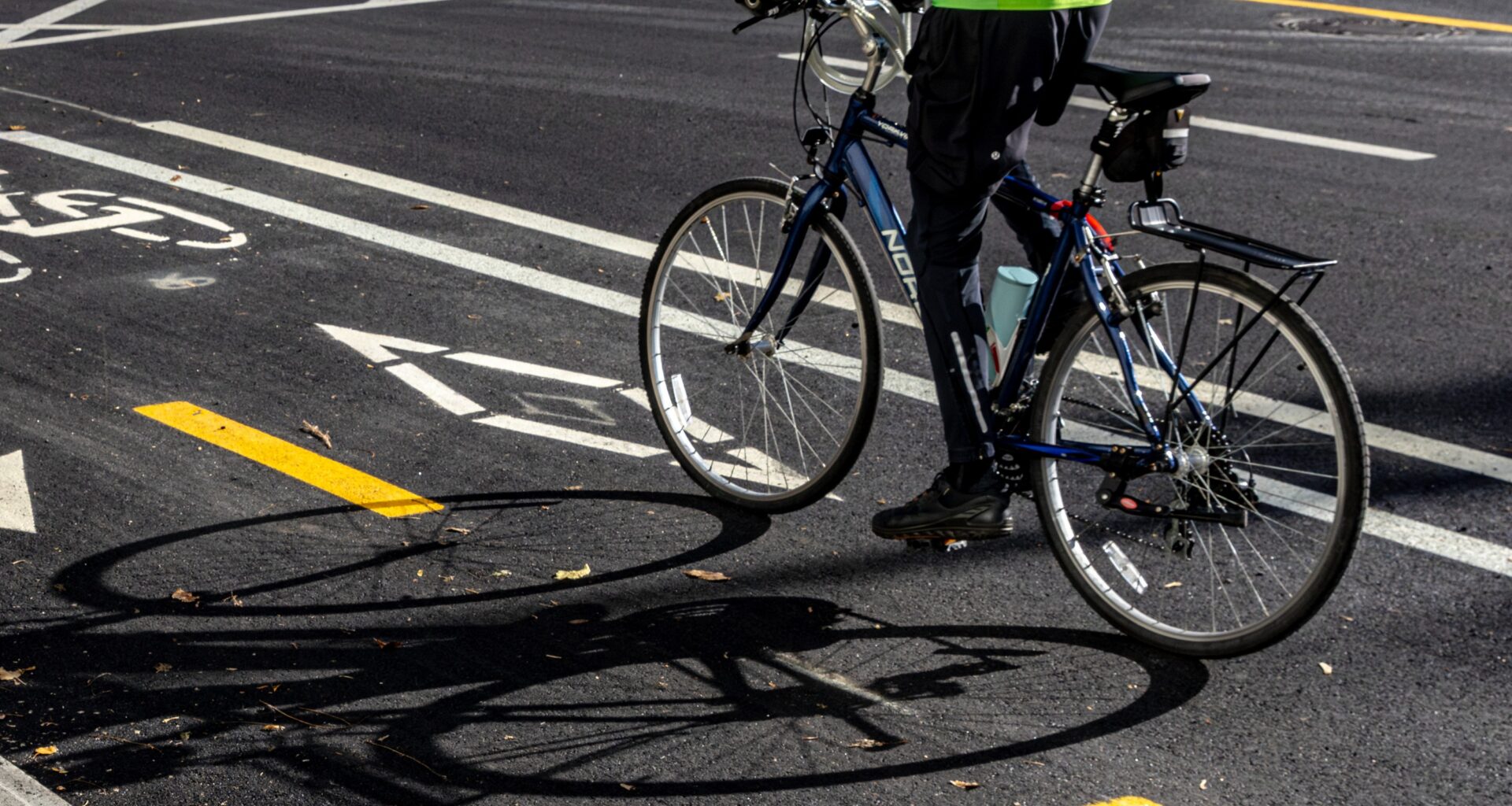
Mayor Soraya Martinez Ferrada’s administration is cutting the length of a planned bike lane east of downtown by a third and delaying the planned completion date of the remaining portion by two years.
In a news release, the administration says the change comes after a public consultation. However, the original plan wasn’t one of the options presented to citizens at the early April consultation.
The route was originally planned to run 6.5 kilometres along Hochelaga St., connecting Fullum St. in the Ste-Marie neighbourhood of the Ville-Marie borough with Highway 25.
The new plan moves the starting point six blocks east to Louis-Veuillot St. and will end the lane nearly two kilometres west of the highway at Louis-Veuillot St. in the Mercier–Hochelaga-Maisonneuve borough.
The most easterly portion of the remaining route, which had been scheduled for construction this year and next, is now scheduled to be built between 2027 and 2029.
Another section of the route, south of the Olympic Stadium, had been scheduled for construction in 2028. On a new map released by the city, no construction date appears, with that phase now described as being “in planning.”
“In only a few months, we have fulfilled our promise to consult citizens on the future phases of the project. We now have to listen,” said Chantal Gagnon, the mayor of the Mercier–Hochelaga-Maisonneuve borough and a member of Martinez Ferrada’s Ensemble Montréal party.
The new plan also takes into consideration concerns about traffic and the loss of parking spots, she said.
The city says that nearly 83 per cent of the 548 people who attended the consultation voted in favour of the new plan.
Citizens were presented with two options at the consultation: the plan adopted by the city and another route travelling about the same distance that was described as more complex and twice as expensive.
The longer route that had been announced by the previous administration was not one of the options.
Neither option included the now-cancelled section of the route connecting to Highway 25, which was described in a consultation document as a “potential future phase.”
Editor’s Picks