
Responding to an audience concerned about climate change in his visit this month, the Honourable Bob Rae likened the international challenge of greenhouse gas emissions to the imaginary analogy of a peeing section in a swimming pool!
Equally vivid was the very real but thankfully past practice of smoking sections in airplanes. Yes, young readers, that was a real thing.
As Canada’s former Ambassador to the United Nations, he is not wrong. Thankfully, we evolved out of smoking sections in shared air. Can we take the lesson further to the ultimate closed system, this planet?
It’s proving challenging. All nations together make this the largest collaboration project going. But some are more serious than others.
The air is just so — airy. Harmful exhaust, gases, and smoke just seem to disappear. But it turns out that invisibility is not a measure of absence. Only images such as those from Artemis II begin to reinforce that the atmosphere has its limits. And we’re pushing them.
It’s obvious now that unusual and severe weather is here. Very hot and very cold temperatures (hello Yukoners), droughts, floods (hello Yukoners), and wildfires (hello Yukoners), are more common and expected.
The global energy think tank, Ember, (Good Name!) reported in their Global Energy Review 2026 that renewable energy production overtook coal in 2025 and that worldwide solar covered all new energy demands, meaning that fossil fuels did not increase. Wow. Here is some evidence of jurisdictions zipping ahead with renewables, China and India among them.
So, it is particularly odd to hear that the territorial government is encouraging homeowners and businesses to switch to fossil fuel burning heating and back-up systems.
Before we go too far down the greenhouse gas gulley and readers ask, “What does this have to do with wildfires?” let’s just connect the dots. Climate change, caused by too much greenhouse gas in the atmosphere, principally from decades of fossil fuel burning, creates hot and dry conditions which make wildfires more frequent, more intense, and more difficult to extinguish or contain. It’s a long tail but it is definitely attached.
It’s everyone’s problem since there are no borders in the sky. There’s not much we can do about wildfire smoke blowing into communities from far away.
But then also, everyone is the solution. Any elimination, reduction, substitution, or diversion of fossil fuel burning is good.
But the Yukon is in a bit of a tough spot. We are burning fossil fuels for power, especially in winter. Despite our significant hydro generation, we still generate some power by burning diesel and liquified natural gas (LNG) to meet the demand. And we have to.
Yukon Energy (YEC) has a plan by 2050 to expand and stream in more renewable sources at different milestones. But right now, we’ve grown faster than our power supply has. The system needs maintenance and upgrades. The grid-scale battery project is behind schedule. We’ve developed a lot of properties with electric heat.
In December, the pinch on the Yukon power grid made national headlines. We were in a -40 C something cold snap. There was a public call out to conserve power and time-shift the use of high-load appliances. Yukon Energy followed their mutual aid protocol where large clients switch to their own power generation and disconnect from the grid. Energy use was high, but we did not trigger rolling blackouts. But we don’t want to push that boundary of the system.
In the short-term, it’s a good goal to reduce electric demand.
However, I’m not convinced that switching from electric to fossil fuel-burning furnaces in homes is the go-to step.
How about we first think about the collective effort we made in December? We shifted high-load appliance use to off-peak times on short notice. What if we organized for that all the time?
It could be about timing.
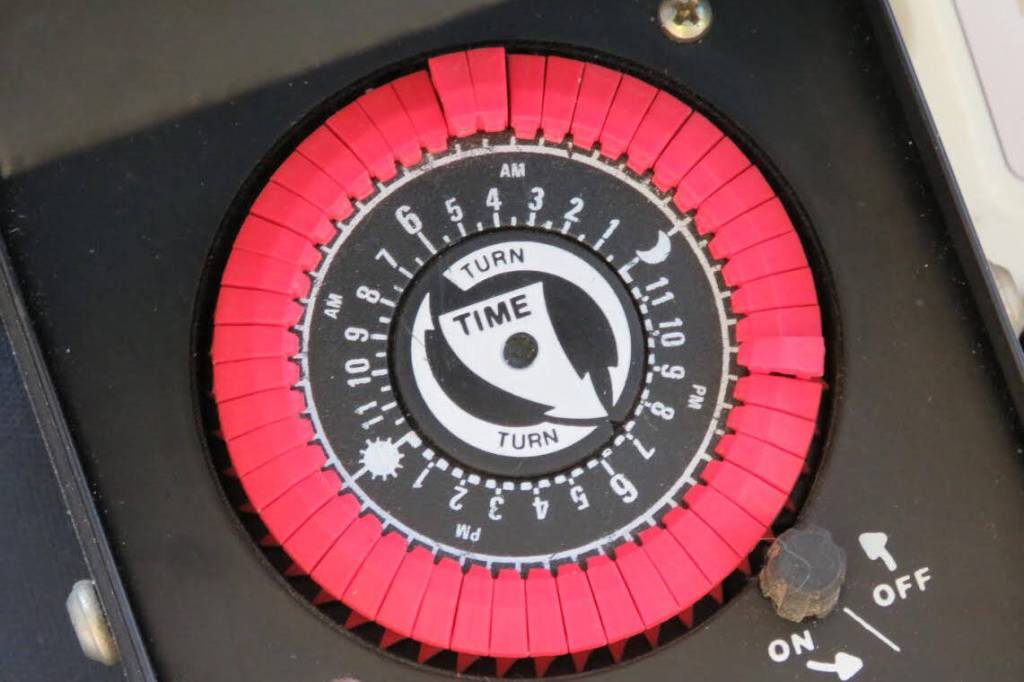
Aren’t we already experts with timers to heat the battery blanket and block heater? Can’t we adapt that thinking to shift non-essential appliance use and adjust the thermostat and hot water heater? Maybe that’s with a smart meter or with a change in power rates to favour different times or maybe we can just do it. It’s not difficult.
Technologies like the Electric Thermal Storage (ETS) can time-shift heat supply.
There’s another odd measure. The government suspended rebates on e-bikes and electric vehicles to discourage this electrical use. But both can easily charge in the middle of the night when the electrical draw is minimal. (The manufacturers know about timers too). The displacement of gas cars by these vehicles is valuable. Plus, they can generate their own power with regenerative braking. This is technology aimed in the right direction.
So, to manage short-term electrical demand, we should manage it, with how much we’re using and when.
Right alongside adding insulation and draft-stopping, conservation has been on the table for a long time. In our case, we could think of electricity use as fossil fuel use. That won’t always be the case, but it’ll keep it top-of-mind.
On the other side of the fossil fuel fence, is an interesting question. Since we have to burn some fossil fuels in our current supply situation, should they be burned in homes supporting the rebate switch, or should they be burned by Yukon Energy, centrally — no furnace switch but other measures?
On the face of it, at a certain ratio, it’s more efficient to make the heat in homes. The heat is created right where it is needed at a reasonable scale. At the same time, substantially fewer electric heaters and furnaces calling for power from YEC means there is less pressure on the supply. This is probably the thinking behind the rebate.
But the ask here, even with rebates, is to pay a significant amount for new furnaces and installation, contend with permitting and insurance of fuel tanks on properties (that many households just got rid of) and swing to an individual commitment towards fossil fuels.
When the grid is more fortified with a greater supply, would we be encouraged to change it back later? Maybe. Homes with fossil fuel heat might not be in favour. It’s not the long-term direction in which we are going.
We’re trying to deal with the short-term. It calls for conservation and time-shifts along with some diesel and LNG supply. YEC aims to develop renewable projects, upgrade systems and build the grid to a capacity beyond demand. To reduce electric demand, let’s work on it together — not by changing to a fossil fuel system, but by changing behaviour.
Ross Burnet lives in the boreal forest just outside Whitehorse. For 25 years, he’s been thinking about how to defeat embers.