

Listen to this article
Estimated 4 minutes
The audio version of this article is generated by AI-based technology. Mispronunciations can occur. We are working with our partners to continually review and improve the results.
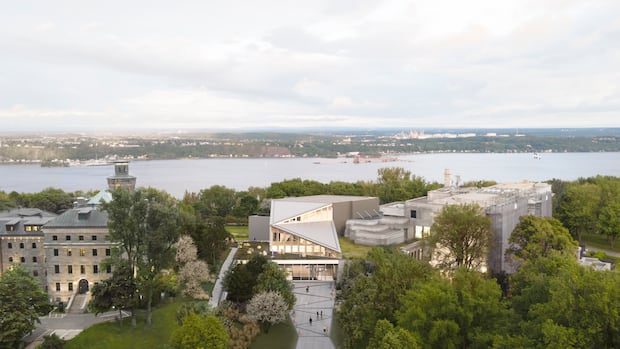
After years of planning and construction, Quebec City is getting a first look at an $84-million pavilion dedicated to housing the work of painter and sculptor Jean Paul Riopelle.
The Montreal-born artist rose to fame in France after the Second World War and helped introduce abstract impressionism in Paris in the 1950s. He is often considered one of Canada’s most influential artists and, come October, about 130 of his pieces will be featured in the new pavilion at the Musée national des beaux-arts du Québec (MNBAQ).
The idea of creating a permanent space for some of his masterpieces started in 2020, says Jean-Luc Murray, general manager of the MNBAQ.
“It was more an exploratory discussion about what the museum could do,” he said.
“Six years later, we’re getting ready to open this amazing space that will host the best and most important collection of Riopelle in the world.”
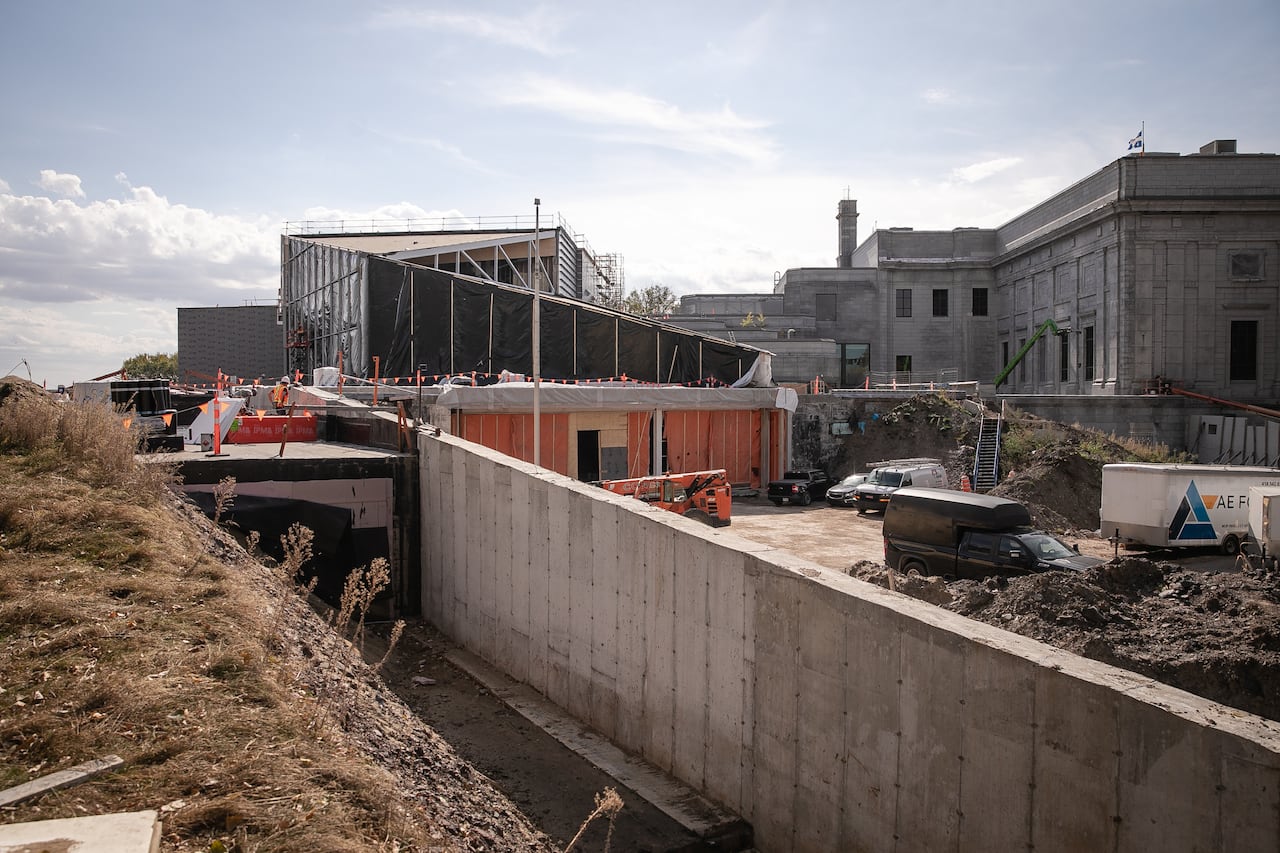 A part of the museum pictured under construction for the new pavilion in October 2025. The project is made possible through a partnership and contributions from the Quebec government, Quebec City, the museum and the Jean Paul Riopelle Foundation. (Olivia Laperrière-Roy/Radio-Canada)
Among the pieces that will be featured in the new pavilion is the expansive 40-metre-long L’Hommage à Rosa Luxemburg — a piece Murray refers to as one of the museum’s masterpieces, which it acquired in the early 2000s.
He says this new pavilion was designed around how to best house the art, with the L’Hommage à Rosa Luxemburg serving as an example.
“It was a big challenge,” he said.
“It was not easy, you know, the size. And we had the crazy idea to present it in an innovative way, to show it in a circular room like the Nymphéas [Water Lilies], the Monet that you can see at the Orangerie in Paris.”
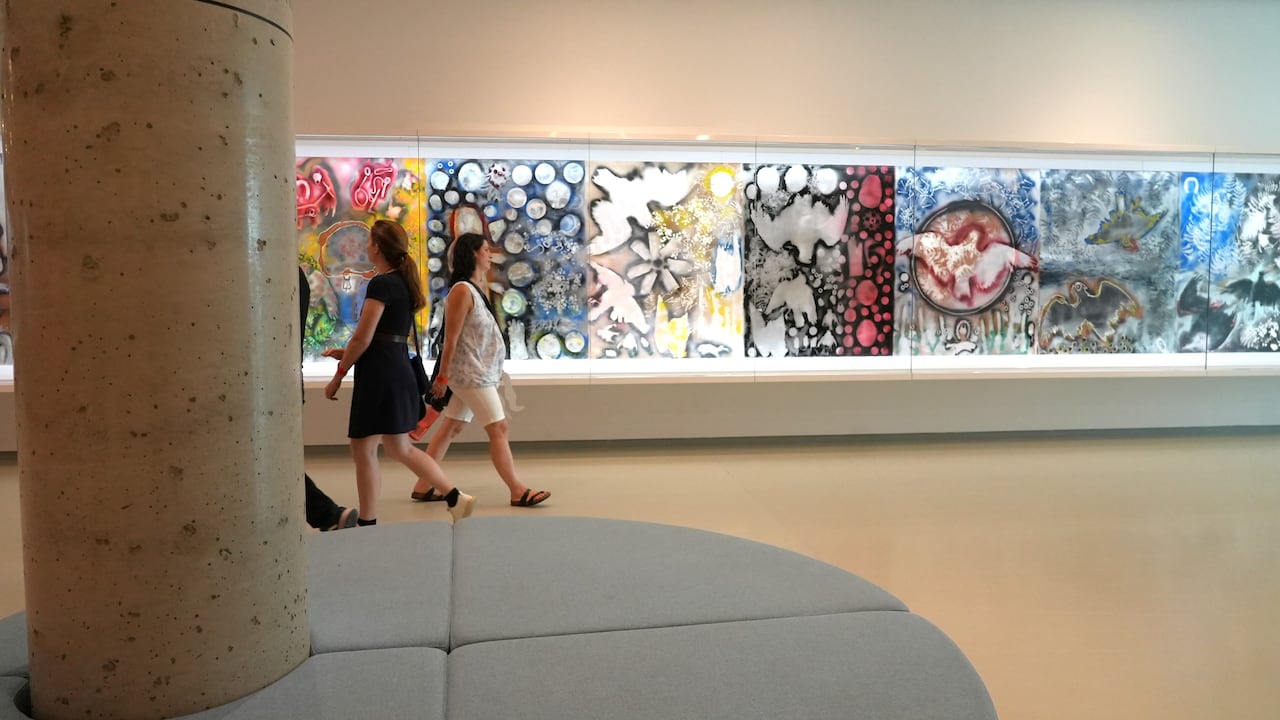 L’Hommage à Rosa Luxemburg by Jean Paul Riopelle was last displayed in the museum in 2025 but will soon be featured in the new Riopelle pavilion come October. (Steve Breton/Radio-Canada)
The museum’s relationship with Riopelle and his work dates back to the 50s, says Murray. As one of the most notable Quebec artists, Murray says the Riopelle pavilion was “meant to happen in our museum.”
After getting access to the storage facility following the construction, Murray says the next steps will be to fill the space with the collection.
The project is made possible through a partnership and contributions from the Quebec government, Quebec City, the museum and the Jean Paul Riopelle Foundation.
Gifting Quebecers ‘a really significant piece of history’
The Riopelle foundation donated 68 major works worth more than $100 million in December 2021 for the project. The foundation was created in 2019 in part by the Audain Foundation — created by philanthropist and art collector Michael Audain to foster appreciation of the visual arts in British Columbia and elsewhere.
In February, the MNBAQ Foundation announced the name of the pavilion — Espace Riopelle – Pavillon Michael Audain — to recognize Audain’s commitment to the museum with his donations totaling $91.3 million, including $76.9 million in donations of artwork.
Audain had been fascinated by Riopelle’s values, his claim for artistic freedom, his love of nature and the North and started collecting pieces about four decades ago, says Manon Gauthier, executive director of the Audain Foundation.
“[He] feels somehow so connected and so determined also to ensure that, starting with Riopelle, that we truly celebrate the cultural heroes across Canada,” she said.
Creating over 7,000 works over his six-decade-long career, the abstract painter had a “profound reverence” for nature and dreamt of having a space for his work in the 80s, Gauthier said.
“He gained fame mostly around the incredible mosaics. You feel an explosion of colours and layers and layers of paint representing our vast landscapes,” she said.
“It’s a really significant piece of history that we are gifting to the people of Quebec.”
A ceremony is taking place Saturday in Quebec City with representatives who helped contribute to the project.