

Oliver Holbourn is midway through explaining the work of the National Wealth Fund when he jumps up from his seat and stretches against a desk.
The need to stand up is caused by a tennis injury sustained more than 20 years ago. “I had two bulging discs, one split. I had a back operation — so it’s just a condition I have to manage,” the chief executive of the Leeds-based institution says to explain his fidgeting.
Still, it helps keep him on his toes. Holbourn knows he has a job on his hands justifying the very existence of the NWF, which has £27.8 billion of taxpayer funding to dole out to worthy projects. Holbourn, 48, wants it to become an “enduring financial institution”. As a result, he is focused on making a profit to prove the institution’s worth.
“I will not apologise for trying to make a profit for the taxpayer, because any change in administration will always bring questions around what we do,” he says. “If we can prove that we’re having a really big impact, and we’re making a profit, that’s really a much more powerful position for us to continue to do what we want and we think is necessary.
“If we’re not a profit-making institution, then what are we? We’re a grant-giving institution. That’s not what we were set up to do.”
That Holbourn — usually known as Olly — is only six months into the role and already thinking about the long term is explained by the UK’s short history with such institutions.
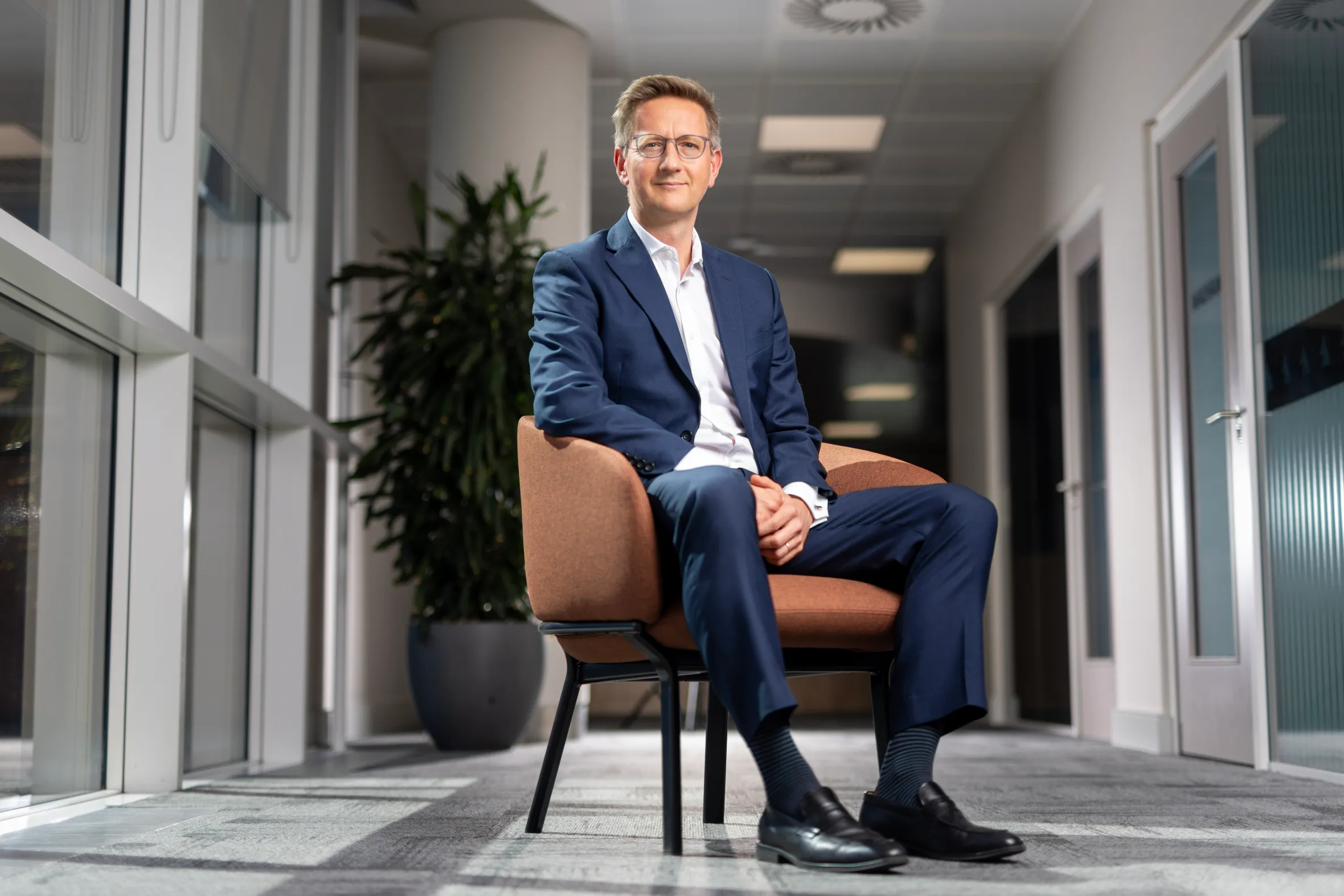 Oliver Holbourn at the National Wealth Fund’s head office in Leeds: “I will not apologise for trying to make a profit for the taxpayer”ANDREW MCCAREN FOR THE SUNDAY TIMES
A predecessor body, the Green Investment Bank, was set up in 2012 but privatised five years later. The current NWF traces its roots back to June 2021, when it was set up under the Conservatives as the UK Investment Bank. It was rebranded and rebooted in October 2024 by Rachel Reeves to invest in a wider range of projects. Some politicians are already querying its future; Reform UK, for instance, has floated the idea of a fund backed by local government pension pots rather than the taxpayer.
Holbourn is now at the heart of the chancellor’s growth mission. He has been given the task of “crowding in” private sector funding that is three times greater than the sum pumped in by taxpayers. He wants to form partnerships with banks, insurance companies and other investors on projects that might otherwise be too risky for the private sector to fund.
“We’re trying to help the country to grow,” he says. “We’re trying to help the country consume more clean energy at lower prices.”
The National Wealth Fund also invests in infrastructure such as fibre connections and defence. “Hopefully as a result of our investments, our [UK] nations will be more resilient,” he says. “With what’s going on in the world, the ability for these brilliant nations of ours to be more resilient over time is super important.”
Holbourn is speaking from a compact meeting room at the NWF’s head office in Leeds, where most of its 375 staff work. It is the anchor tenant in a landmark waterfront redevelopment just minutes from the railway station. On a glorious spring day, the area is buzzing with office workers enjoying the sun at lunchtime. This Yorkshire city has become a mini-financial centre; outposts of the Financial Conduct Authority and the Bank of England are nearby.
 Leeds now has a thriving financial districtGETTY IMAGES
Holbourn, who requires staff to spend three days a week in the office, says “the greatness of being in Leeds is that it enables quicker travel to Scotland and Wales … and it’s good that the government apparatus is more evenly spread [out of London]”.
The NWF provides guarantees and debt to get projects off the ground. It is behind Britain’s first reservoir since 1991 (in Hampshire), a gigafactory in Sunderland, and fast fibre connections in Northern Ireland. It also takes some equity stakes in companies, notably in a tin mine in Cornwall. On top of this, the NWF oversees the £36.6 billion pumped into the Sizewell C nuclear plant on the Suffolk coast, but does not include this in its metrics.
Holbourn is a banker by training. He grew up in Barnes, southwest London, to an accountant father and a mother who stayed at home. Sent to boarding school in Tonbridge, Kent, he describes “a loving, happy upbringing” with a younger brother. After studying law at Oxford, he joined the graduate scheme at what was then Merrill Lynch (now Bank of America), where he met his wife, Charlotte, who worked in marketing.
 The Sunderland gigafactory under construction in 2023. Battery production began late last yearJOANNE COATES/GETTY IMAGES
He left the private sector in 2013 to join UK Financial Investments, the body set up to look after the taxpayer stakes in the banks bailed out in the financial crisis, such as NatWest (then Royal Bank of Scotland) and Lloyds Banking Group. He became UKFI chief executive three years later.
He was persuaded to join UKFI by its then-chairman Sir Robin Budenberg, who now chairs Lloyds. Budenberg describes Holbourn as “unflappable” and a banker who “cares about policy and the country”.
“He’s also a really nice guy. He has a very low ego and does not take things in a personal way. In the job he’s doing now, that’s absolutely key as he has to bring lots of people together. Where people feel you’re doing the right thing for the country and you don’t care about yourself, it makes people want to work with you,” says Budenberg.
Holbourn joined NatWest, one of the banks he had been overseeing, in 2018. Hired just before Dame Alison Rose took the chief executive seat, he became closely associated with her strategy and was posted to Jersey in 2022 to lead RBS International.
He had not been on the island long when Rose was ousted in 2023 amid the furore over Nigel Farage’s bank account at Coutts, NatWest’s private banking subsidiary. He gives a politician’s answer when asked about his views on her departure: “I was actually far away from HQ when all that happened. I have a human reaction, but at the end of the day what happened, happened,” he says.
Holbourn left NatWest last June; in his words, “my time was up”. He had been planning to return to university to study behavioural science when the NWF job came up.
He describes a life of “logistic gymnastics” as his wife remains in Jersey while the youngest of their three children finishes primary school, with the older two in boarding schools. He describes two of his three children as “mildly neurodiverse … and getting on brilliantly”.
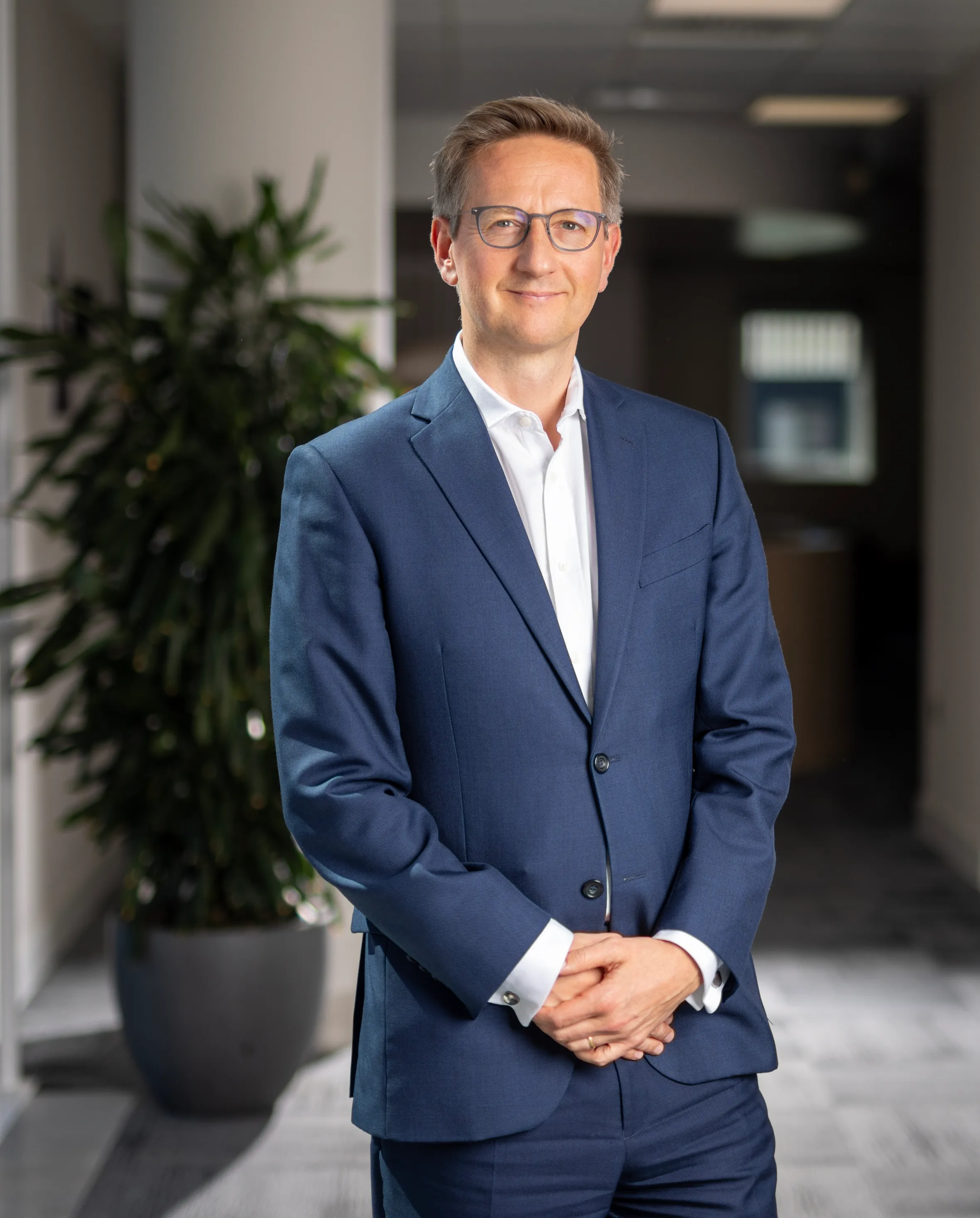 “My time was up,” Holbourn says of his decision to leave NatWestANDREW MCCAREN FOR THE SUNDAY TIMES
The NWF is one of a number of public financial institutions, such as Great British Energy and the British Business Bank, intended to get investment into Britain. It can be an infuriating experience for businesses. For instance, Darren Davidson, vice-president of Siemens Energy UK and Ireland, told MPs on the Treasury select committee in June 2025 that companies working in offshore wind had access to 23 schemes in the UK.
Holbourn says this raises the question of “how do you make sure that whoever the customer is, whatever door they knock on, they get the right help? The important thing we’re trying to formalise is that there is ‘no wrong door’ ”.
What he means is that if a company approaches one of the bodies for support, there will be a formal mechanism to refer the applicant to another body. With this in mind, he is working on a “set of principles” to speed up the application process, which is currently open ended.
“I think you should get an acknowledgement of the receipt of your application within 24, 48 hours. And then, I think, you should get an initial view on whether this is something we can take further within a week or two,” says Holbourn.
Within two months of taking over, he set out a strategic review outlining 25 sectors — from innovative technology to strategic infrastructure — that the National Wealth Fund will back. He has committed to focusing on “place-based” investment to work with local governments. The NWF has “strategic partnerships” with regional authorities in Manchester, Glasgow, the West Midlands and West Yorkshire.
In this strategic review, Holbourn is clear about a “step change” in approvals, aiming for £5 billion worth of projects a year — a faster pace than the £8.4 billion allocated since the NWF’s creation. So far it has managed to “crowd in” £17 billion of private funding. While this falls short of the goal of £3 for every £1 it puts in, the NWF points out that this is a long-term goal.
To speed up processes, Holbourn says he is decentralising decision-making to give staff more autonomy: “You need to give people freedom and catch them if they fall.”
He also wants to be more proactive in setting out the types of projects backed by the NWF. Currently, 80 per cent of these result from applications, but he wants to reduce that to 50 per cent and intends to produce some research on this “within the next two months”.
This means looking at the 25 sectors that the NWF is targeting and being “front-footed” in approaching companies for private investment opportunities.
“I want us to be clearer on what are the problems we’re trying to solve, and then making sure we have the pipeline we want rather than one that we necessarily have,” he says.
From all this, he wants to make a profit — in aggregate, not per project (and not including Sizewell C); last year, the fund made a £152 million loss. ”We will have some things that do not go as well as we expected, and we will have others that go better than we expected. But in aggregate, by 2031, we want to be better than break even,” he says.
By then a new government will be in power and the NWF will need fresh funding. Holbourn is ready to be judged on: “Have we done a good enough job to prove that we deserve additional capital, wherever that comes from? We have to prove that.”.
He ends on his theme of the NWF’s longevity: “Success to me is that whenever I go — and there’s no thought of that at the moment — [I will be] passing the baton on to someone where the organisation’s in a better place and we are on our way to becoming an enduring public financial institution.”
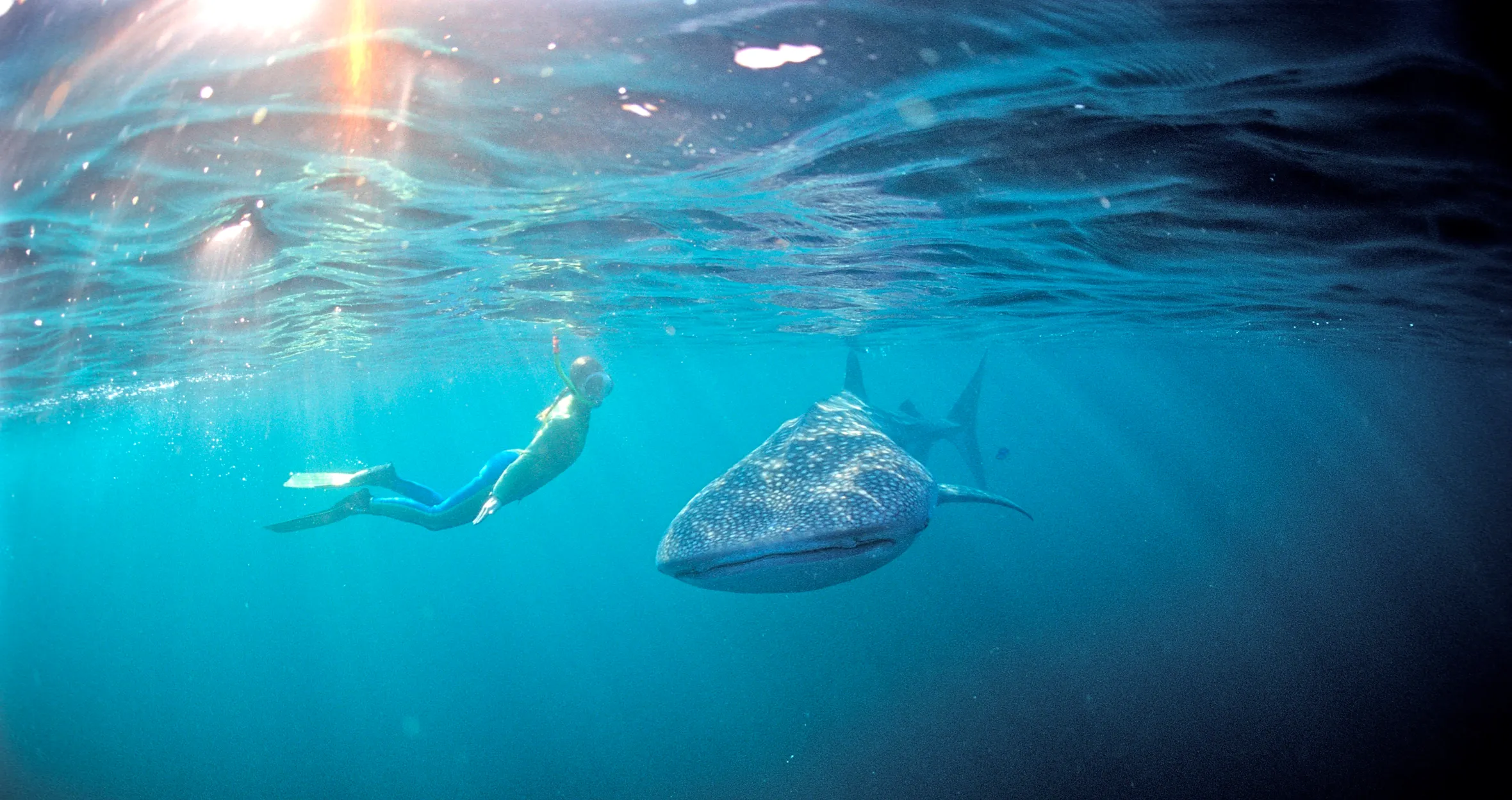 Holbourn fulfilled his “dream to swim with whale sharks” at Ningaloo Reef in AustraliaREINHARD DIRSCHERL/GETTY IMAGES