

Listen to this article
Estimated 4 minutes
The audio version of this article is generated by AI-based technology. Mispronunciations can occur. We are working with our partners to continually review and improve the results.
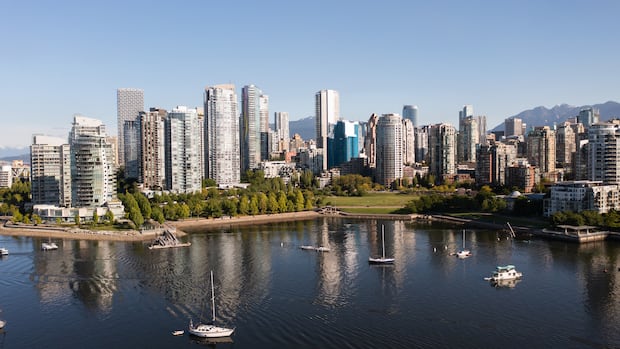
Should the City of Vancouver allow taller skyscrapers downtown? And if so, where?
Those are questions being put to the public as the city begins the first review of its Higher Buildings Policy since 2011.
That document, which provides guidance for buildings that significantly exceed their zoned height, currently caps structures at just under 215 metres tall.
It aims to create a “dome-shaped” skyline, with the tallest buildings on Georgia, Burrard and Granville streets.
The city’s current tallest building, Living Shangri-La, is about 200 metres tall.
WATCH | Vancouver revises view cone policy: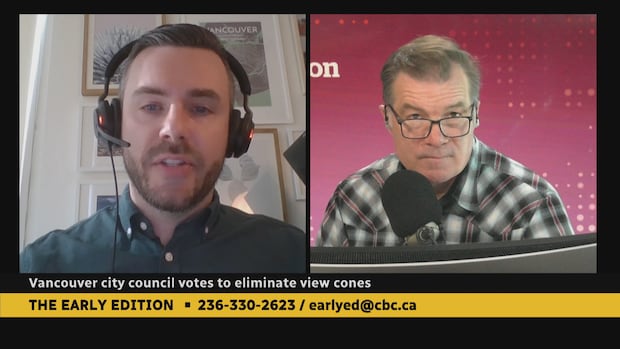
Vancouver city council votes on the plan to modernize the city’s view cones
Last night, Vancouver city council voted on the plan to modernize the city’s view cones. The policy dates back to 1989, when 26 view cones were protected. Over the years, that number increased to 38. But Mayor Ken Sim has spoken out publicly, saying the protections inhibit development. And last night, city council voted to eliminate the policy. For more, we’re joined by Vancouver city councillor Peter Meiszner.
“We expect, and are seeing, higher buildings continue to be proposed in our downtown,” City of Vancouver general manager of planning Josh White told CBC News.
“We want to identify a few things: where should the tallest buildings be located? How tall should they be? How does that interact with things like protected views?”
The city argues that potential benefits of permitting taller towers include revenue in the form of developer contributions and the construction of more housing units.
Potential drawbacks include increased pressure on existing infrastructure, wind and shadows at street level and potential increases in inequality if developers focus on luxury housing, according to the city.
The review aligns with a previous council direction to look into how taller buildings could advance the city’s Granville Street Plan, a framework to revitalize the Granville Entertainment District.
White added any changes identified in the review won’t contradict the city’s “view cones,” which protect specific public views of the North Shore mountains.
But those corridors were altered in 2024, potentially leaving room for new development.
Weighing the trade-offs
Andy Yan, director of Simon Fraser University’s City Program, said there is a need for the city to take a big-picture look at building heights and what the skyline should look like — particularly as “supertall” skyscrapers begin to appear in cities like New York and Toronto.
According to a recent Postmedia report, at least one developer is already looking to bring a 315-metre supertall skyscraper to Vancouver.
But he said any changes to the policy must be approached with care.
“There is a real need for transparency and accountability in terms of what these what these taller buildings will do,” Yan said.
“And what happens in terms of design excellence, as well as the kind of amenities these tall buildings can facilitate in the City of Vancouver.”
Yan said key issues that will require public scrutiny include the potential for tall buildings to privatize public views, and their tendency to lack much in the way of affordable housing.
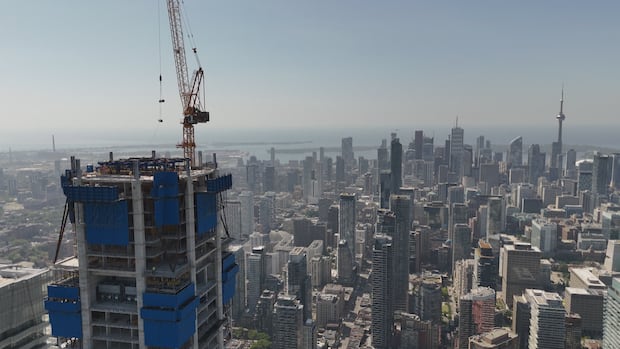
Inside Canada’s first supertall building, One Bloor West
One Bloor West now has a roof, officially giving it the title of Canada’s first supertall building. Mercedes Gaztambide took an 85-storey journey to the top to check out the view.
Michael Mortensen, director of Liveable City Planning, agreed that a review of the policy was in order, but said it must account for the trade-offs of any change.
Taller buildings provide the city with cash up front, but result in a permanent change to the city’s views and brand that the public must live with for years to come, he said.
And while they may come with an “architectural cachet,” he said, they’re also significantly more expensive to build.
“I think the worst outcome would be a few little exceptions that pop up here and there without a sort of cohesive plan, the best outcome would be a comprehensive review,” he said.
“There needs to be a pretty broad public discussion.”