

Listen to this article
Estimated 4 minutes
The audio version of this article is generated by AI-based technology. Mispronunciations can occur. We are working with our partners to continually review and improve the results.
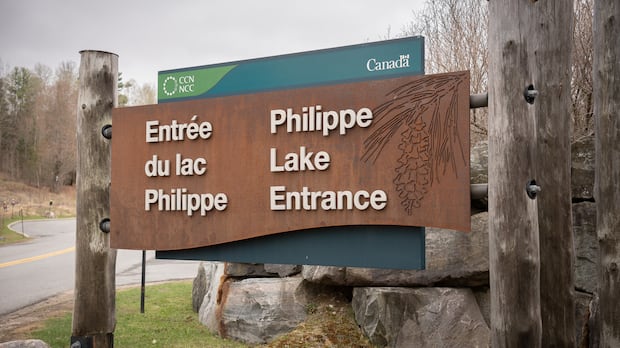
Canada geese glide across Lac Philippe on a quiet morning, while birds chirp in towering trees along the shoreline.
Farther along, wild turkeys cross one of the many trails leading to some of the campsites.
Next month, people will be able to rejoin wildlife in this part of Gatineau Park — long a popular destination for visitors — when its main campground opens for the first time since 2022.
“It’s really a national attraction,” said Guillaume Lamoureux, mayor of nearby La Pêche, Que., who was disappointed when the campground closed just as sites were reopening following two years of the COVID-19 pandemic.
It’s now set to reopen June 12, after being shuttered for the last three summers due to renovations that were originally expected to take just a year to finish.
Lamoureux said he’s happy more people will soon return to the region — or visit for the first time.
“The more the merrier,” he said. “It’s good for our economy. We know, of course, that the last few years, following the pandemic, while some local businesses have done very well, others have struggled a little bit more. So it’s really good news for all of us.”
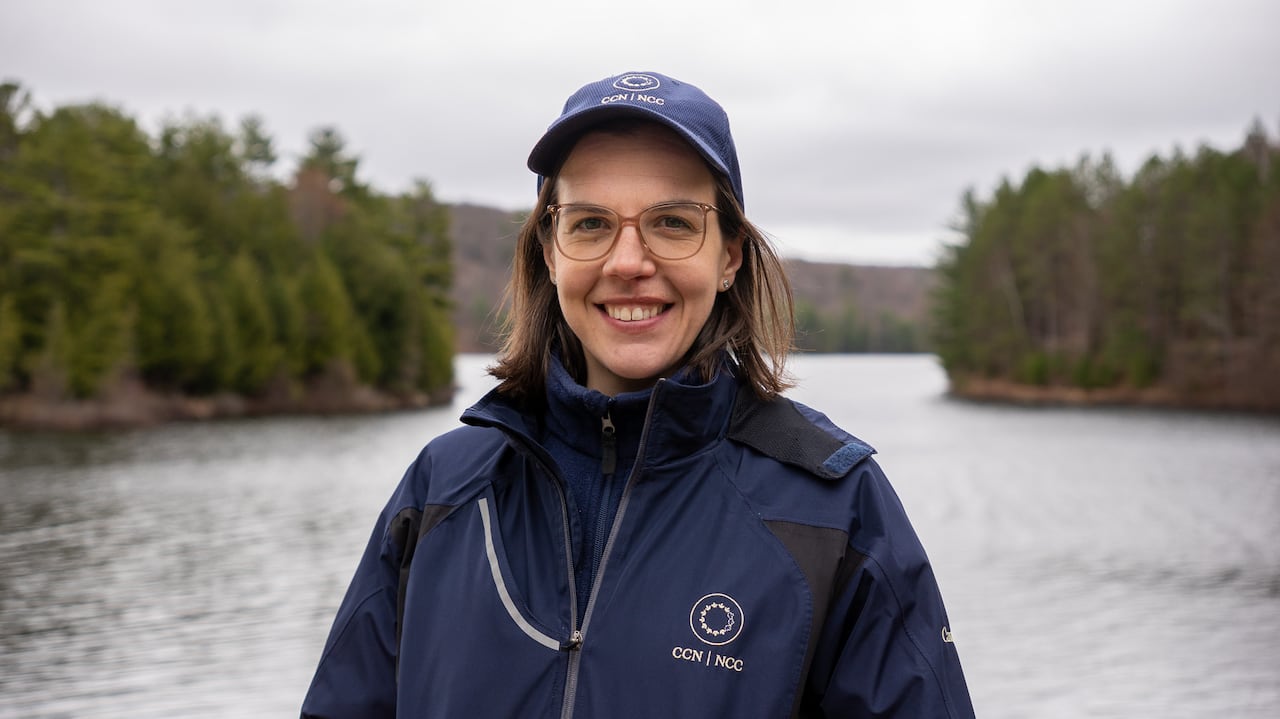 As part of the work to renovate the Lac Philippe campground, more than 4,000 trees have been planted in the area, says Calina Ellwand. (Charles-Olivier Perron/Radio-Canada)Costs ballooned
The campground was built in the late 1950s and, despite some renovations over the years, had become outdated.
Some of the updates the National Capital Commission have now put into place include modernized facilities, with 30 sites now having have electricity and water and 10 mini-chalets, one of which is accessible.
There’s also a new amphitheatre by the lake and a renovated kitchen shelter.
“We are excited to welcome campers here again,” said Calina Ellwand, the NCC’s public programs and communications manager of Quebec urban lands and Gatineau Park.
The NCC also planted more than 4,000 evergreen and deciduous trees and bushes, including white spruce, balsam fir, eastern white cedar, white birch and ironwood, along with a number of pine, maple and oak trees.
While the total cost of rehabilitating the campground was estimated at $19 million in 2022, the most recent estimate from the NCC has ballooned to $29.7 million.
The money comes out of $228.6 million given to the NCC by the federal government over a five-year period “to carry out essential work on certain high-impact and high-value assets,” according to a French-language statement from the commission.
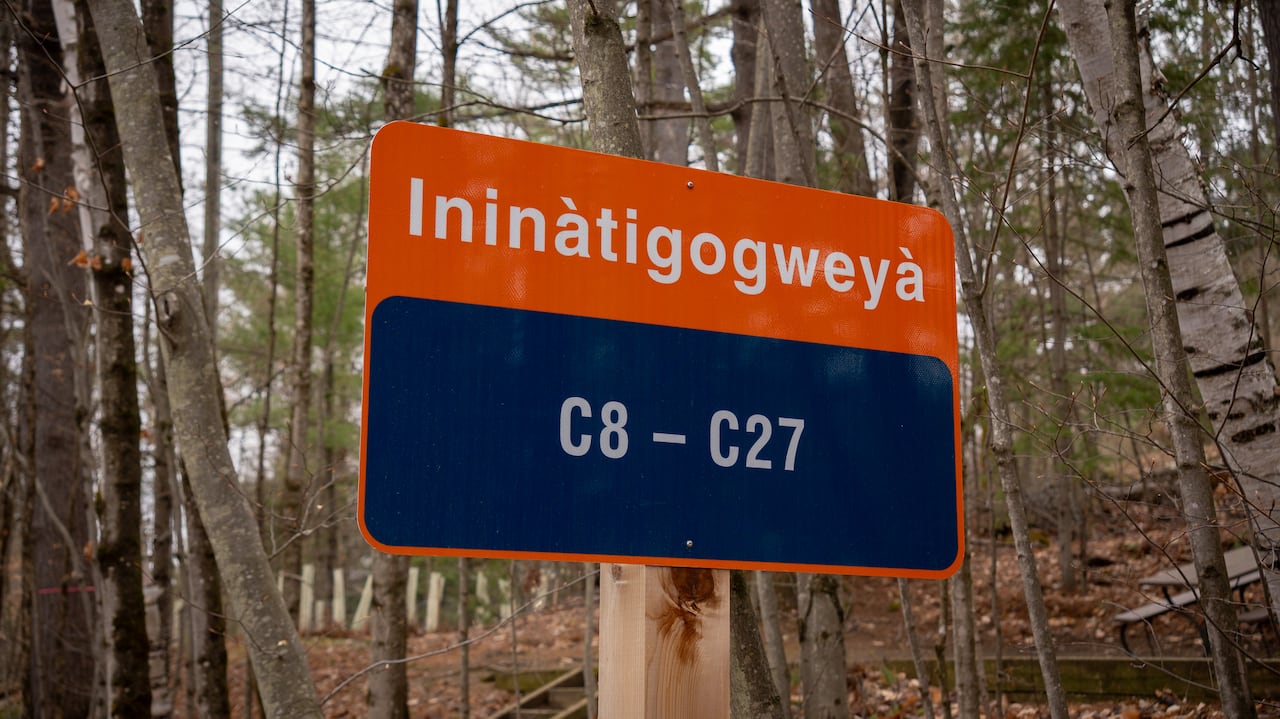 Several signs in Anishinābemowin have been installed near Lac Philippe, including this one which means “group of maple trees” in English. (Charles-Olivier Perron/Radio-Canada)Kitigan Zibi elders named areas
“Even those who are in tents will notice their their campsite has more privacy,” Ellwand said, adding that landscaping was done around each site, with a dedicated wooden platform for tents.
Visitors will also see signage in Anishinābemowin as elders from Kitigan Zibi Anishinābeg in western Quebec contributed names to various areas, she said.
“The elders came to the campground and told us stories about each of the sectors and gave each of those sectors names, based on some landscape feature that they observed, whether it was the type of tree in that area, or perhaps a water feature,” Ellwand said.
Ultimately, labour shortages in the construction industry were to blame for tripling the time it took to finish the renovations, Ellwand said.
“It did take longer than expected, but we are very excited to be reopening finally, fully this summer.”
The campground’s season is set to run until Thanksgiving.
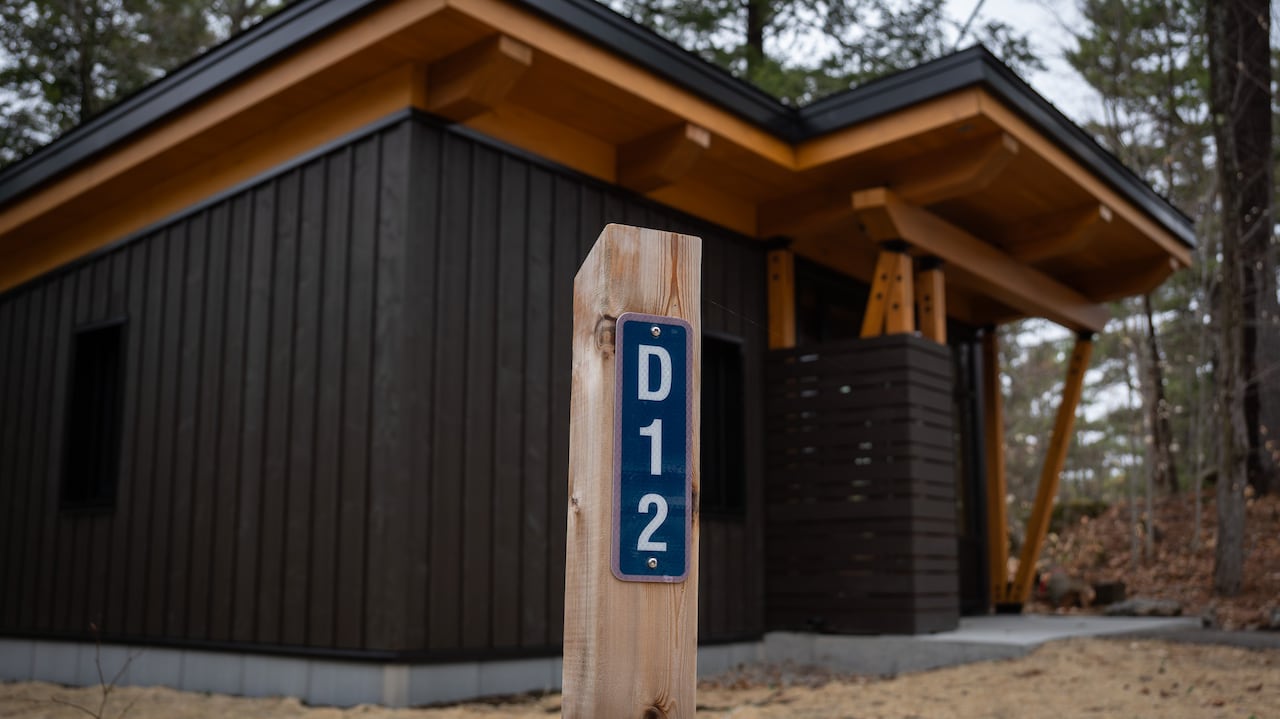 One of the new chalets at the Lac Philippe campground in Gatineau Park. The campground is reopening in June after being closed for the past three summers. (Charles-Olivier Perron/Radio-Canada)