


Listen to this article
Estimated 5 minutes
The audio version of this article is generated by AI-based technology. Mispronunciations can occur. We are working with our partners to continually review and improve the results.
A group representing Canadian independent grocers says Manitoba’s approach to grocery property restrictions has left the industry with a sour taste as the province announced it was challenging some of Sobeys’ anti-competition contracts earlier this week.
Manitoba’s Property Controls for Grocery Stores and Supermarkets Act, which passed last June, bars grocery stores from creating new exclusivity clauses or restrictive covenants that can be used to prevent other grocery retailers from setting up shop nearby.
It’s a move the province said will increase competition and lower prices as a result.
But Gary Sands, the Canadian Federation of Independent Grocers’ senior vice-president of public policy and advocacy, said there shouldn’t be a “blanket prohibition” against property controls in the province.
He said his group believes there are both reasonable and unreasonable contracts, with no “one-size-fits-all” solution.
 Gary Sands, senior vice-president of the Canadian Federation of Independent Grocers, says the Manitoba Municipal Board isn’t the right avenue for anti-competition complaints. Instead he says the province should refer contract challenges to the federal Competition Bureau. (Phillip Chin Photography)
“In our view, yes, there are cases where a property control can be reasonable,” Sands said, calling small, independent grocery stores negotiating with a landlord to ensure another grocer doesn’t open up in the same strip mall or plaza an “entirely reasonable property control.”
“An unreasonable property control is when a large store is preventing another competitor from even moving into the community or within a certain radius or they leave the area entirely.”
He said his group believes it’s also unfair for grocers to close stores and still be able to prevent other grocers from moving in, retaining power over future tenants after they vacate the space.
For example, a former Sobeys store on 18th Street in Brandon has been sitting vacant for years after the grocery giant signed a lease preventing anyone else from setting up shop.
“We would have liked to have had the discussion before Manitoba brought in this blanket ban of all property controls because we think that’s the wrong way to approach this issue,” Sands said.
Under the rule, property restrictions are voided unless they were registered by the December 2025 deadline. The law allows the province to challenge any of the registered contracts, referring them to the Manitoba Municipal Board for a hearing to decide if they’re in the public interest.
But Sands said he’s skeptical that the municipal board has the industry knowledge to make the right call. He said the province should instead refer cases to the Competition Bureau Canada, which enforces federal laws meant to prevent anti-competitive practices.
“They have the knowledge and the experience of working with the grocery industry to be able to make that determination,” he said of the bureau.
He said the province didn’t consult the independent grocers group before moving forward on curbing property restrictions. The same thing happened when the government announced it was freezing the retail price on one-litre cartons of milk, Sands said.
“Where we get concerned about Manitoba, is they continue to do things without first reaching out and talking to people in the industry,” he said.
A spokesperson for Manitoba Labour Minister Malaya Marcelino said in a statement Sunday property matters in Manitoba fall under the jurisdiction of the Municipal Board, and that the board has the necessary resources and expertise to rule on the 43 property control cases brought forward by the government.
The spokesperson said freezing milk prices was a direct way to lower grocery prices, but that the government is working on other measures, including ending the property controls.
CBC News has reached out to the Canada’s Competition Bureau for comment.
‘The government is really looking at this the wrong way’
Food Fare owner and manager Munther Zeid, whose family runs five grocery stores in Winnipeg, said he doesn’t think dropping grocery store property restrictions will do much to lower prices.
He said the province should be looking further up the food supply chain instead.
“The government is really looking at this the wrong way. They think that opening up more stores will create more competition, lower prices … They need to look at the other parts of this business, the wholesale side,” Zeid said.
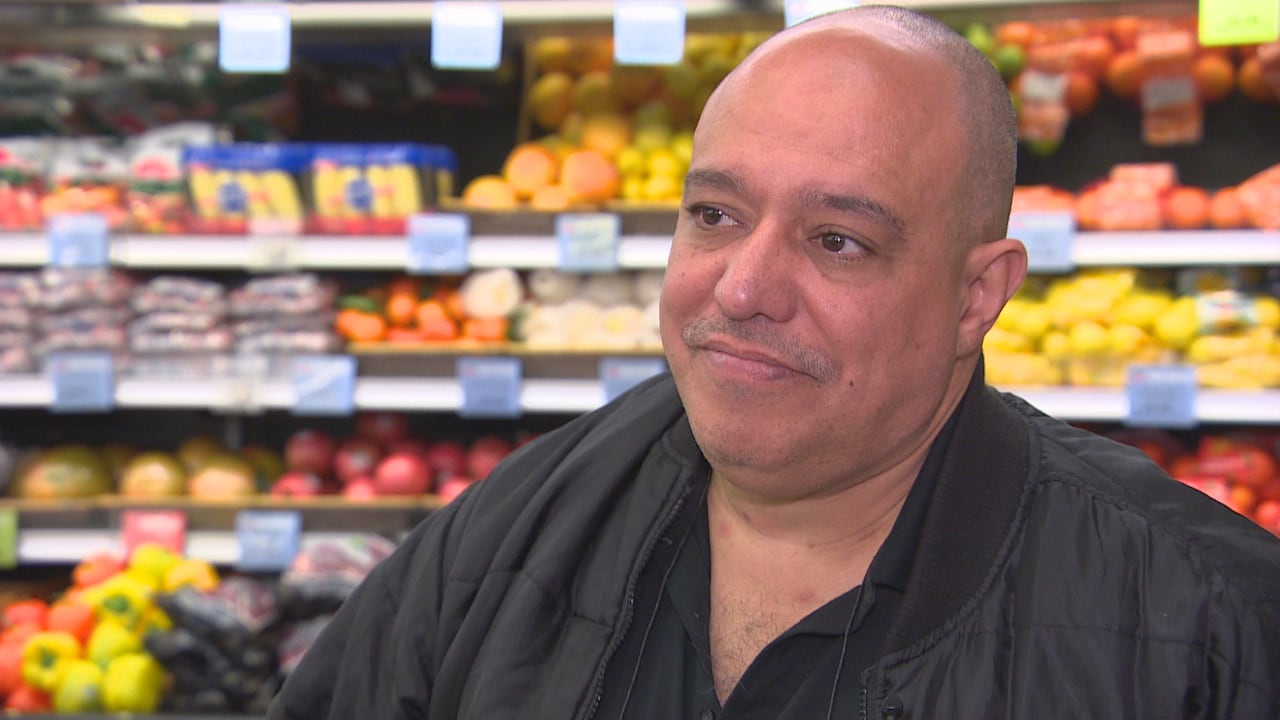 Food Fare owner and manager Munther Zeid says the province can do more to drop grocery prices by looking at the wholesale and manufacturing levels of the supply chain. (Justin Fraser/CBC)
“You want cheaper prices, go to the source that sets the prices or the cost, which is the manufacturers and the wholesalers,” he said, adding retailers are “at the mercy of the wholesalers.”
Zeid said he doesn’t buy the province’s claim that more stores will lead to lower prices for consumers. He said prices will stay the same unless more wholesalers offer retailers lower prices.
“You can open up 50 more stores in the city. It’s not going to make a difference in price,” he said.
“All you’re doing is you’re taking that piece of pie and cutting it up into smaller and smaller pieces.”