
The Crown has asked that a career criminal receive the harshest sentence possible in the Criminal Code, an indefinite sentence for a choice he made nearly six years ago when he left a federal penitentiary in Port Cartier, stole a government vehicle, and drove more than 800 kilometres to Montreal — where he carried out four armed robberies over the course of a couple of days.
During September 2020, Éric Lefebvre, now 56, left the penitentiary and was given the choice to board a plane that would take him to a municipality close to where he was supposed to begin residing at a halfway house. He opted instead to go to Montreal where he robbed three banks and a jewelry store.
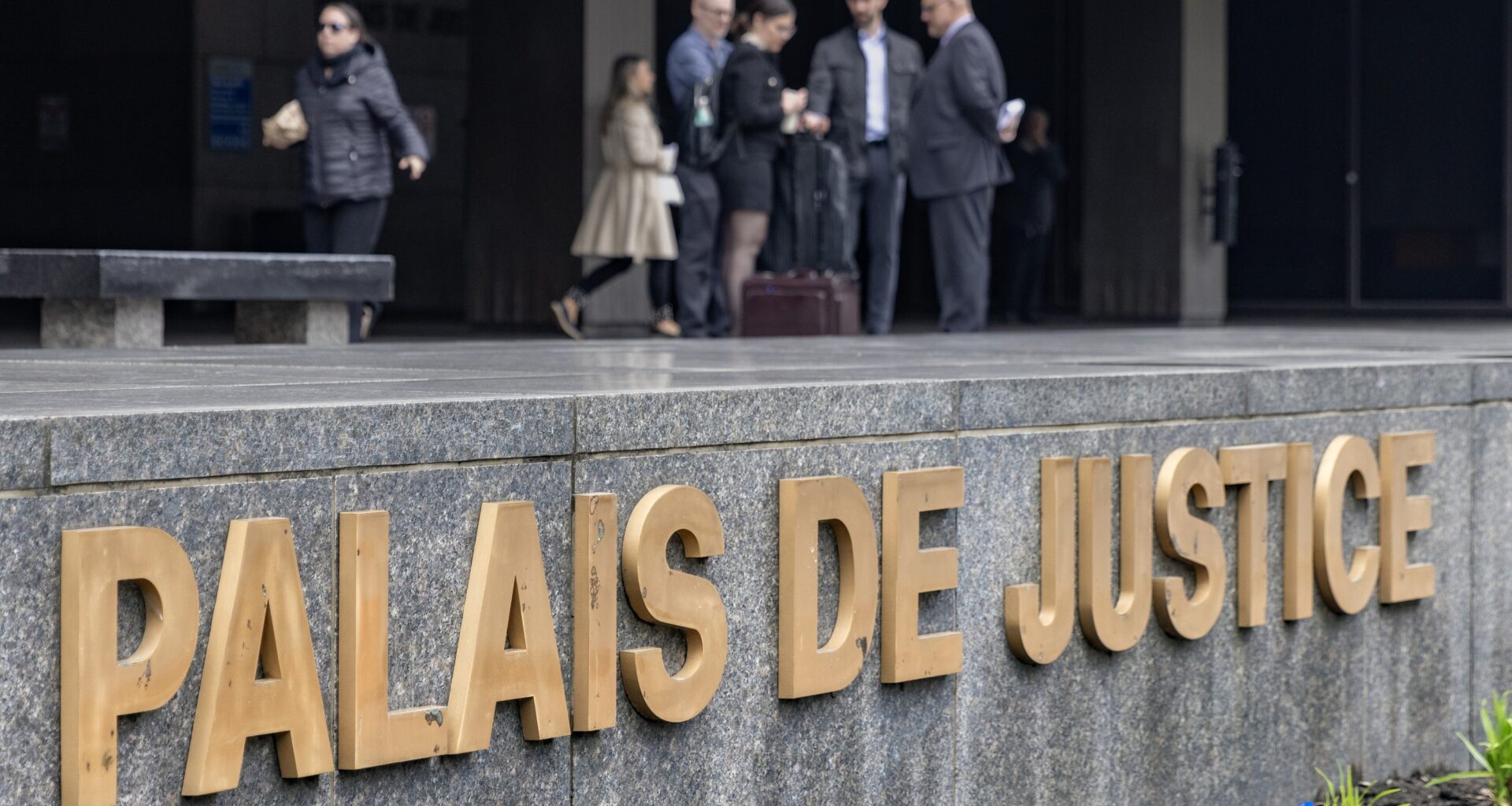
On Monday, during a hearing at the Montreal courthouse before Quebec Court Judge Karine Giguère, prosecutor Jean-Christofe Ardeneus argued the only option to sentence Lefebvre is to have him declared a dangerous offender and leave it to the Parole Board of Canada to determine when he can be released again, if ever.
The prosecutor noted that Lefebvre was designated a long-term offender before he went on his crime spree in 2020. He was serving time inside the penitentiary in Port Cartier when he automatically qualified for a statutory release. He was serving an eight-year, eight-month sentence for a series of crimes, including armed robbery, and the Parole Board of Canada ordered that he reside at a halfway house as a means to manage the risk he represented to public safety.
With the long-term offender designation, surveillance conditions could have been imposed on Lefebvre for a period of 10 years after the prison sentence expired, which it did last year. The type of designation requested by the Crown on Monday is harsher as it would place no limit on how long Lefebvre can be incarcerated.
Ardeneus noted on Monday that Lefebvre was trusted enough to board the plane on his own, but he opted instead to reoffend through violent crimes at the first opportunity.
“If there is not a direct control on Mr. Lefebvre, the risk materializes and in our case it materialized immediately. In fact, the moment the people responsible for his detention (in 2020) left him on his own with the responsibility to take the plane (he went illegally at large),” the prosecutor said. “It was irrational to have done it, but it happened, and it shows that there are no barriers that block him. If there is no one watching him, where eyes are constantly on him, and I mean literally on him, (he will reoffend). The long-term offender designation did not stop him.
“On the very first day, the first opportunity, he stepped away from his obligations with the carceral system and went on to commit crimes in different places in Quebec.”
According to court records, Lefebvre carried out two break-ins in Sept-Îles before he arrived on his long journey to Montreal. On Nov. 14, 2022, he pleaded guilty to both of the break-ins and a two-year prison term was attached to the eight-year, eight-month sentence that expired last year.
The prosecutor also argued Monday that Lefebvre has shown no empathy for the bank and jewelry store employees that he threatened with a fake firearm in 2020.
The prison term he was serving in 2020 was the fifth sentence he had to serve inside a federal penitentiary.
A summary of the most recent decision made by the parole board in Lefebvre’s case, made last year, describes how: “information in (Lefebvre’s) file shows that your criminal behaviour began as a teenager. Since then, you have demonstrated persistence and versatility in committing a variety of crimes,” the author of the summary wrote while noting Lefebvre has been convicted of more than 200 offences. “The board is concerned not only about the volume of crimes, but also that there are several violent crimes such as possession of a restricted weapon, assault against a police officer, threats, armed robbery, use of an imitation weapon, robbery, extortion and assault with a weapon.”
Defence lawyer David Petranic told the court that the prosecution’s argument that his client has shown no empathy for the victims is based on a statement Lefebvre gave to a Montreal police investigator after his arrest in 2020.
“The video (of the statement) is of an institutionalized person talking to a police officer. The police officer wasn’t indicating (a reaction). He seemed to want to talk to (Lefebvre) while he talked about his tendencies (including a serious drug problem),” the defence lawyer said. “Mr. Lefebvre was expressing himself on certain things back in 2020. It was six years ago following an arrest.”
Petranic argued the dangerous offender status is not necessary for his client and that a fixed sentenced of between 10 and 12 years would be more appropriate.
“The indeterminate sentence constitutes the most serious sentence, sometimes even more harsh than a life sentence given its indeterminate character. It is the most extreme form of detention,” the attorney said.
The judge is scheduled to make her decision on the sentence early in August.