
The scion of wealthy Jewish merchants, Fernand Ochsé hosted literary salons that exemplified the elegance of Paris’s beau monde in the years between the First and Second World Wars.
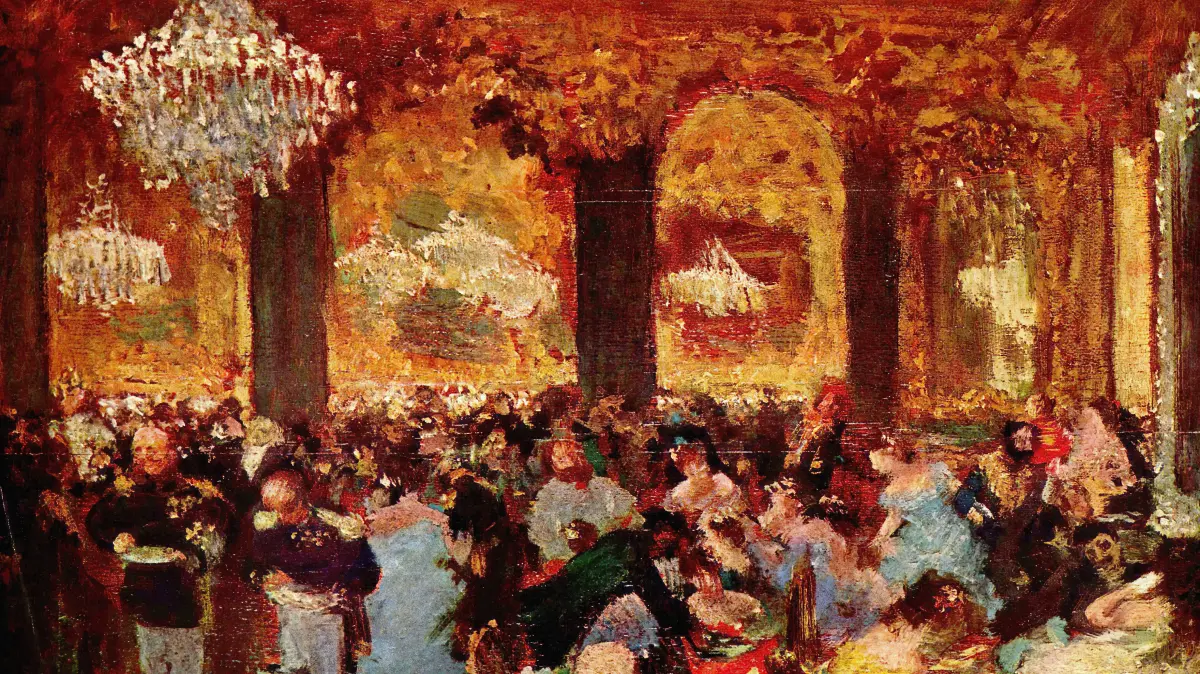
A passionate art collector, he bought Edgar Degas’s Dinner at the Ball in 1919. The impressionist’s depiction of a glittering 19th-century Parisian ball, with revellers dissolved into shimmering colour and light beneath grand chandeliers, would have resonated with Ochsé.
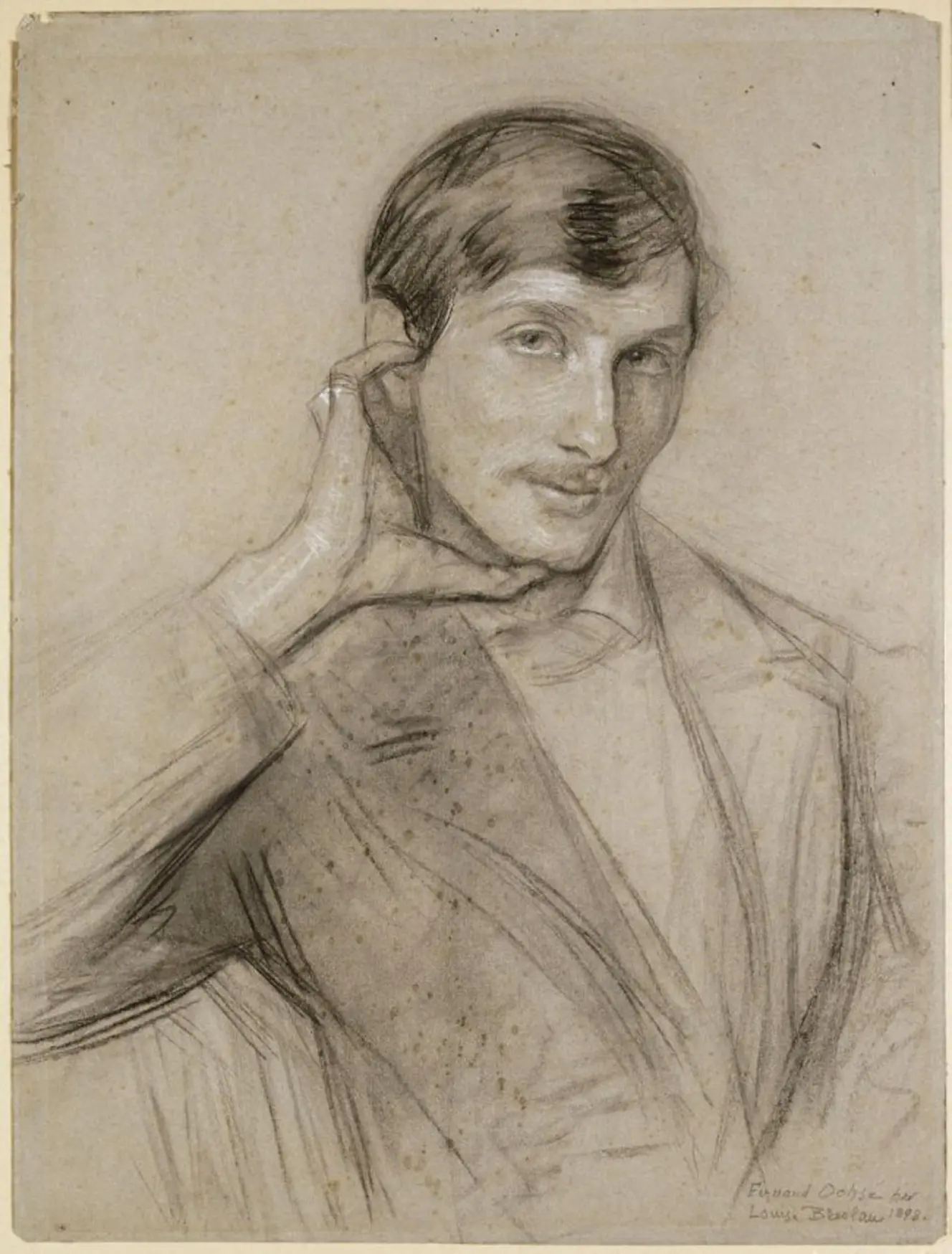 Fernand OchséAlamy
By 1941, three years before Ochsé and his wife, Louise, were deported to Auschwitz and murdered there, the painting had passed into the collection of Maurice Coutot, a Parisian genealogist, in circumstances that remain unclear.
Coutot consigned it to Galerie Brame in Paris, where it was sold to Kurt Martin, the Nazi-appointed director of the state art museum in Karlsruhe.
Dinner at the Ball was among more than 100,000 artworks identified after the war as having been plundered by the Nazis or forcibly sold to France’s wartime occupiers.
It is now on display at the Musée d’Orsay in Paris in a room, to be inaugurated on Tuesday, that is devoted exclusively to art suspected of having been looted or acquired under duress by the Nazis.
France recovered about 60,000 of the artworks looted during the war. Three quarters of them were restituted to the owners or their heirs, but the owners of about 15,000 works could not be identified.
Most of them were sold by the French state in the Fifties, except for about 2,200 paintings, sculptures and objects judged to be of particular artistic or historical importance. These were entrusted to national museums as “MNR works”, Musées nationaux récupération, while researchers tried to trace their provenance.
Investigations have so far failed to identify the original owners of the 12 paintings and one sculpture exhibited in Orsay’s new gallery, which is called To Whom Do These Works Belong?
The museum has assembled a team of six provenance investigators, who will spend the next three years trying to identify the families who once owned the works.
In all, the Musée d’Orsay holds 225 artworks that may have been looted by the Nazis. Those normally kept in the museum’s storerooms will be rotated with those in the new gallery to give them greater public exposure in the hope that the descendants of the original owners may come forward.
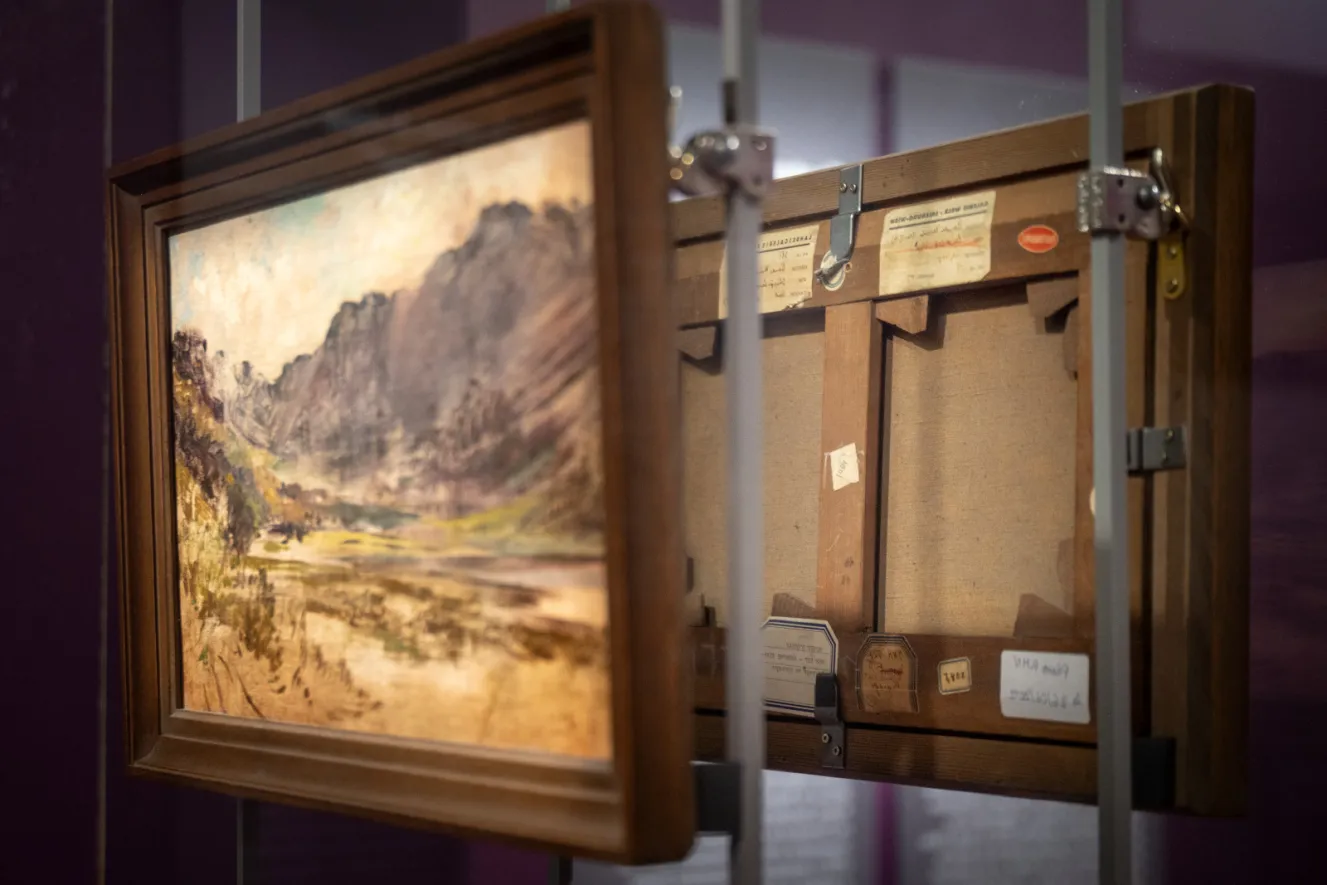 Musee d’Orsay
Eight decades after the war ended, it seems a faint hope.
Inès Rotermund-Reynard, a provenance researcher at the museum, said: “Many families never returned from the concentration camps.”
Even so, David Zivie, who heads the French culture ministry’s mission for the research and restitution of art looted between 1933 and 1945, said it was still possible to identify some of the families concerned.
“Thanks to digitised records and online tools, we’ve made a lot of progress in the past 15 years,” he said. “We have 30 cases pending that will probably lead to restitutions.”
The gallery and the investigations team are funded by a €1 million donation from the American Friends of the Musée d’Orsay.
Elizabeth Kehler, chair of the organisation’s board, said: “It’s never too late to find the descendants of the original owners. Americans are very excited about this project and we’re hoping for more restitutions.”
Annick Lemoine, the director of the Musée d’Orsay, said any works proven to have been looted and whose original owners could be identified would be returned to their heirs.
“This new room is intended to exhibit these works and also to make public the questions they raise and the current investigations, revealing their uncertainties as well as the progress made,” she said.
Many artworks were returned to their rightful owners or their heirs in the Forties and Fifties, but another wave of restitutions followed the fall of the Berlin Wall in 1989. A reunified Germany returned artworks plundered from France that had been held for decades in communist East Germany.
One of the most striking paintings in the Orsay exhibition is Pierre-Auguste Renoir’s 1876 portrait Madame Alphonse Daudet. Julia Daudet, a poet and the wife of the novelist Alphonse Daudet, died in 1940. The following year the painting was sold to the Cologne Museum by the Paris art gallery Renou et Colle. Its earlier ownership has not been established.
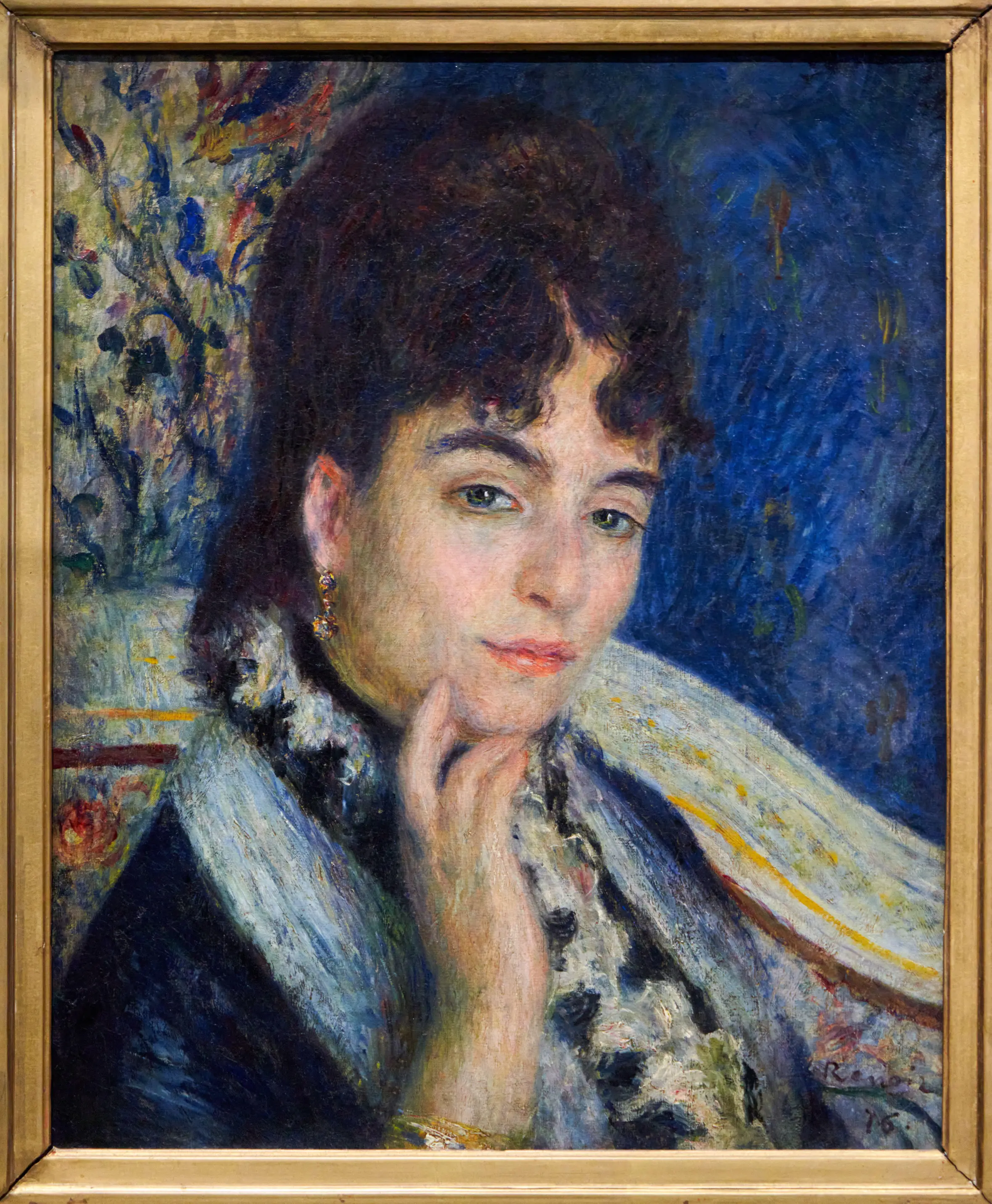 Renoir’s Madame Alphonse DaudetAlamy
Another painting on display, La Montagne Sainte-Victoire, thought to have been painted between 1885 and 1887 and long attributed to Paul Cézanne, also has a troubled history.
It once formed part of the prestigious collection of Georges Viau and was sold at auction in Paris in 1942 to a German art dealer for the high price of five million francs.
It was returned to France after the war, but remained in the care of the state because a curator at the Louvre judged it to be a forgery. He insisted that it should not be allowed to re-enter the art market.
Recent studies have cast doubt on his verdict and suggested that it may in fact be an authentic Cézanne.
The Montagne Sainte-Victoire was one of his favourite subjects; he painted it about 80 times in oil and watercolours.
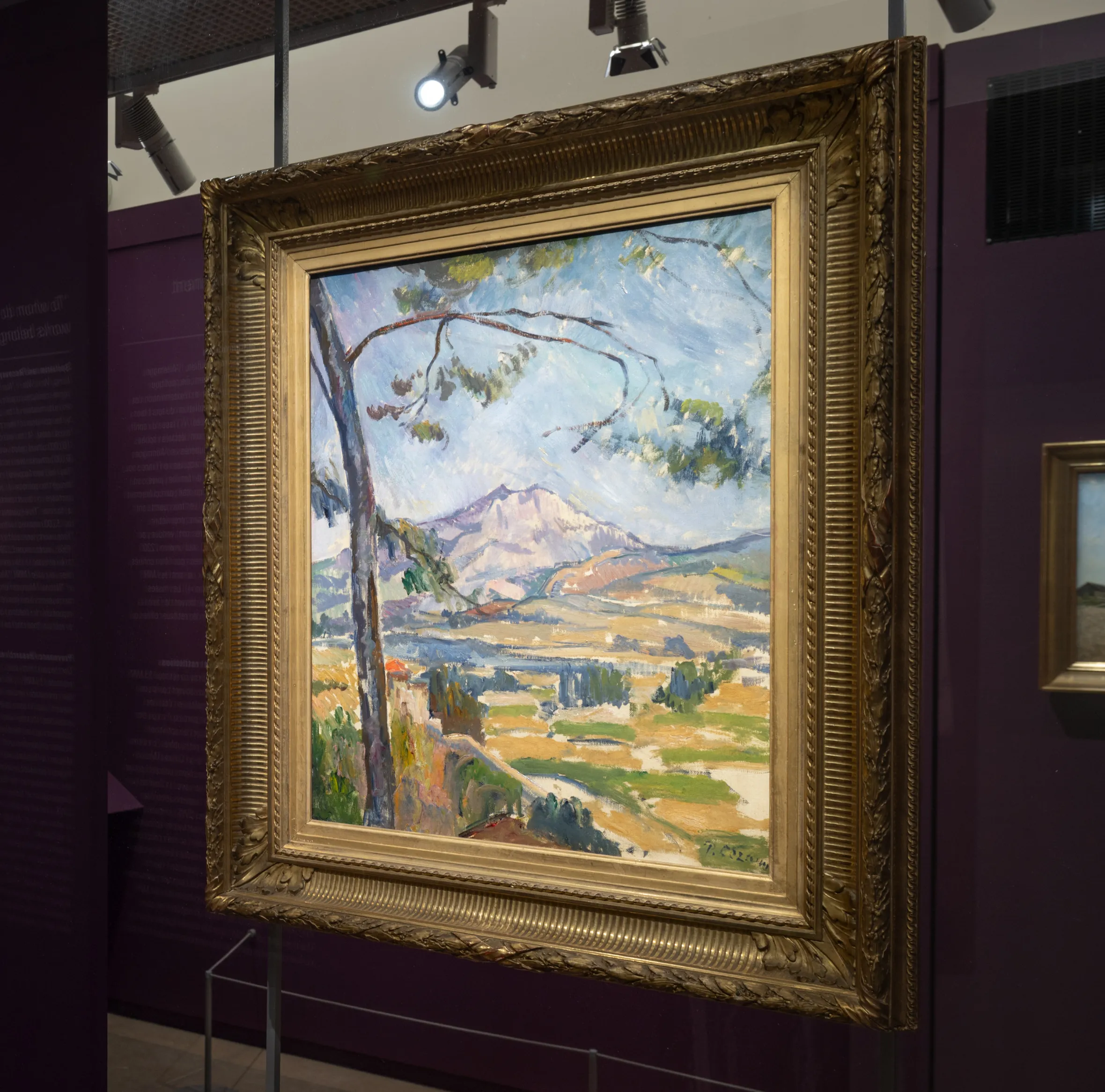 La Montagne Sainte-VictoireMusee d’Orsay
In the Orsay gallery, it is listed as a Cézanne with a question mark beside his name, a sign of how much about these works remains unsettled.