
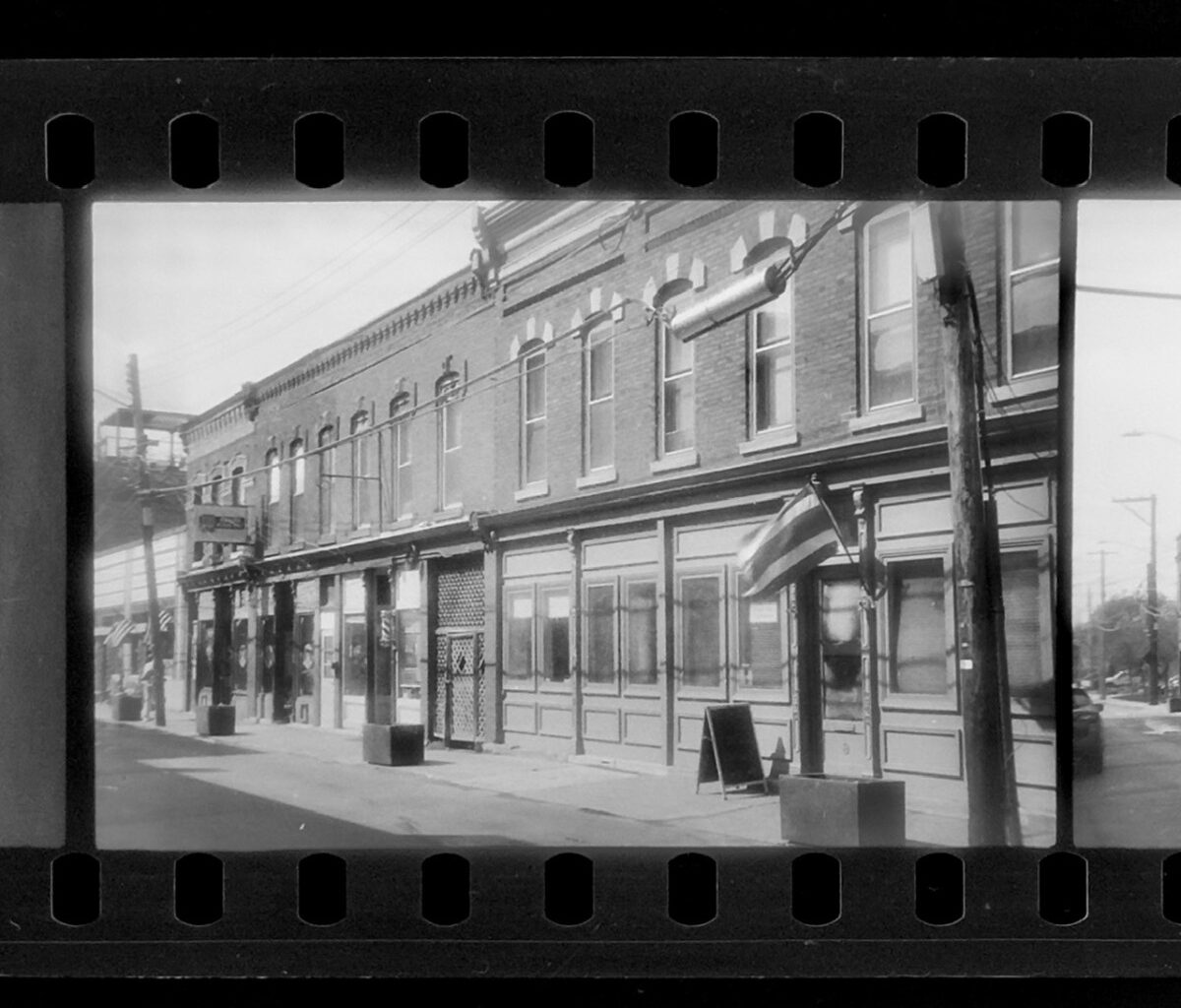
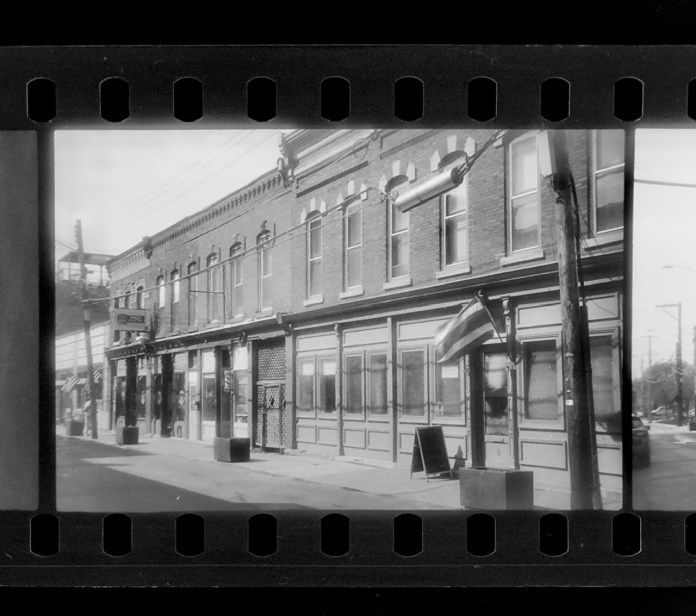
 The film is intended to look as close as possible to the fine-grained, low-ISO films used in the 1920s (All pics: Courtesy Scully & Osterman)
In a basement in Rochester, New York, a husband and wife are creating the ultimate accessory for old-school Leica shooters – a black-and-white film like 1920s photographers would have shot.
Mark Osterman, a former process historian at the George Eastman Museum in Rochester and his wife France Scully Osterman, decided to mark the 100th anniversary of the first Leica 35mm camera by making a 1920s-style film entirely from scratch.
They have turned their basement into a miniature film factory where they are making their own emulsion – and then coating acetate film to create a one-off vintage black-and-white film.
“I bought a 1928 Leica I camera early in 2025. Only then did I realise that the Leica camera was actually introduced 100 years earlier and that Leica was celebrating the centennial,” Osterman told Kosmo Foto.
A treasure trove of old film-making equipment has allowed the pair to turn their Rochester basement into a miniaturised film factory. “We actually own a rare unique film coating machine that was built in the research lab at Polaroid. It was eventually sold to the Rochester Institute of Technology (RIT). When RIT ceased teaching emulsion/film research they gave me the machine. It coats 5-inch wide acetate with lengths varying, but we generally coat 8 feet. It came with a 35mm slitter so we get 24 feet of film in a batch.
“Eastman Kodak also gifted us the rare Bell and Howell perforating machine .. the same type used in the earliest sprocketed films used for cinema.
“So … we can make real film just on a small scale.”
In the images below, you can see how the film negative looks compared to a 1925 film.


The film the Ostermans produce is extremely slow compared to modern emulsions, and is based off a recipe they produced more than 20 years ago called MO-1880. “It was ISO 1-2. Then we do an additional sensitisation with heat and sulphur to create the emulsion for this project we call MO-1925. This is ISO 8-12, just as used in the first Leica cameras.”
The centenary of the first Leica, designed by Ernst Leitz’s Oskar Barnack, was the perfect excuse for the Ostermans to embark on this film-making journey. “Before 35mm cameras you had to make a large negative to make a large print. Oscar Barnack invented the Leica camera to use conventional motion picture film to make a small negative used to make an enlarged print.
“Incidentally a well known Leica collector (now deceased) gave us on loan the rarest of all 35mm film… an actual roll shot and developed by Oscar Barnack. With this we could compare our results. We will present that roll to the Leica company in June when we go to demonstrate our film.”
(The film belonged to Rolf Fricke, which had been instrumental in setting up Leitz Canada. He had a number of early films in his collection taken by former Leitz employee Dr Henri Dumur, which included a roll shot in 1925 – you can read more about this in an interview Osterman gave to Rust Magazine.)
Veteran Leica owners salivating at the prospect of getting their hands on this unique Osterman emulsion should note that the film will not be available for sale.
However, a documentary film is being made which will tell the story of the film’s development. The Ostermans are currently working with cinematographer Gerardo Puglia on a short film chronicling their efforts to make the 1920s-style emulsion. They have set up a GoFundMe campaign to raise the funds necessary to finish the film, which includes a one-minute clip from the film showing the Ostermans creating the 1920s emulsion in the red-lit laboratory.
The documentary will feature the 1928 Leica I camera. “Additionally we will be using the original glass drum visual developing apparatus from 1925, and the first variable size enlarger introduced by Leitz Leica for the documentary.”
Osterman expects the film to be shown at various international film festivals in the coming year.
 I’m Kosmo Foto’s founder and editor.
I’m a New Zealander who has been living in London since the mid-1990s, shooting film seriously since the year 2000. Kosmo Foto was launched in 2012 and has since become a film brand, with the release of my first films Kosmo Foto Mono 35mm (2017) and Kosmo Foto Mono 120 (2019).
I’m doing everything I can to promote film photography in the 21st Century, and help it survive and thrive. If you want to write something for Kosmo Foto, please drop me a line at [email protected].
Latest posts by Stephen Dowling (see all)
Related