

Listen to this article
Estimated 4 minutes
The audio version of this article is generated by AI-based technology. Mispronunciations can occur. We are working with our partners to continually review and improve the results.
A review of New Brunswick’s Clean Water Act began Tuesday with forestry representatives in support of its current form, and others calling for stronger protections.
The review of the 37-year-old law is one of two promised by the Susan Holt government, coming after a similar review into the Clean Air Act by the legislature’s environmental stewardship committee in the fall.
Holt’s election platform included a promise to “guarantee that everyone in New Brunswick has the right to clean air and water” by updating both clean air and water laws.
But during the earlier clean air review, J.D. Irving Ltd. representatives warned that overly strict environmental protections could come with an economic cost.
WATCH | ‘Water is arguably our most valuable resource’: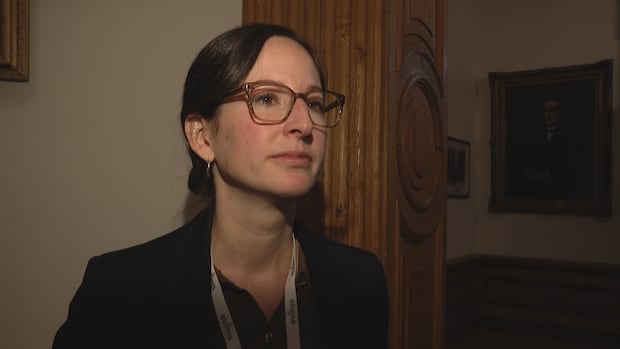
Legislative committee begins review of Clean Water Act
Experts, advocates and industry weigh in on changes that would guarantee the right to clean water in New Brunswick
J.D. Irving was also part of Tuesday’s hearing about clean water. Jason Limongelli, vice-president woodlands, calling for the act to remain the same.
“Generally speaking, OK, if it’s working well in that regard, don’t change something that’s doing well and doing what’s intended,” Limongelli said to reporters after the hearing.
But Richelle Martin, a lawyer with East Coast Environmental Law, appeared at the hearing to propose 11 ways to strengthen the act.
“Water is arguably our most valuable resource,” she said. “It’s vital to all life, yet there’s currently no legal right to clean water in New Brunswick.”
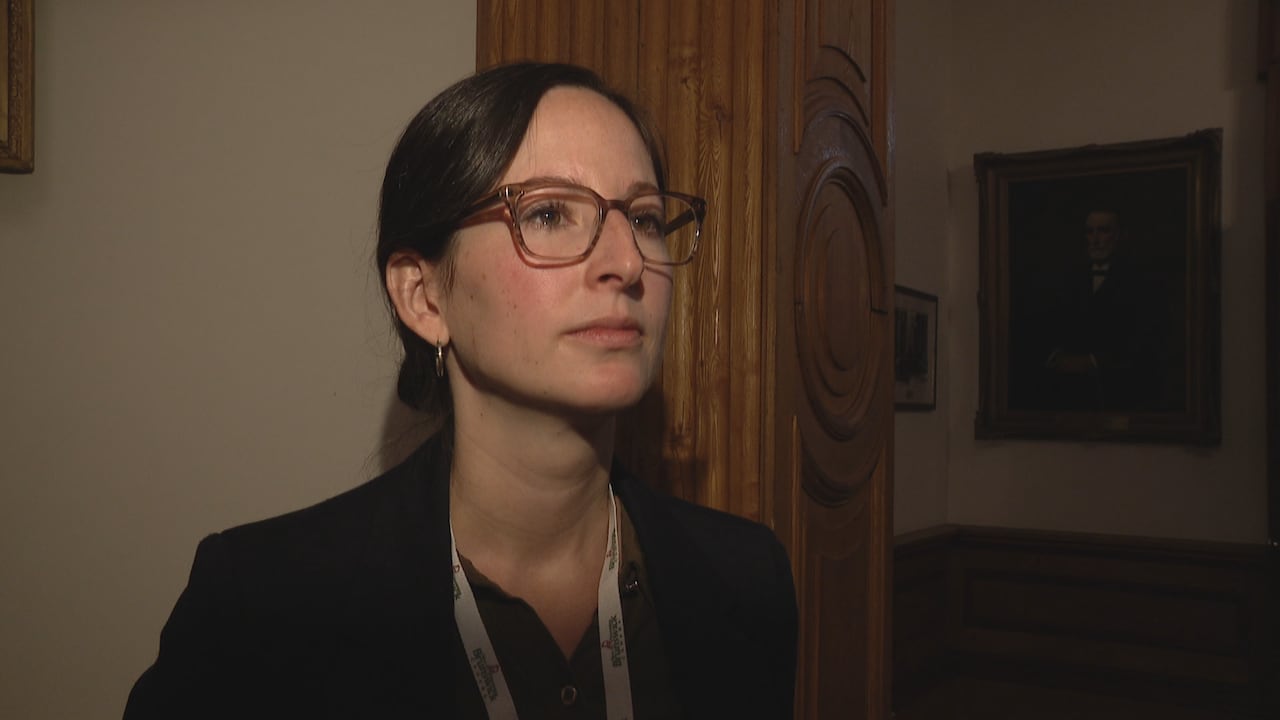 Richelle Martin, a lawyer with East Coast Environmental Law, says the review is an opportunity for government to follow through on its election promise. (Tara King-Stewart/CBC)
“This can result in unequal access to water and clean water.”
Martin noted that in northern New Brunswck, Charlo’s municipal water supply was found to have high levels of pre- and polyfluoroalkyl substances, or PFAS — chemicals that don’t break down easily but can cause health problems.
“I think the government is taking steps to address that,” Martin said. “But if they weren’t, and they didn’t have a right, then they could be left with no remedies in that case.
“So having legally protected rights is really crucial for something that’s so vital as clean water is.”
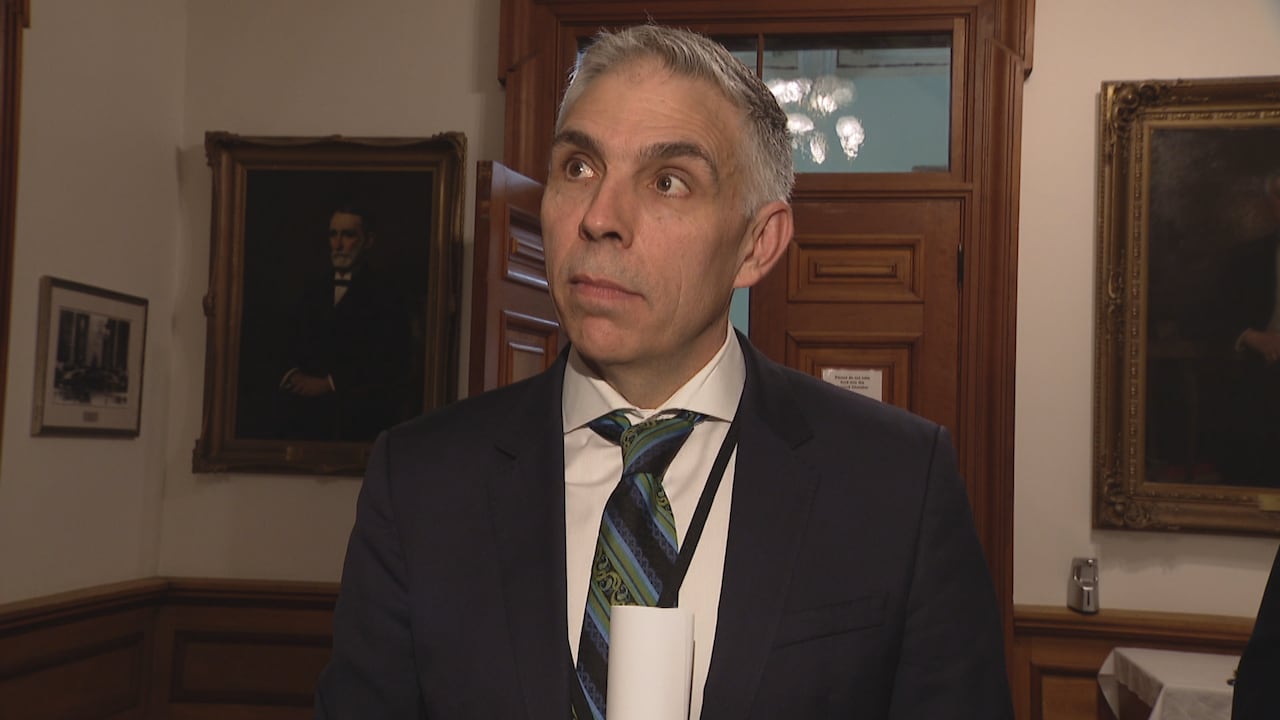 Jason Limongelli, J.D. Irving Ltd. vice-president woodlands, says the act is functioning well as it is. (Tara King-Stewart/CBC)
Limongelli said J.D. Irving doesn’t have a formal position on legislating a right to clean water, but questioned whether the move is necessary.
“We take it extremely seriously, in terms of our operations,” Limongelli told reporters.
“Whether someone wants to make that a right. I think that it is our right to have clean water or clean air. Does it change anything as a law? I’m not sure.”
Asked about the impacts such a change would have on the company, Limongelli said he would have to see the legislation and evaluate it.
Waterway buffers as protected areas
The committee also heard discussion on whether the government should designate currently required buffer zones around waterways as protected areas.
Under the current rules, forestry companies must leave a 30-metre buffer between operations and waterways, but some selective harvesting is allowed within the first 15 metres.
Speaking in committee, Natural Resources Minister John Herron questioned whether those buffer zones should count toward the provincial target to increase its conservation lands from 10 to 15 per cent.
Herron asked witnesses to weigh in on the idea, which he said had been raised by department staff.
It’s also been raised by Andrew Willet, J.D. Irving’s director of sustainability and Indigenous relations, as part of a since-shelved proposal to log conservation lands in exchange for protecting areas with social or tourism value.
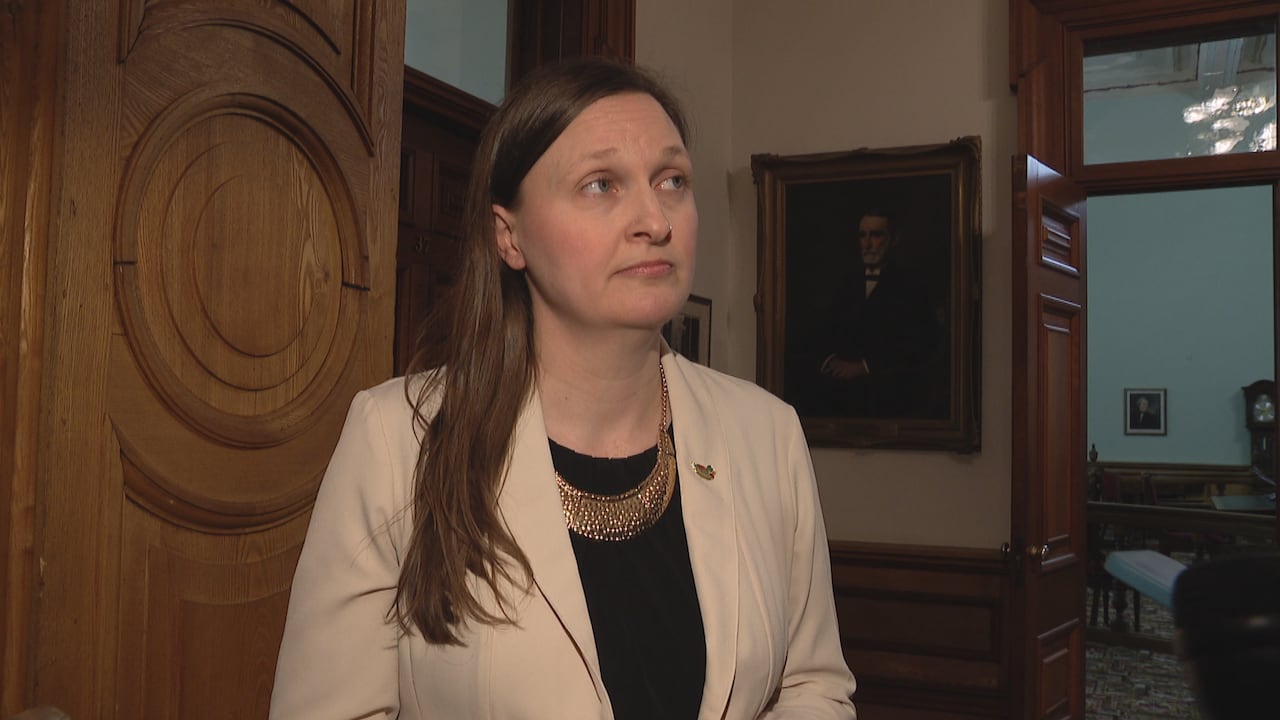 Green Party MLA Megan Mitton, a member of the committee, says protected-area designation should be guided by ecosystems rather than buffer zones. (Tara King-Stewart/CBC)
While Martin was unsure whether buffers should count toward conservation targets, J.D. Irving representatives supported the idea.
Limongelli said the move would benefit J.D. Irving in a “reputational” sense, because it would alleviate public concerns about the company operating near wetlands.
“It’s a win for the citizens … who will feel more comfortable with the whole thing, and it’s a win for us,” he said in an interview.
But Green Oarty MLA Megan Mitton, who sits on the committee, said the priority should be to expand protected areas based on ecosystems.
“I’m concerned about designating [buffer zones] as protected areas, when they’re really just small riparian zones along the water,” she said.
“It’s not considering where the animals need to move … 30 metres is not very big, in terms of habitat.”
Herron was not available for an interview on Tuesday.