
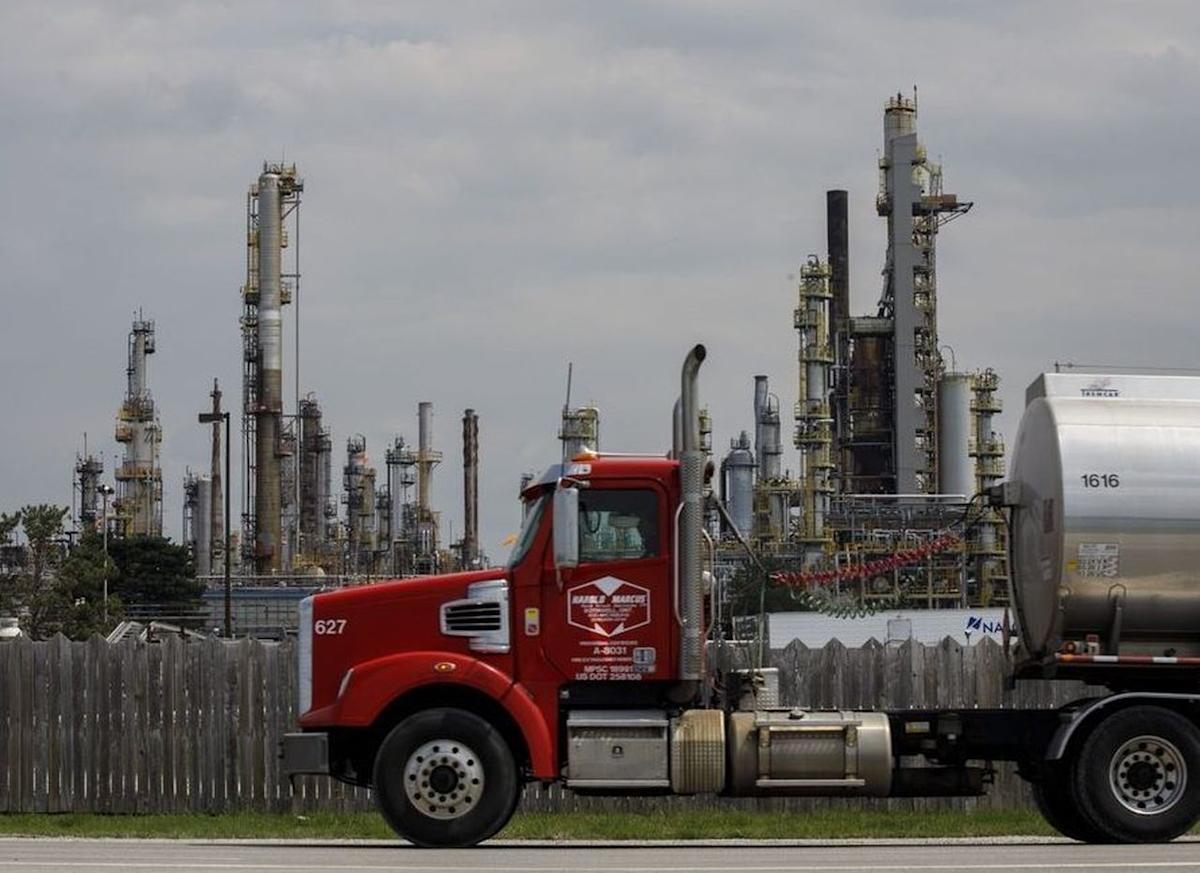
 Suncor Energy Inc., posted a profit of $2.1 billion in the first quarter of the year, up about 24 per cent from the same period last year, driven by record refined fuel sales and higher oil prices. (Credit: Cole Burston)
Suncor Energy Inc. chief executive Rich Kruger said regulatory reform is needed to spur investment in Canada’s oilpatch, but said there is “growing recognition” among governments and Canadians of the sector’s importance.
“The conversation is moving from whether Canada should more fully develop its resources to how Canada should do this,” Kruger said Tuesday at the oilsands major’s annual general meeting.
“But it will take national resolve to grow and compete globally with fiscal and regulatory policies to attract capital growth.”
Kruger’s remarks come as stronger crude prices — triggered by war in the Middle East — are lifting earnings across Canada’s energy sector. It also comes as the industry is pushing back against federal regulations and carbon policies it says are making the sector uncompetitive.
The country’s largest integrated oilsands producer reported first-quarter profit of $2.1 billion Tuesday, up about 24 per cent from the same period last year, driven by record refined fuel sales and higher oil prices.
Suncor has already signalled it intends to return a significant portion of the windfall to shareholders, having announced plans in March to hike monthly share buybacks by almost 30 per cent.
The Calgary-based company’s adjusted funds from operations — Suncor’s preferred cash-flow metric and a measure of cash available to pay dividends — topped $4 billion in the first three months of the year, up from $3.05 billion a year earlier.
Suncor reported record first-quarter upstream production of 875,000 barrels per day, an increase of 22,000 barrels per day compared to the same period last year, the company said Tuesday.
It also reported higher refinery throughput and set a new all-time quarterly record for refined fuel sales.
Canadian oil producers are reporting strong first-quarter results so far this earnings season, although the period reflects just one month of the higher prices seen since the U.S. and Israel first attacked Iran on Feb. 28.
Prices surged after the fighting effectively closed shipping traffic through the Strait of Hormuz, a critical chokepoint for roughly one-fifth of global oil and gas flows.
“Supplying growing levels of reliable, affordable and abundant energy is how we can strengthen at home and influence abroad,” Kruger said Tuesday.
More to come…