
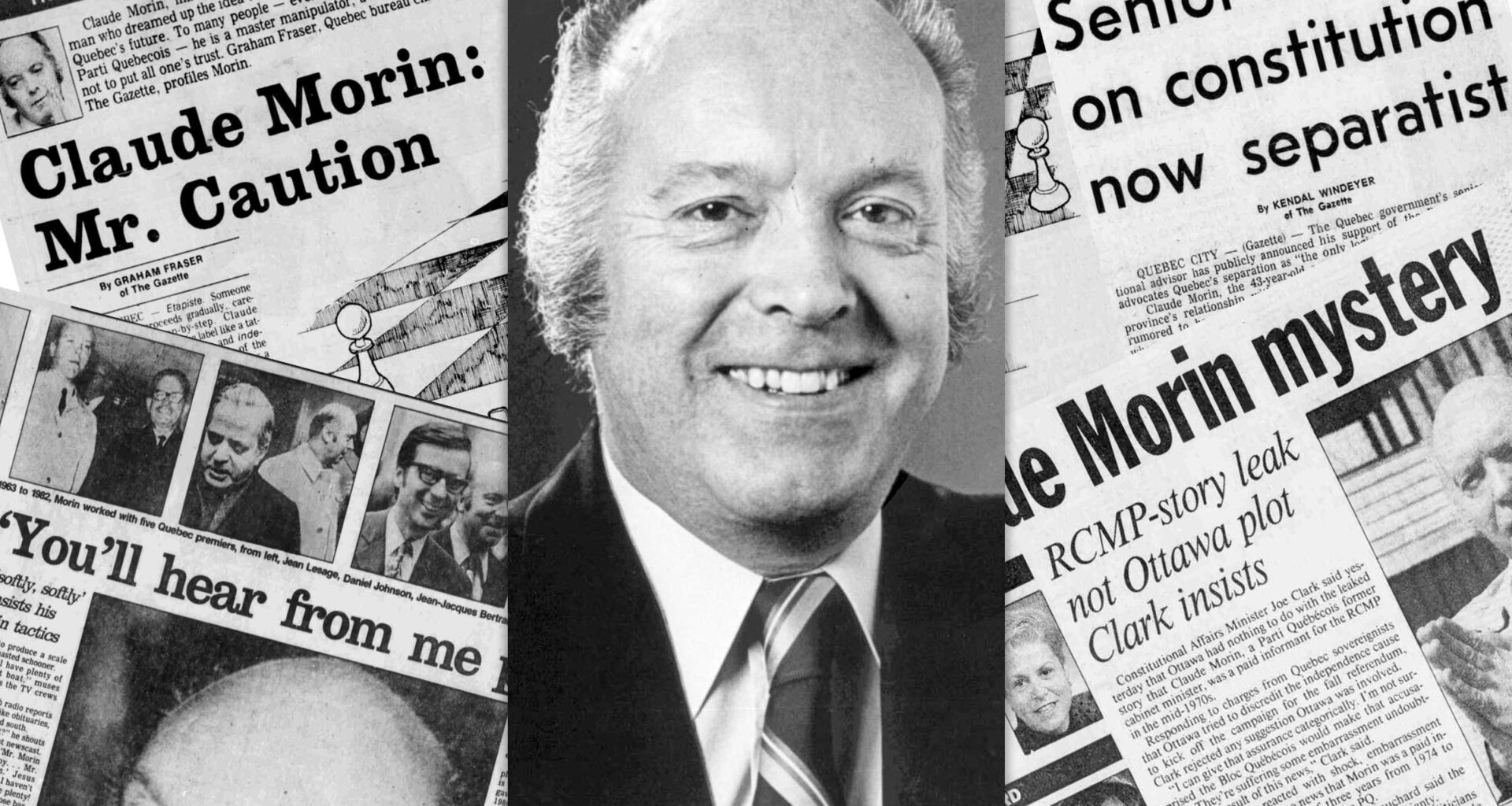
Claude Morin, a central but controversial architect of Quebec’s Quiet Revolution who served five premiers and later became a senior figure in the Parti Québécois, died Tuesday in Quebec City. He was 96.
His death was confirmed to The Gazette by one of his children.
A former professor, essayist and politician, Morin helped shape Quebec’s modern state as the province was redefining its identity and institutions.
Quebec Premier Christine Fréchette offered condolences to his family in a message posted on X. She wrote that he “marked Quebec during a pivotal moment in our history: the Quiet Revolution,” and describing him as “a man of intellect, an éminence grise behind major reforms.”
Mes condoléances à la famille et aux proches de M. Claude Morin. Il a marqué le Québec dans un moment charnière de notre histoire : la Révolution tranquille.
Membre du gouvernement de René Lévesque, il a été un homme de tête, une éminence grise derrière de grandes réformes qui… https://t.co/hR4Jhffze0
— Christine Fréchette (@CFrechette) May 5, 2026
PQ leader Paul St-Pierre Plamondon also posted on X, wishing condolences to Morin’s family and noting his “indelible mark on Quebec society.”
“It would be pointless to deny that shadows remain regarding Claude Morin’s legacy within the Parti Québécois,” he added. “But I wish to pay tribute to the man who accompanied René Lévesque in his daily life for many years.”
Claude Morin a laissé une marque indélébile sur la société québécoise.
Il serait inutile de cacher que des zones d’ombre demeurent quant à l’héritage de Claude Morin au sein du Parti Québécois. Mais je tiens à saluer celui qui a accompagné René Lévesque dans son quotidien durant… https://t.co/MHdjLTbetc
— Paul St-Pierre Plamondon (@PaulPlamondon) May 5, 2026
Yet his legacy was complicated. For some, his reputation was tarnished by revelations that he had acted as an informant for the Royal Canadian Mounted Police in the 1970s. It was a role he maintained as a way to better understand Ottawa without harming Quebec’s interests.
Morin was born in 1929 in Montmorency, near Quebec City. He studied economics at Université Laval before earning a graduate degree at Columbia University. He then returned to Quebec in the late 1950s with his American wife, Mary.
But that academic path then shifted in the early 1960s, when he was recruited to write speeches for Liberal Premer Jean Lesage.
By 1963, he had entered government as deputy minister of federal-provincial affairs, helping steer relations during a period of rising nationalist sentiment encapsulated by the slogan “Maîtres chez nous.”
He went on to play a role in major reforms, including efforts tied to the nationalization of electricity, and remained a key adviser through the governments of Daniel Johnson, Jean-Jacques Bertrand and Robert Bourassa.
He joined the Parti Québécois in 1972 at the invitation of René Lévesque, becoming both a strategist and later minister of intergovernmental affairs. A proponent of “gradualism,” he argued that Quebec should pursue sovereignty through a referendum after securing electoral legitimacy.
As minister, he was deeply involved in the lead-up to the 1980 referendum on sovereignty, which ultimately failed, with 59.56 per cent voting “No.”
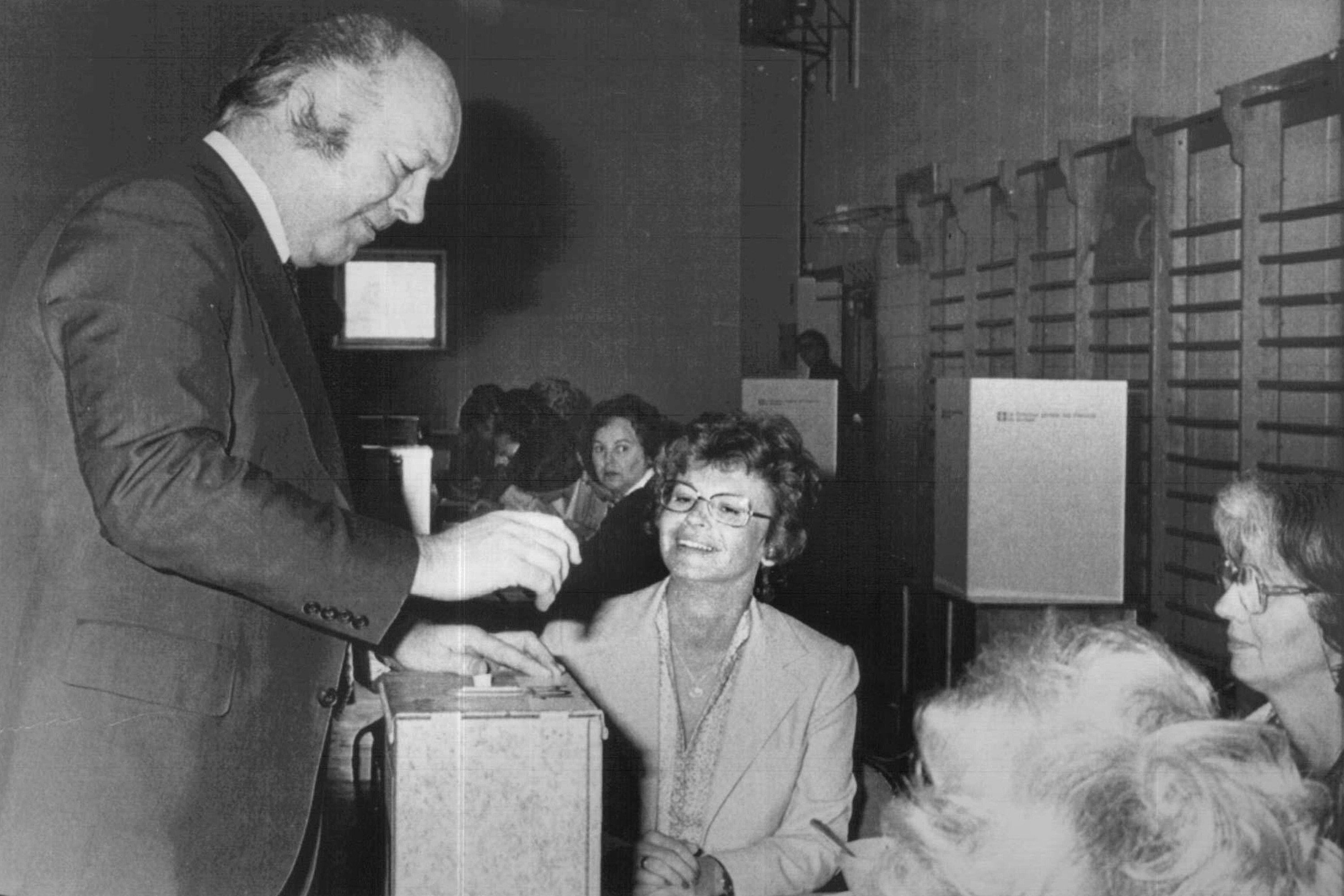 Claude Morin votes in the 1980 Quebec referendum. Gazette file photo
He also played a role in managing Quebec’s external relations, seeking to limit foreign involvement in the referendum debate.
The following year brought another defining moment: the constitutional negotiations that culminated in the “Night of the Long Knives,” when the federal government and other provinces reached an agreement without Quebec’s consent.
Morin resigned from politics in December 1981, saying he had always intended to step down after the referendum.
His departure was also overshadowed by disclosures of his contacts with the RCMP, which divided colleagues. It left Lévesque reportedly stunned.
He later returned to academia at the École nationale d’administration publique. He also authored several books reflecting on his years in power and Quebec’s political evolution.
Morin is survived by his five children and their spouses, seven grandchildren, five great-grandchildren and two sisters.