
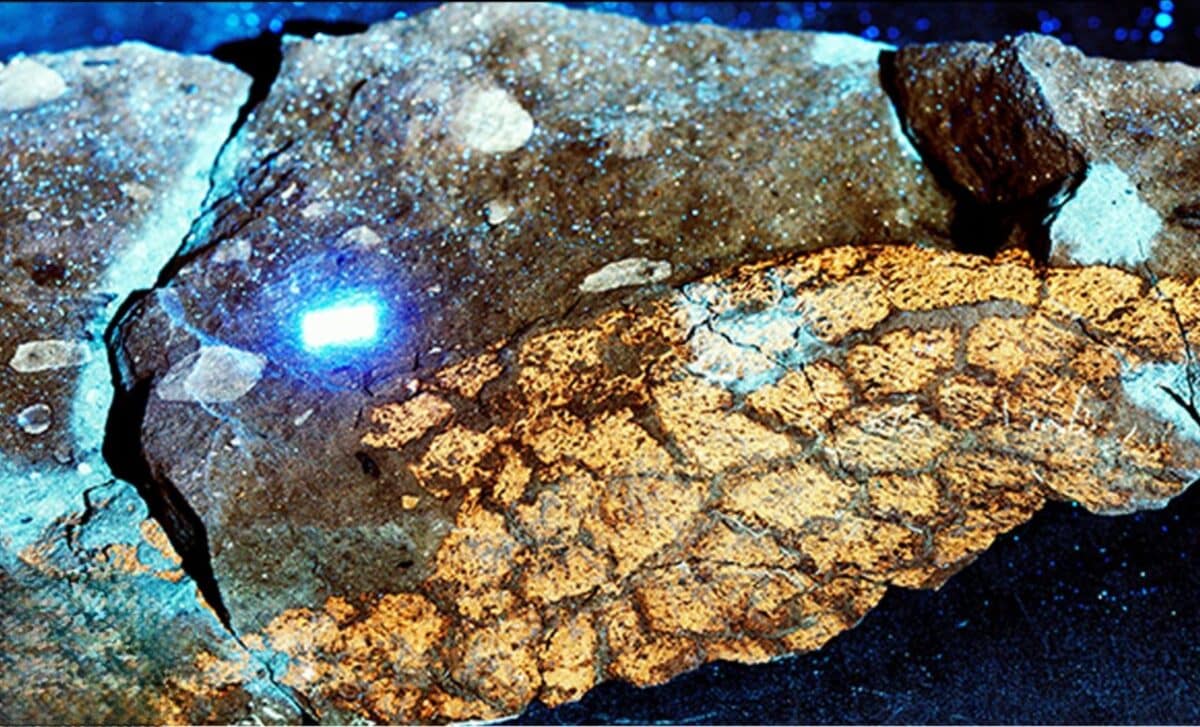
For years, scientists have been left guessing about the true appearance of dinosaurs, particularly when it comes to their skin color. Fossilized skin rarely survives the passage of time, and without it, most depictions of dinosaurs have been based on assumptions and educated guesses. For large, long-necked herbivores like Diplodocus, this meant imagining them as dull, grey or brown creatures. However, a recent discovery in Montana is now providing groundbreaking evidence that challenges these assumptions. Fossilized skin impressions from young dinosaurs have offered the first real clues about the color patterns of these ancient giants, suggesting that they may have had vibrant, speckled skin that helped them survive in a world full of predators. This study, published in Royal Society Open Science, marks a significant step forward in understanding dinosaur appearance and behavior.
The Fossil Discovery That Changed Everything
The Mother’s Day Quarry in Montana is renowned for its exceptional preservation of fossils, including the skin impressions of young Diplodocus dinosaurs. These fossils date back to the Late Jurassic period, around 150 million years ago. What makes this find particularly significant is the preservation of not just bones, but detailed skin impressions, which are incredibly rare in the fossil record. The site’s dry climate played a key role in the preservation process, likely dehydrating the bodies of these young dinosaurs before they were covered by mud and debris, which sealed their skin impressions in place.
This rare preservation allowed researchers to study the skin in unprecedented detail using cutting-edge scanning electron microscopes. What they found within the skin layers were small, microscopic structures known as melanosomes, tiny organelles that store pigment and give color to skin, hair, and feathers in modern animals. These melanosomes are crucial for understanding the color patterns of ancient animals, and the discovery of them in Diplodocus fossils is a game-changer in the field of paleontology.
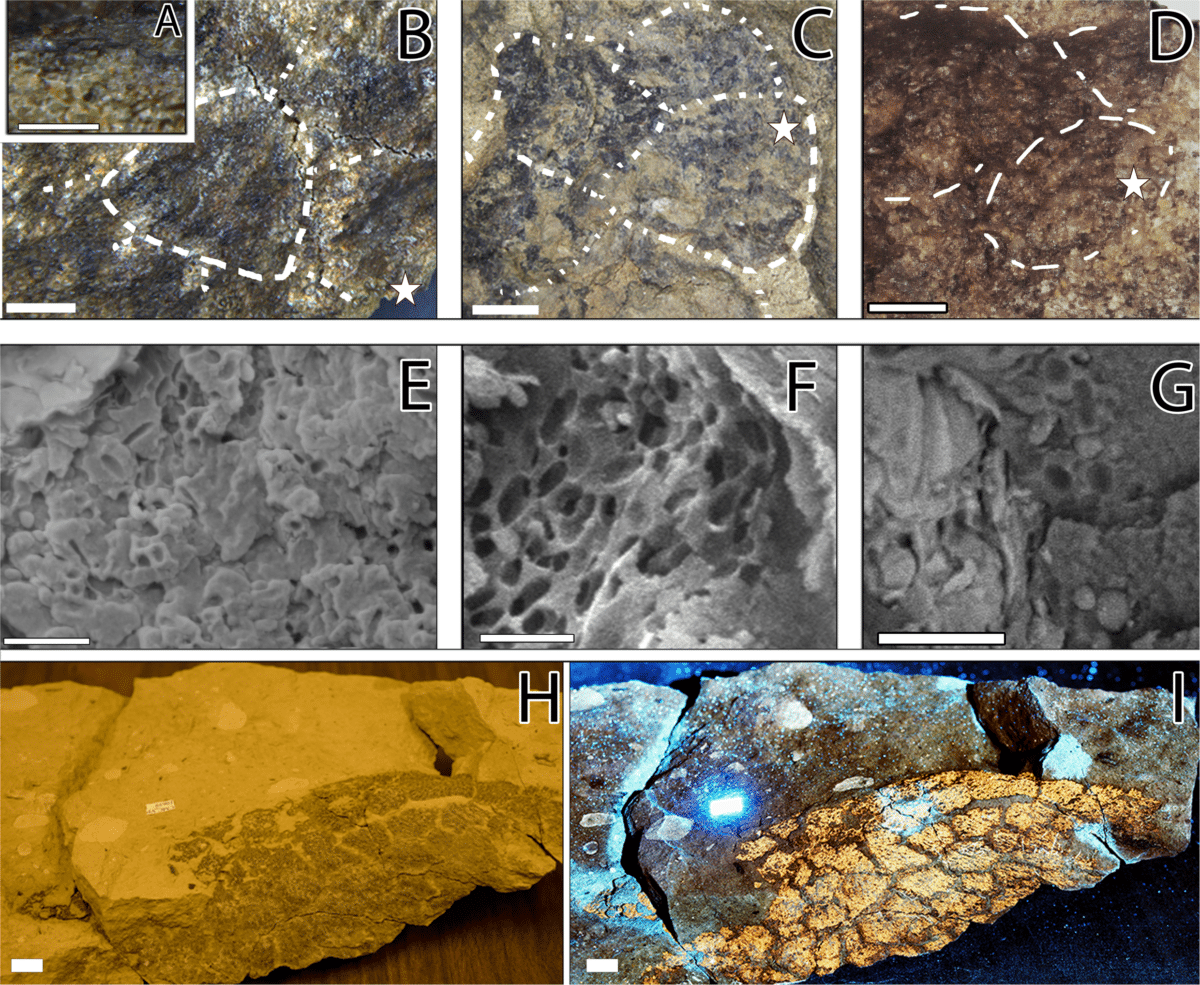 Sampled fossilized hexagonal scales outlined with dotted white lines, with correlated melanosome impressions and LSF image.
Credit: Tess Gallagher/University of Bristol, UK.
Decoding the Melanosomes: What They Tell Us About Dinosaur Color
The scientists behind the study, published in Royal Society Open Science, discovered two distinct types of melanosomes in the skin of young Diplodocus. The first type was oblong or oval-shaped melanosomes, which are commonly associated with darker colors such as black or brown in modern animals. These melanosomes are found in many reptiles and birds, and their presence in Diplodocus suggests that the dinosaurs may have had dark-colored skin. The second type of melanosomes was flat and disc-shaped, similar to those found in bird feathers, which are responsible for reflecting light and creating iridescence or lighter colors.
The combination of both melanosome types indicates that the skin of Diplodocus was not a solid color, but rather a patterned surface, likely speckled or spotted. These patterns could have helped young Diplodocus avoid predators by providing camouflage in their environment. The idea that camouflage patterns could have been a survival strategy is not new, many modern animals, from reptiles to mammals, rely on similar tactics to blend into their surroundings. This discovery provides new evidence that Diplodocus, once thought to be a dull, grey giant, was likely much more colorful and dynamic in appearance.
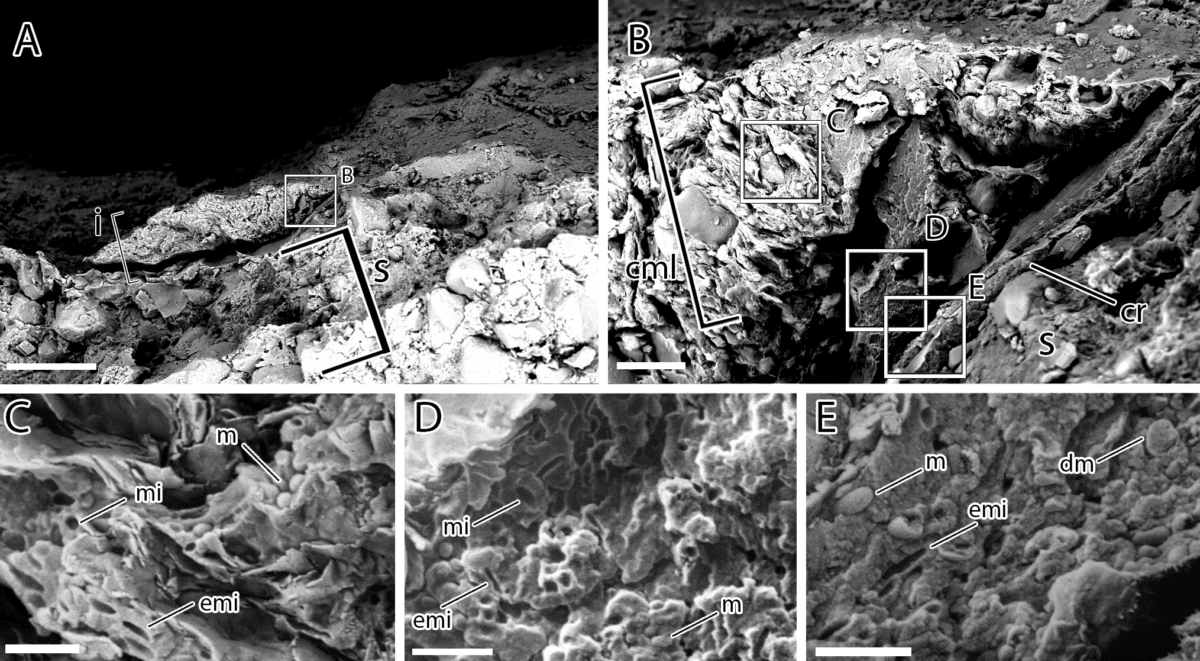 SEM images of a cross-section of a Diplodocus scale displaying melanosomes and clay mineral layering. (A) Cross-section of integument (i) on top of sediment (s). Scale bar represents 100 μm. (B) Close-up of integument showing a clear distinction in clay mineral layers (cml) overlying the carbon-rich layer (cr). Scale bar represents 10 μm. (C) Close-up of clay mineral layer displaying melanosome impressions (mi), elongate melanosome impressions (emi) and intact melanosomes (m). (D) Close-up of melanosome impressions in the partially displaced layer directly above the carbon-rich layer. (E) Close-ups of parts of the carbon-rich layer, displaying numerous melanosome impressions and elongate rod-like melanosome impressions, as well as a single disc microbody (dm). Scale bars for C–E all represent 1 μm.
Credit: Royal Society Open Science
What This Means for Our Understanding of Dinosaur Behavior
The implications of this discovery go beyond just skin color. The presence of distinct color patterns in the Diplodocus fossil suggests that these dinosaurs may have used camouflage to avoid predation, much like modern animals. Young dinosaurs, being smaller and more vulnerable to predators, would have benefited greatly from such camouflage. The speckled skin could have allowed the Diplodocus to blend into its environment, hiding from larger carnivorous dinosaurs that hunted in the same habitats.
This insight also changes the way scientists view dinosaur behavior. In the past, many believed that dinosaurs relied solely on their size and strength for survival. However, this study highlights that color patterns, which are linked to behavior such as hiding from predators, played an important role in the survival strategies of these ancient creatures. Understanding the connection between skin color and survival could open new doors for paleontologists, helping them draw more accurate conclusions about the lifestyles and habits of other dinosaur species.