
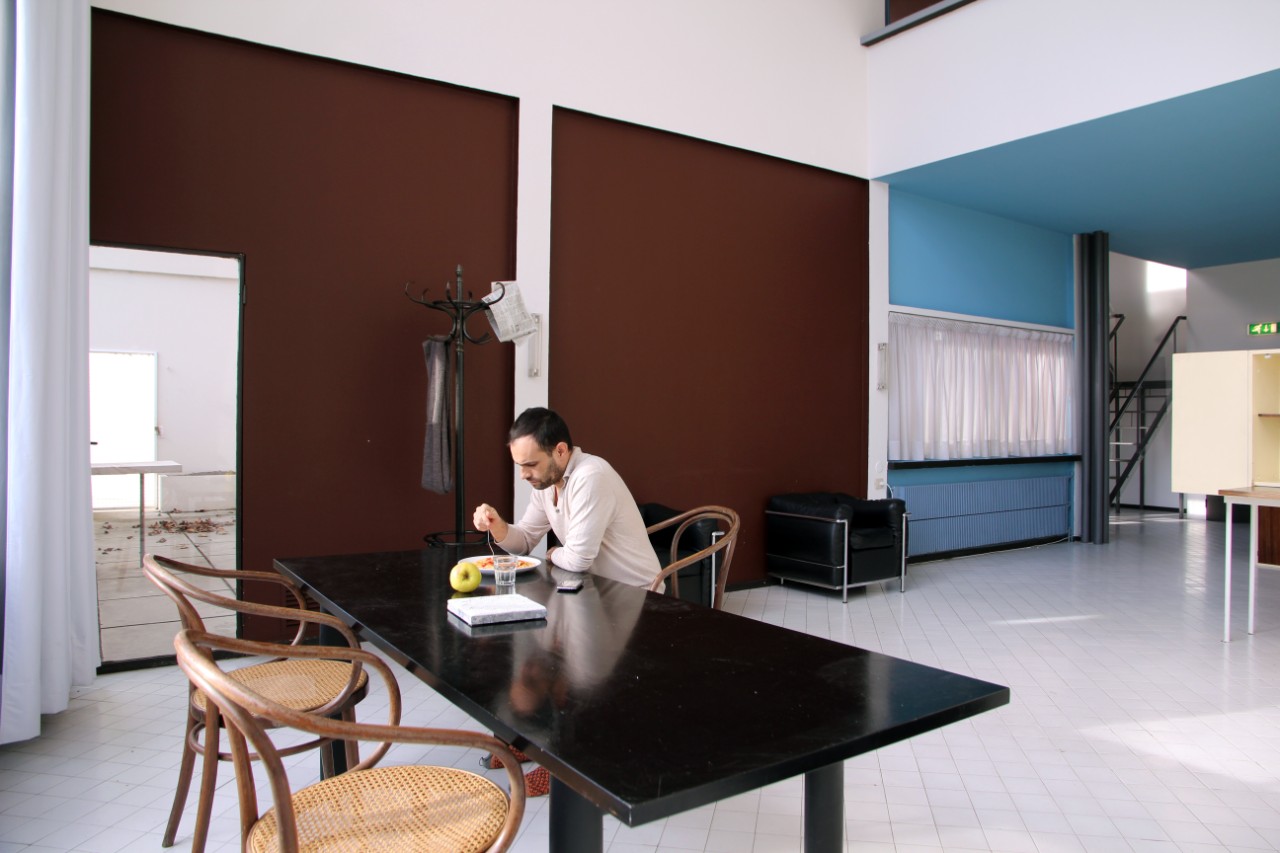
And yet, when Chironi actually goes into these houses-and stays there, uses them, goes through them-something changes. “I disagree,” he says.
In the duplex inhabited within the Unité d’Habitation in Marseille, the house is organized around the body: “My center of gravity stood still, I simply made a movement and so I cooked, washed dishes, dried. The use of minimum space with maximum comfort.” The large window holds interior and exterior together, the light changes throughout the day, the landscape enters the space: “in the morning I had all the pinks of dawn, in the evening all the reds of sunset.” And the wind across the terrace-often cited as a limitation-becomes part of the experience: the mistral crosses the building as a continuous sound, and Chironi records it, follows it, listens to it under the pilotis, turns it into working material. “I got tired of working, I went up … the old man strolled, the children played, the couples kissed.”