
Human mini-hearts grown from stem cells aboard the International Space Station are outpacing Earth-based labs in both volume and quality. The results could one day reshape how doctors treat the world’s leading cause of premature death.
The work comes from Arun Sharma, director of the Center for Space Medicine Research at Cedars-Sinai in Los Angeles. His team has been running heart cell experiments on the ISS since 2016. The latest results aired at the International Society for Heart and Lung Transplantation’s meeting in Toronto on 25 April.
Why Microgravity Changes Everything for Growing Tissue
Heart organoids are self-organised clusters of stem cells that beat like a miniature heart. On Earth, producing them requires suspension bioreactors that keep cells floating. The process works, but spinning the cells introduces mechanical agitation they find stressful.
“The cells love being grown in this way,” Sharma said. “But to force them into suspension, you typically have to spin them around and introduce some sort of a force, which the cells can sense. And they don’t like being always agitated this way.”
In microgravity, floating requires no such intervention. The cells drift freely and, apparently, thrive.
“We have seen a very significant increase in terms of organoid production,” Sharma said. He declined to give specific figures ahead of publication, but added: “I can say that the scale of production is something that’s been very impressive.”
A Paradox at the Heart of Space Medicine
The finding sits oddly alongside what microgravity does to existing cardiac tissue. Without gravity’s resistance, astronauts’ hearts shrink, weaken and shift towards a more circular shape. Even heart muscle cells flown to the ISS in petri dishes deteriorate; their ability to contract declines, and their metabolism shifts.
The distinction, Sharma suggests, lies in the difference between making something new and preserving something already made.
“On one side, you have things that have already been made before that are being exposed to low gravity and potentially deteriorating,” he said. “On the other side, you are actually making those things from scratch in space.”
The Long Road From Orbit to Operating Theatre
No space-grown heart tissue has reached human patients yet, and no trials are in the pipeline. Sharma’s near-term goal is using space-produced organoids to test new cardiac drugs. Further ahead, he wants to manufacture heart muscle patches in orbit for patients awaiting transplants. He believes space-made patches could be “thicker, more robust” and less prone to collapse on return to Earth.
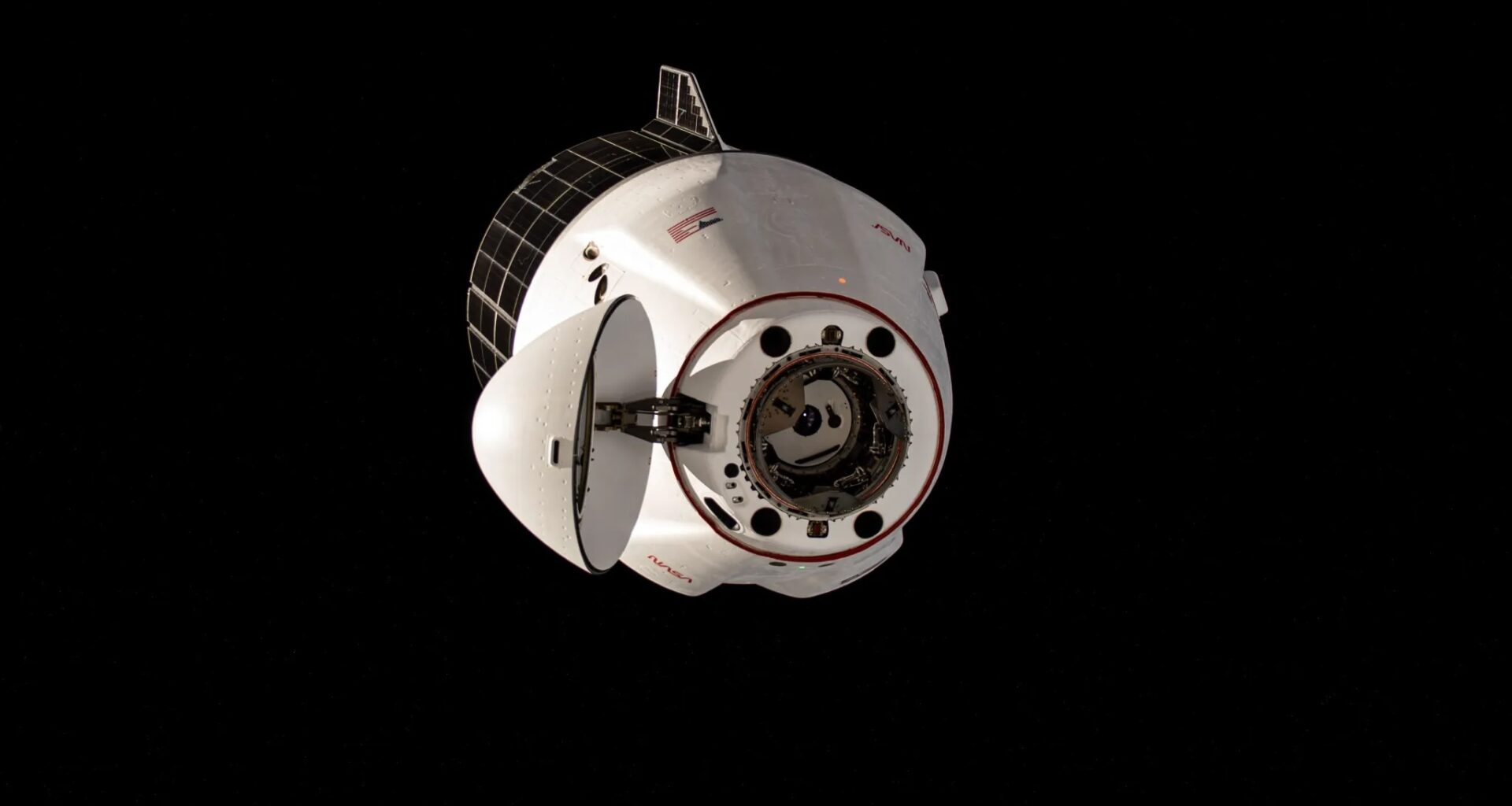
Regulatory timelines mean human trials remain years away. The next step is a further batch of experiments aboard NASA’s SpaceX CRS-35 resupply mission, due to launch no earlier than August.
 Published by Kerry Harrison
Kerry’s been writing professionally for over 14 years, after graduating with a First Class Honours Degree in Multimedia Journalism from Canterbury Christ Church University. She joined Orbital Today in 2022. She covers everything from UK launch updates to how the wider space ecosystem is evolving. She enjoys digging into the detail and explaining complex topics in a way that feels straightforward. Before writing about space, Kerry spent years working with cybersecurity companies. She’s written a lot about threat intelligence, data protection, and how cyber and space are increasingly overlapping, whether that’s satellite security or national defence. With a strong background in tech writing, she’s used to making tricky, technical subjects more approachable. That mix of innovation, complexity, and real-world impact is what keeps her interested in the space sector.