
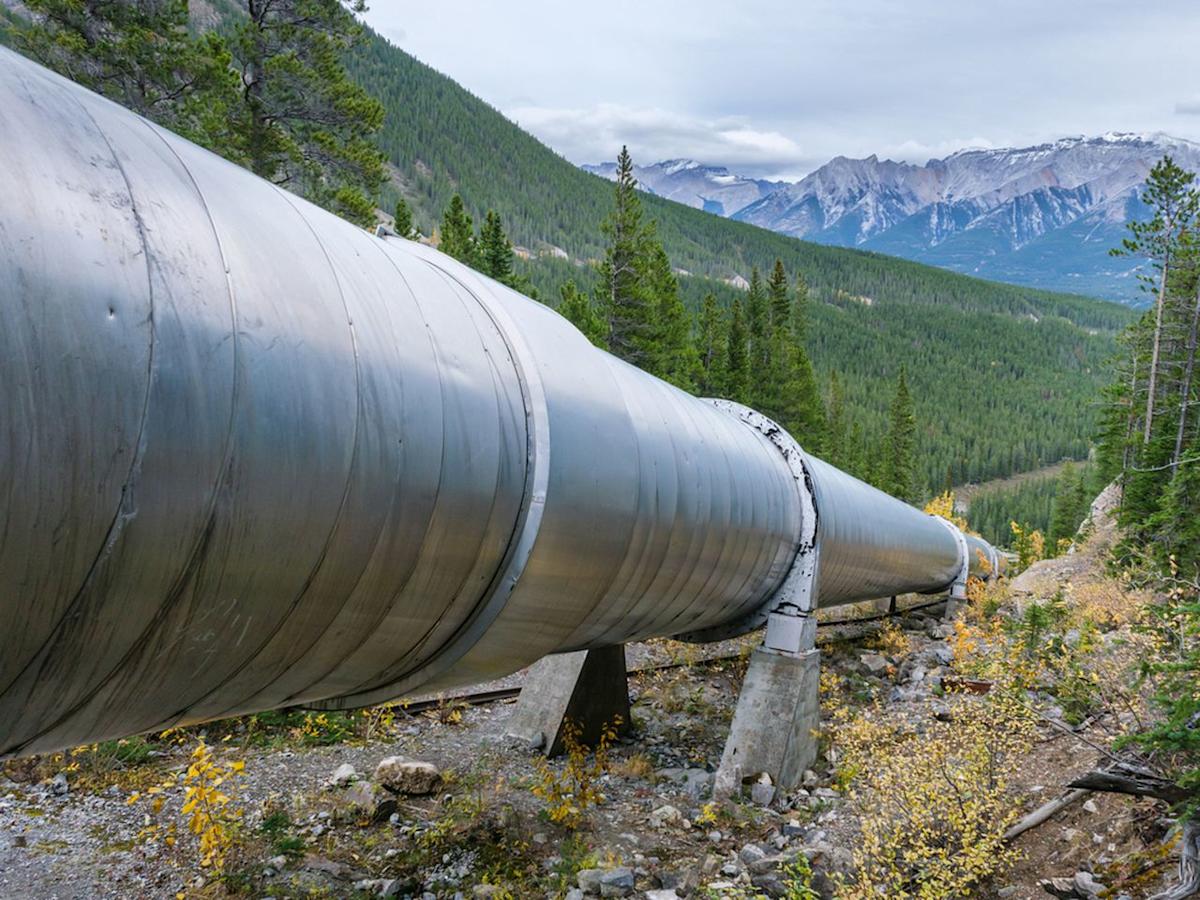
 “We need that pipeline to be able to grow oilsands in a significant way,” says CRNL’s Scott Stauth. (Credit: Marc Bruxelle/Getty Images/Postmedia files)
Canada will need a new oil pipeline to the West Coast and more competitive investment policies if it hopes to see another significant phase of oilsands growth, Canadian Natural Resources Ltd. president Scott Stauth said Thursday.
“There’s significant upside for volume development in the oilsands,” Stauth said during the company’s first-quarter earnings call. “We need a regulatory framework and a fiscal framework that will allow us to grow those volumes, and for a decade or so in Canada, we have not had the environment, regulatory-wise, to be able to do so.”
The head of Canada’s largest oil producer joins a growing chorus of industry executives this earnings season who are calling on Ottawa to ease regulatory hurdles — including planned increases to the industrial carbon tax — in order to attract more capital to the sector.
The debate comes at a sensitive moment in negotiations between Ottawa and the Alberta government over a broad deal to boost energy production, including potential federal support for a new bitumen pipeline to the West Coast. One stumbling block is how quickly industrial carbon pricing should rise to a minimum effective credit price of $130 per tonne — a policy Ottawa views as central to meeting Canada’s emissions-reductions targets.
Meanwhile, industry is pressing Ottawa to focus on a different target: the Carney government’s pledge to make Canada an “energy superpower” and double non-U.S. exports over the next decade — an ambition some economists and industry advocates say will require significantly more pipeline capacity.
Stauth said Thursday that expansions to Enbridge’s Mainline system and the Trans Mountain pipeline, as well as a possible revival of Keystone XL, are helpful. But he said a new one-million-barrel-a-day pipeline to the West Coast would be “very important” for long-term growth.
 Canadian Natural Resources Ltd. president Scott Stauth.
CNRL has said previously it is holding off on a major $8.25-billion expansion of its Jackpine oilsands mine while it awaits more clarity on federal regulations.
“We need that pipeline to be able to grow oilsands in a significant way,” he said.
The push from the oilpatch comes as producers have seen their first-quarter earnings boosted by higher energy prices triggered by war in the Middle East.
CNRL reported an adjusted profit of $2.4 billion in the first three months of the year, roughly flat compared to the same period a year earlier.
But the oilsands giant pointed out Thursday that its upgraded bitumen — known as synthetic crude oil (SCO) — is currently selling for US$5.70 more per barrel than U.S. Benchmark West Texas Intermediate.
Synthetic crude — which usually trades at a discount to WTI — is being snapped up by refiners who consider it an ideal feedstock for jet fuel and diesel.
Based on current forward pricing, SCO could continue to trade above WTI for the remainder of 2026, CRNL said.
“With everything that’s going on worldwide, there’s simply just a greater demand out there for that light crude to create that diesel production,” Stauth said.
CNRL said its production averaged 1,643,000 barrels of oil equivalent per day in the first quarter, a four per cent increase from a year earlier.