
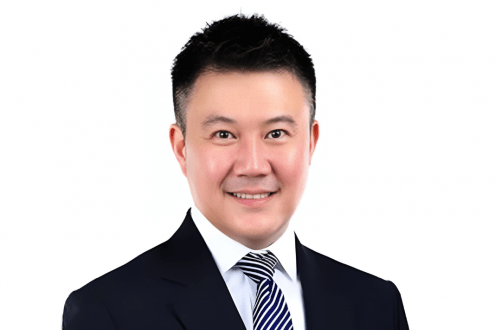
As the independent wealth management ecosystem in Singapore continues to evolve, firms are increasingly being judged not only on investment capability, but on whether they can offer a broader, more integrated response to the changing needs of wealthy families. For Lester Tay, Founder and CEO of Rockstead Capital, that shift reflects both the maturation of Singapore as a financial centre and the growing acceptance of the external asset management model as a serious alternative to traditional in-bank advisory. In his view, the landscape has changed materially over the past decade, with independent managers now able to offer clients a more open architecture, a wider product universe and the ability to manage wealth across multiple banking relationships from a single platform.
Tay frames that evolution against Singapore’s broader strengths as a financial hub. Political stability, transparent government and a mature ecosystem of financial service providers have all helped underpin growth. But he also notes that the banking model has historically remained highly traditional, with product distribution largely controlled within institutions. The rise of the EAM and IAM segment has changed that equation. As he explains, firms like his can now “offer a broader, more open-architecture view across the product universe, complementing what banks provide” and manage client assets across different banks while also bringing their own product expertise to the table.
A Maturing EAM Model with Continued Growth Potential
Tay sees Singapore’s independent model as having moved into a more developed phase, but he is equally clear that there is still significant room to grow. He notes that Singapore’s total assets under management now stand at around US$6 trillion, with roughly 7% currently sitting under the EAM model, and says he expects that share to rise further over time. In other words, while the model has won acceptance and begun to consolidate, it remains a relatively small part of the overall wealth landscape.
That growth is being driven in part by structural changes in client demand. As taxation, cross-border transparency, migration and legacy planning become more intertwined, clients are increasingly looking for something more than a single-point product relationship. Tay says plainly that “a purely product-led, single-point engagement model is becoming less sufficient for increasingly complex client needs,” because families now need a much broader advisory response that links investment management with insurance, tax planning, migration and succession considerations.
He also draws a clear distinction between first-generation and second-generation wealth. The first generation, in his telling, tends to prioritise security, safe havens and, in some cases, lower fees. The second generation is often more financially literate and more demanding in terms of transparency, innovation and visibility. That generational shift is pushing firms like Rockstead to broaden their own capabilities and move towards a more genuinely holistic offering.
Evolving Beyond Siloed Models
When discussing differentiation, Tay makes the point that the old boundaries between product manufacturers, insurers, custodians and independent advisers are no longer as clear as they once were. Banks used to control custody, insurers sold insurance and fund managers built products. Now, he argues, everyone is operating in a more overlapping space, and the firms that succeed will be those that can sit effectively in the middle and coordinate across those different segments.
His own formulation is that independent firms increasingly need to create something like a “tripartite agreement across investors banks and the investment firm,” placing themselves in a coordinating role between client, institution and solution provider. He believes that AI will help on that front, but also warns that it will raise client expectations at the same time. The more information clients can access and verify on their own, the less room there is for vague sales positioning or generic product distribution. In his words, “the industry as a whole will need to continue raising standards to meet increasingly informed client expectations, if they want to better serve their clients.”
Tay observes that a few distinct models are emerging in the independent space. The first are boutique platforms established by former bankers, often with a strong focus on client acquisition. While these models can be nimble, they may face challenges over time in building the scale, investment depth, and institutional infrastructure needed for sustained growth. The second are firms centred around a single large family, which may then extend their investment approach to external clients. While this can offer strong alignment in certain cases, it may also be less flexible in addressing the diverse needs and objectives of a broader client base.
Rockstead, by contrast, positions itself as having evolved from a fund management business into an EAM model. That, Tay suggests, gives the firm a different foundation, one shaped less by sales and more by product design, investment expertise and platform capability. He believes that legacy, DNA and internal support structure matter if wealth managers are to serve families holistically rather than simply chase revenue.
Delivering Investment Value Through Bespoke Portfolio Construction
On portfolio construction, Tay divides the world broadly into banking products and insurance products. On the banking side, he says Rockstead’s team has the ability to “reverse engineer” products and customise exposures using a wider toolkit of instruments, including derivatives and options, allowing for more tailored and, in some cases, more cost-efficient outcome.
That reflects a broader philosophy around value creation. Tay argues that investors have become more sophisticated and no longer accept off-the-shelf products without scrutiny. The real value, in his view, is not in passing products from left to right as a middleman, but in breaking them apart, understanding their mechanics, removing unnecessary cost layers and tailoring the structure more precisely to client needs. He describes this as a more farm to table approach, where the client is getting something more direct, more transparent and more bespoke.
The same logic applies on the insurance side, though with a different balance. Tay says Rockstead sees insurance solutions as having two distinct components: the mortality protection element and the underlying investment element. In his view, insurers remain best placed to handle the mortality side, but the investment side is increasingly being opened up, especially through products such as VULs and index-based universal life structures. That gives firms like Rockstead an opening to manage the portfolio while still relying on established insurance carriers for the protection component. The overall direction, he argues, is clear: bespoke tailoring is becoming central, and clients are no longer satisfied with standardised product menus.
AI as an Internal Tool, Not a Substitute for Judgment
Tay’s approach to technology and AI is pragmatic rather than headline-driven. He describes the firm’s use of AI across three main areas. The first is data collation, where AI is to improve speed, consistency and breadth of information gathering, while removing some of the manual burden from the process. However, he is equally clear that data on its own is insufficient. “How you use the data is the key thing,” he says, stressing that judgment remains central.
The second application is around internal reporting, where AI is used as a check-and-balance system. Reports generated internally are run through AI to cross-check references against market benchmarks and broader trends, helping improve consistency and credibility. The third is more strategic: dashboards, trend analysis and natural-language interaction with AI tools to review portfolio holdings, benchmark them against peers and identify inconsistencies.
Tay is particularly interesting when he describes AI as creating “a very emotionless, accurate colleague to cross-check what we do.” That captures the spirit of his approach. AI is useful because it can extend the capabilities of the investment team and act as a scaling tool, not because it can replace human decision-making. He is explicit that there are three things he does not believe AI can replace: the human connections with client, judgment call, and accountability. Those are the areas the firm still guards closely, even while leaning into the advantages AI can bring.
More broadly, Tay does not want the AI agenda to be led primarily by IT. He argues that the real initiative should come from the investment team and product engine, because they are the ones who understand how the tools can materially improve advice, construction and service delivery. In that sense, AI is being treated less as a technical project and more as an investment and advisory multiplier.
The Next 12 to 18 Months
Looking ahead, Tay’s priorities are closely tied to Singapore’s policy direction and structural advantages. He says the firm wants to remain highly sensitive to government initiatives, especially around family offices and the continued development of the VCC framework. In his view, Singapore remains exceptionally well positioned as a place for families to live, hold wealth and plan for succession, benefiting from language, culture, geography, tax treatment and governance.
He is particularly bullish on the VCC as a platform, arguing that the benefits are now so clear that firms are “running out of reason not to use VCC” for investment structures. He highlights features such as tax exemption on qualifying investment activity, confidentiality advantages and flexibility around capital adjustments, all of which make it increasingly attractive relative to offshore structures.
At the same time, Tay argues that part of the industry’s role is interpretive. Firms like his often need to translate government initiatives into practical solutions that ordinary clients can understand and use. He gives the example of the newer S$5 million family office solution, which he believes was partly designed to compete more effectively with Hong Kong, but which Rockstead also adapted into a useful offering for local Singaporeans, especially in the context of trust and estate planning. His larger point is that family office structures should not remain seen as exotic or reserved only for the ultra-rich. Over time, he believes they may become far more mainstream.
He makes the point that legacy planning should not be viewed as a niche concern. Death, succession, and tax considerations are universal realities, and increasingly, more families are recognising the importance of addressing these issues proactively. In his view, structured solutions such as family offices and trusts should be considered earlier in the wealth journey, rather than only at the later stages. Taken together, Tay presents Rockstead Capital as a firm trying to bridge traditional product manufacturing, external management and bespoke family advisory. The proposition is built around independent management from outside the bank, a more tailored approach to portfolio construction, selective use of AI and a strong belief that wealth management is becoming more integrated across investment, insurance, migration, tax and legacy needs. In a Singapore market that is still evolving but increasingly open to the independent model, that combination may prove increasingly compelling.