
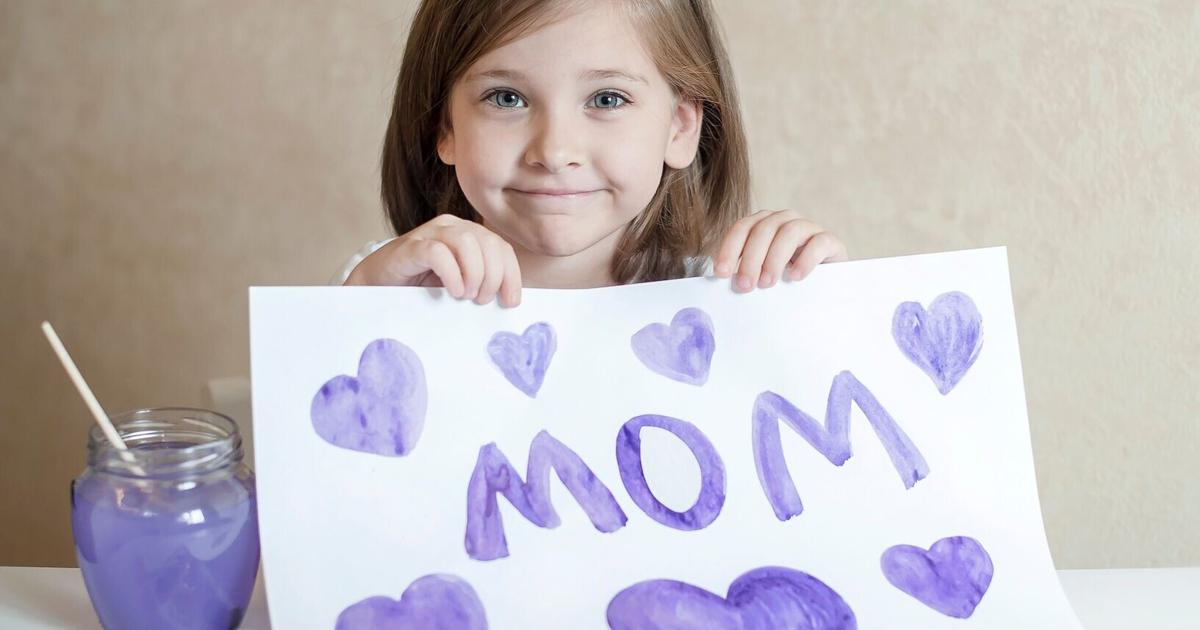


A little girl paints a heart on a homemade greeting card as a gift for Mother’s Day. (stock photo)
PaniYani
Winnipeg parents already feel like they are fighting a losing battle trying to raise children in a world where everyone seems to believe they know better than Mom and Dad. Governments lecture them, social media pressures them, and now even elementary schools are stepping into decisions that should never have required debate in the first place.
The decision by Grade 1 and 2 teachers at Sage Creek School to replace traditional Mother’s Day and Father’s Day crafts with generic “family gifts” is another example of too many cooks in the kitchen when it comes to raising children. Schools should focus on education, structure, discipline, and preparing students for adult life, not on rebranding family traditions to satisfy ideological trends.
Parents are right to be frustrated.
According to reports, families were informed only this week that students would no longer be making crafts specifically for Mother’s Day or Father’s Day. Instead, gifts will be distributed on May 15 during the United Nations’ International Day of Families. There was no meaningful consultation with parents before the decision was made.
That matters because schools do not replace parents. They work for families and communities. When schools begin removing traditions that most families still value, without even asking parents first, trust breaks down.
This is not a small issue about making handprints on a card. It reflects a larger problem across education systems where administrators and educators increasingly believe social engineering is part of their mandate.
Meanwhile, Manitoba students are falling behind in the areas that actually determine future success.
Manitoba continues to rank near the bottom in Canada in mathematics performance. In the 2022 PISA international assessment, Manitoba students scored well below the Canadian average in math. Grade 8 students also ranked last nationally in mathematics in the 2019 Pan-Canadian Assessment Program.
Those results should alarm every parent.
A child struggling with math today faces fewer career opportunities tomorrow. Weak literacy and numeracy skills affect everything from trades training to university admissions to managing household finances later in life. Families already dealing with rising grocery bills, mortgage payments, rent increases, and higher utility costs understand how important practical education really is.
Parents sending children to school expect them to learn reading, writing, mathematics, science, discipline, and problem-solving skills. Instead, too much energy is being spent on symbolic decisions designed to avoid offending anyone.
The reality is straightforward. Most Manitoba children still live in two-parent households. Statistics Canada data from the 2021 census shows roughly 84 percent of Canadian census families are two-parent families. That does not diminish the importance of single parents, grandparents, guardians, or blended families. Those families deserve respect too.
But accommodation does not require erasing traditions that matter to the overwhelming majority of students and parents.
Schools have always had practical ways to handle sensitive situations. A child without a mother could make a gift for a grandmother, aunt, guardian, or another caregiver. A student uncomfortable participating could opt out quietly and respectfully. That approach balances compassion with common sense.
What Sage Creek chose instead was elimination.

Supporters of these changes claim they create inclusion. In reality, they often create confusion. Young children benefit from clarity, structure, and consistency. Constantly redefining traditions sends the message that nothing is stable and every long-standing practice must be reconsidered through a political lens.
Parents are exhausted by this approach.
A typical Winnipeg family is already juggling hockey fees, daycare costs, packed schedules, homework, rising food prices, and full-time work. For many families, a simple handmade Mother’s Day or Father’s Day gift from school is meaningful because it reflects appreciation, stability, and family connection. Schools do not strengthen communities by stripping away those moments.
There is also a broader concern here about accountability inside Manitoba’s education system.
Too often, schools seem willing to move quickly on symbolic cultural issues while academic performance continues to decline. Manitoba students need stronger fundamentals, more classroom discipline, better attendance standards, and higher expectations. They need structure, not posturing.
That starts with understanding the proper role of schools.
Teachers play an important role in children’s lives, but they are not co-parents. Governments are not co-parents either. Parents make the final decisions about values, traditions, and how children are raised.
Schools should reinforce the foundations families build at home, not override them.
If education leaders genuinely want to rebuild trust with families, they should focus on measurable outcomes that improve students’ lives. Restore stronger academic standards. Prioritize math and literacy recovery. Increase transparency with parents before major policy changes are introduced. Give families more say in school culture decisions instead of imposing top-down directives.
Most importantly, stop treating ordinary family traditions like problems that need to be managed.
Winnipeg families are not asking schools for political messaging. They are asking schools to educate children properly, respect parents, and focus on the real challenges students face. Given Manitoba’s academic results, that should already be more than enough work for the education system.