
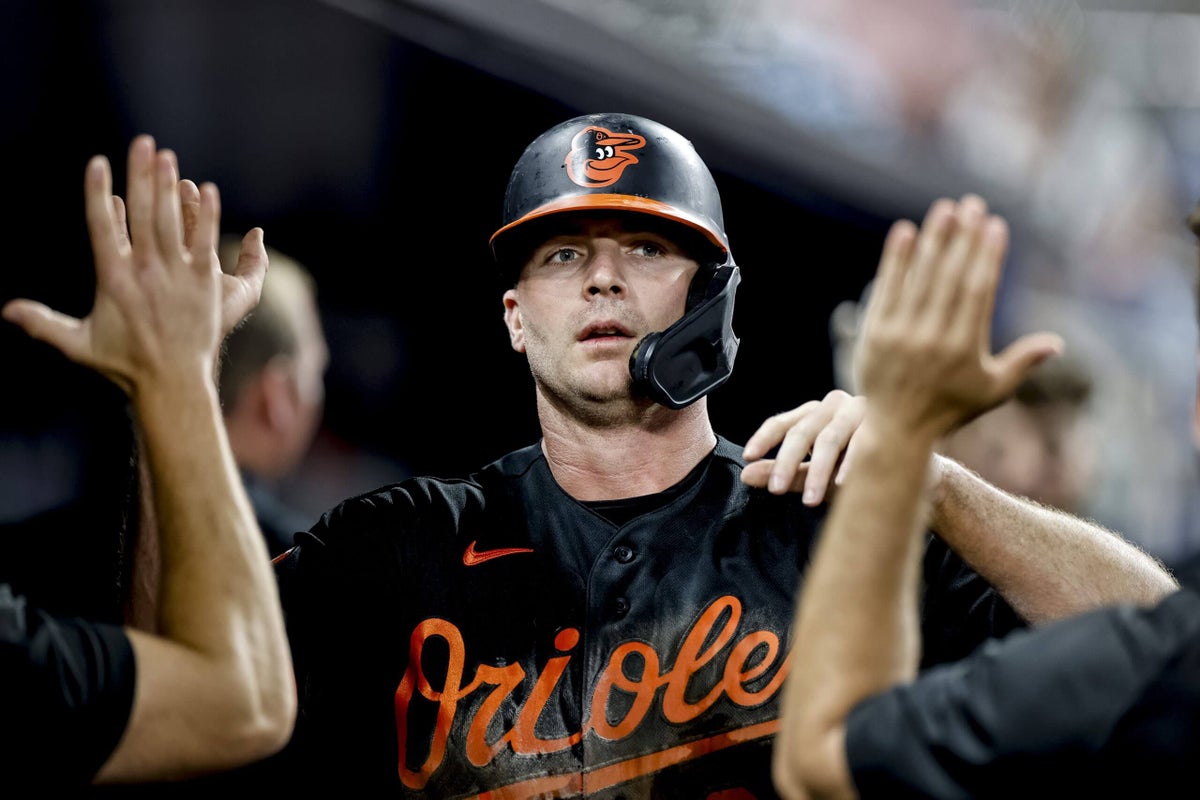
Who broke the Baltimore Orioles?
It was fair to wonder Monday night, when the Birds were putting the finishing touches on a 12-1 loss in the Bronx, an embarrassing end to a pitiful four-game series sweep by the New York Yankees in which Baltimore never led and was outscored by nearly 30 runs.
Three games later, the panic has subsided, at least a little. The Orioles (17-21) enter Friday a game out of a wild-card spot in an American League in which only two teams are more than a game above .500. If nothing else, a Baltimore team that has started and sputtered post-rebuild can take solace in the fact that nearly everyone else in the AL isn’t very good right now, either.
It’s not exactly the kind of slogan you slap on T-shirts. Nor should it quell a largely discontented fan base angered not by six weeks of underwhelming play but 22 long months of it.
The Orioles tanked loudly and unapologetically upon the arrival of former general manager Mike Elias in November 2018. It worked. Three 100-loss teams (and one that went 25-35 during a shortened 2020 season) gave way to squads that finished above .500 in 2022 and ran away with the AL East in ’23, giving Baltimore its first division title since 2014.
The O’s were back, and more than a half-million more fans showed up to Camden Yards in 2023 than the year prior, drunk on the potential of a robust young core and a top-ranked farm system teeming with talent. Never mind that they were promptly swept out of the AL Division Series by the would-be champion Texas Rangers. The unanimous industry consensus was that the window was just opening.
Baltimore went back to the playoffs in 2024 courtesy of a 91-win season, a record that papered over a 42-46 finish. That team was swept out of the AL wild card by the Kansas City Royals, who didn’t have the Orioles’ offensive upside but came to the same conclusion many of their opponents had: Those big swings had big holes in them, prompting one rival executive to liken the Orioles to a showcase team.
The Orioles lacked heart, hustle and veteran player leadership, the latter being a particular sore spot for former manager Brandon Hyde, who was fired in May 2025 after Baltimore’s dismal 15-28 start. Suddenly, a team that looked to be on the precipice of a long, fortuitous window seemed rudderless, limping to a last-place 75-87 finish.
So forgive fans if a flat start to ’26 brings back some painful recent memories, even if rookie Craig Albernaz is now in the manager’s chair, somewhat defiantly telling beat reporters not to write off this club. Without Hyde, the fans’ ire has fallen squarely on Elias — quietly promoted to team president before the 2025 season — and the rest of the front-office members, who deserve some criticism.
You can argue that the organization held on to prospects too hard and was too conservative in passing up opportunities to get better at the trade deadlines in ’23 and ’24. The Orioles pumped money into facilities and processes but, some feel, not always people. The front office, which added veterans this winter, had to learn the hard way that experience is critical to a clubhouse.
An endless cycle of coaches continued because Baltimore didn’t value some of its people enough, making it easy to jump ship for better opportunities. Churn in the coaching industry is the norm, but some think the constant change particularly hurt the O’s young hitters. That has changed. Albernaz’s staff members, all of whom were chosen by the rookie manager, are all on multiyear deals.
It’s easy to spotlight Baltimore’s sloppy play and a defense that ranks in the bottom five of MLB in defensive runs saved, outs above average and defensive fWAR. But one former Orioles coach who was asked to assess the team’s on-field play quoted former NFL coach Bill Parcells, saying, “If they want you to cook the dinner, at least they ought to let you shop for some of the groceries.”
You can also argue that the Orioles didn’t get enough pitching this offseason and are overrelying on starters Kyle Bradish and Trevor Rogers to lead the rotation. The better argument is that the organization — which lost starter Cade Povich to forearm discomfort during Thursday’s start — has failed to develop pitchers under Elias.
Still, the Orioles’ universally lauded winter moves were the most aggressive of the Elias era. And for all of their issues, the O’s are smack dab in the thick of a way-too-early playoff race. New addition Pete Alonso is getting hot, franchise cornerstone Adley Rutschman is looking like himself again, and some players on their lengthy injury list (like Rogers and Jackson Holliday) figure to return soon.
This isn’t the 2025 team. At least not yet.
Had the Orioles won a playoff series since the new regime took over, even a single playoff game, this season’s uneven start would have been more palatable. But public trust has dissipated. There is little to suggest Elias is anywhere close to the hot seat with an ownership group that took over in 2024 and promoted him a little more than a year ago — one that is still paying Hyde’s salary this season — especially not before an expected lockout.
So blame the rest of the league for where the Orioles find themselves, still able to sell optimism despite multiple series that garnered anything but. Blame ownership for promoting Elias. Or blame Elias.
Or hope that the front office has learned from its past mistakes and that a team that has been groping for success relative to its perceived talent might finally start to find it.