

Unemployment rate, Canada
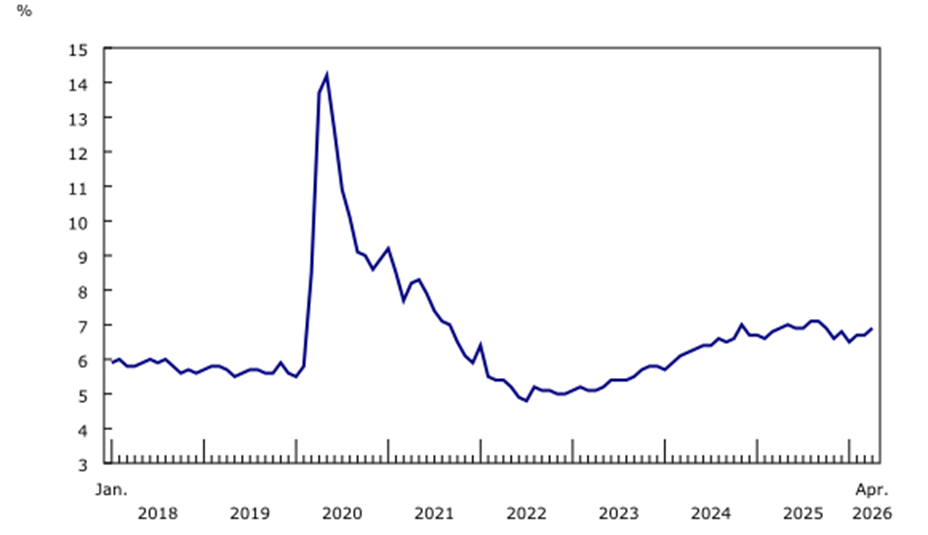
Tariffs and trade uncertainty weigh on hiring confidence
The goods-producing sector — the most directly exposed to US tariffs — shed 26,800 jobs in April, according to StatsCan. The services sector, where four in five Canadians are employed, posted a modest gain of 9,100 positions, providing only partial relief, reported CBC News. The rough start to 2026 reflects a labour market struggling under the weight of prolonged trade uncertainty, with the unresolved future of the North American free trade deal and energy price pressures stemming from the Iran conflict continuing to compound the tariff impact, reported CBC News.
That uncertainty is translating directly into employer hesitation. The Bank of Canada flagged in its April Monetary Policy Report that indicators including the employment rate, hours worked, and job vacancies all point to slack in the labour market — underutilized capacity that organizations must factor into their planning assumptions for the remainder of the year.
Analysts polled by Reuters had forecast net gains of 15,000 jobs and an unemployment rate of 6.7 per cent, according to CBC News. The miss on both fronts underscores how difficult the current environment is to model, and reinforces why scenario-based workforce planning is more valuable now than static headcount projections.