

Listen to this article
Estimated 4 minutes
The audio version of this article is generated by AI-based technology. Mispronunciations can occur. We are working with our partners to continually review and improve the results.
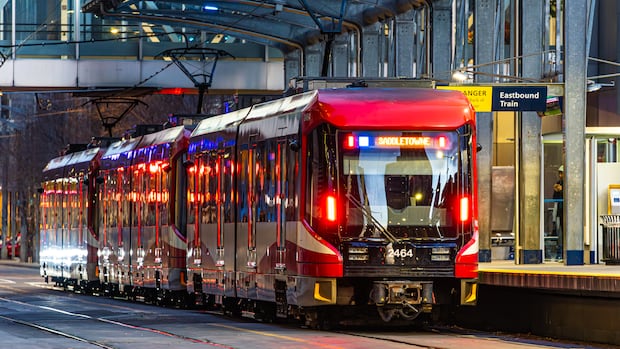
City councillors took a step toward eliminating Calgary’s downtown CTrain free fare zone, endorsing a recommendation from administration to do so.
Members of the infrastructure and planning committee voted 7-4 Thursday in favour of the plan. It will now go to city council for a final vote.
More than a dozen people, including transit riders and representatives from the city’s tourism and hospitality industries, appeared in person or by phone to ask councillors to spare the free fare zone.
Launched as a pilot project in 1981 to encourage ridership on the new CTrain, the zone has been a mainstay along Seventh Avenue in the decades since.
In November, TD Bank ended its sponsorship of the free fare zone about two years early.
Then, council ordered a review of the free fare zone in February, after narrowly voting in favour of keeping it during fall budget talks.
The report from city administration recommends scrapping it, primarily in the name of safety.
It suggests making it a paid zone by Aug. 1.
Safety concerns
Administration says ending the free fare zone will help reduce disorderly behaviour, at a time when violence aboard public transit has become an increasing concern in the city.
“Customer research has consistently found that safety is the primary concern of current transit riders, especially at the downtown CTrain stations after dark and on weekends,” Calgary Transit director Sharon Fleming said.
By making it a paid area, the report says officers would have the authority to remove disruptive riders earlier, before a situation might escalate. It would also help improve perceptions of safety, encouraging ridership.
But the report does acknowledge that it would not address the root cause of that disorder and would likely just push people to other nearby areas.
“Our downtown stations operate also as sidewalks. We’re worried this change will be used to harass people with nowhere else to go and simply move them … to another place on the sidewalk,” said Alex Williams with the grassroots advocacy group Calgary Transit Riders.
Other speakers before council noted disorder is not limited to the free fare zone, and said they’d had negative experiences along other parts of the transit system.
The economic case
Charging a fare would generate an extra $5 million annually, the report says.
But Dan Kohse with the Calgary Chamber of Commerce told council the free fare zone is an invaluable driver of downtown traffic that encourages people to explore restaurants and businesses.
Carson Ackroyd, senior vice-president of sales at Tourism Calgary, agreed that many of the visitors to downtown, who generate hundreds of millions of dollars annually through tourism, conventions and other business, rely on the free fare zone to get around during their stay.
“The free fare zone is not a transit subsidy. In fact, it’s one of Calgary’s highest-performing economic assets,” said Ackroyd.
Coun. John Pantazopolous questioned if visitors who fly to Calgary are doing so with a free CTrain ride in mind. And if those people witnessed a violent or disturbing incident on transit, would they not remember that over the savings of $4?
“It’s served its purpose, it’s gotten people downtown, it’s been a wonderful addition, and it’s time to move on,” Pantazopoulos said on CBC Radio’s Calgary Eyeopener.
Coun. Myke Atkinson, however, suggested going the other way: introducing free transit for all.
“Why are we charging user fares for transit? We don’t charge for using our roads. We don’t have tolls on our roads,” he said to reporters. “Transit is something that we want to encourage.”