

The problem, according to Simon Le Bon, was the girls; those young women, the Duranies, who chased Duran Duran around the 1980s. He is not complaining. I am not sure I have ever met a man less prone to moaning. It is just that predominantly female fanbases tended to put off the snooty male critics. “They thought we were the next Bay City Rollers,” Le Bon says with a sigh. So Duran Duran did not have the respect they deserved? “Certainly not.” He grins and cackles at the memory of the highly regarded Tom Petty scoffing at him in a hotel lobby in Los Angeles. “But, you know, that’s the price you pay for being hot,” he says, laughing, before stopping abruptly. “You won’t take that out of context, will you?” he asks, a little nervously.
Still, Le Bon does have a point. Duran Duran were a whirlpool of fantastic sound and vision who took the theatrics of their hero David Bowie and made it Eighties. They were Princess Diana’s favourites.
The band formed in Birmingham in 1978 and were labelled the Fab Five, posing for the burgeoning MTV as rather, yes, hot young men playing their indelible, funky, rousing synth-pop. For some it was more style than substance, something that Moby calls the “Bee Gees curse” — meaning when an artist is so “successful and stylised” that they are not taken seriously. Not that Le Bon is bothered. With songs such as Rio, Girls on Film and Ordinary World, they never disappeared up their own art, instead selling more than 100 million records and scoring 15.6 million monthly Spotify listeners (equal to their rivals Spandau Ballet and Culture Club combined). Despite multiple line-up changes and various fears that it might all come to an end, they are still at it, headlining London’s BST Hyde Park for a second time this summer.
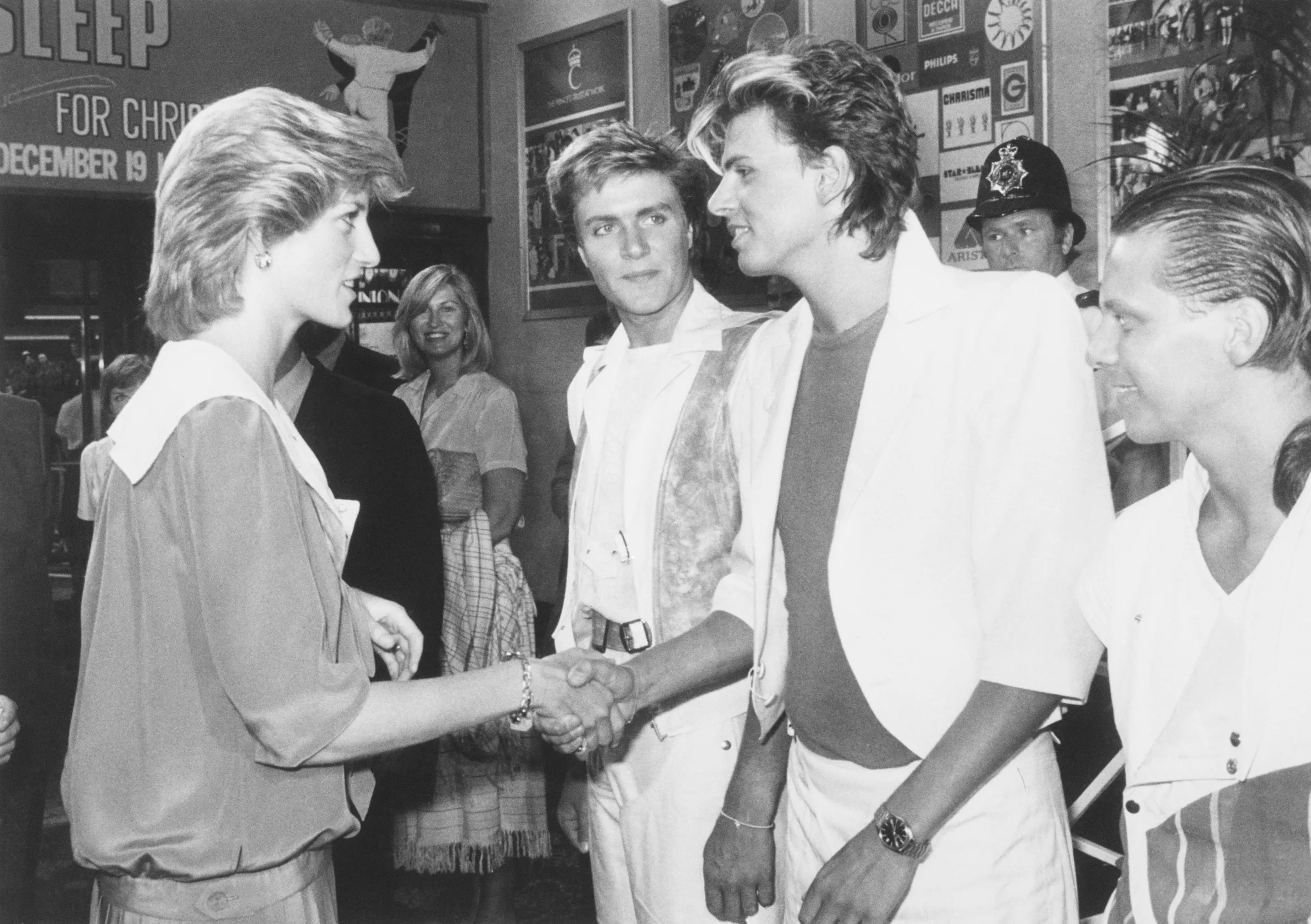 Princess Diana and the band at a Prince’s Trust gig in July 1983Pete Skingley/Getty Images
“We were the biggest band in the world,” says Le Bon, an extremely relaxed 67-year-old frontman, sprawled out on a sofa in a café near his London riverside home. He is dressed down in blue jeans and a T-shirt and is cheeky, camp, convivial. “We were aiming for a meteoric rise to success — and we got it.”
Duran Duran are a four-piece now. Andy Taylor, a key member in the band’s heyday, left long ago, leaving Le Bon (vocals), Nick Rhodes, 63 (keyboards), John Taylor, 65 (bass), and Roger Taylor, 66 (drums). (None of the Taylors are related.) I spend a week following the band as they prepare for an American tour — expect all the hits — and the release of their disco-tinged new single, Free to Love, which features their old collaborator Nile Rodgers, who first worked with them on The Reflex in 1984.
Rodgers tees them up well. “Duran Duran took us on a journey,” he says. “Britain and America had depressions. Queues for petrol. Blackouts. But they took us to places that looked beautiful, like Rio. Their world was one we wanted to see. When we met we had the time of our lives. And not just because we were high.”
Le Bon smiles. “We have long been accused of having our head in the sand, or fiddling while Rome burns,” he says of his group’s long-held default position of fun. “But there’s a place for a positive attitude and we’ve always, very much, been the band whose glass is half full.” This is why, years ago, Le Bon said Duran Duran were “the band to dance to when the bomb drops”. They played on through many sinking Titanics, including in Birmingham in 1981 the day after the Handsworth riots. I remind Le Bon of something he said in 1987 about feeling safe while playing Belfast during the Troubles — “Anybody who blows up groups would be very unpopular indeed.”
“I said that?” he says, grimacing. Sure did, but the very point of his band is to exist outside politics, right? “Look, there’s always bad shit happening,” he reasons. “But that doesn’t mean good things don’t happen. I do not want everything to be about the Strait of Hormuz. We have got to maintain positivity, but there are some artists who feel that they have to remind everyone that it’s shit, and that doing so makes them more credible.” Artists might be naive to think they can effect change, I say, but want to show they care. “And that they have agency,” Le Bon adds. “Which is unrealistic, really, and laughably conceited. There is always politics, but people need a good time. People need to have sex, have babies. Otherwise it’s the end of the human race. And we can be part of that positivity.”
There is one Duran Duran song, though, that is explicitly political: The Edge of America, released in 1988 and remastered in 2010, about a country falling apart — “Where is your nation now?” — while vigilantes roam on the streets. It feels rather pertinent. Le Bon nods. “But the thing about American politics is that America chose the person they want to lead the country, and whether we like him or not, we have to respect that,” he says. “That’s the choice of the American people, and we don’t go out of our way to offend anybody.” (Asked if they would play the song on their imminent tour of the US, Rhodes says: “We’re doing a big festival. It’s probably not the right vibe.”)
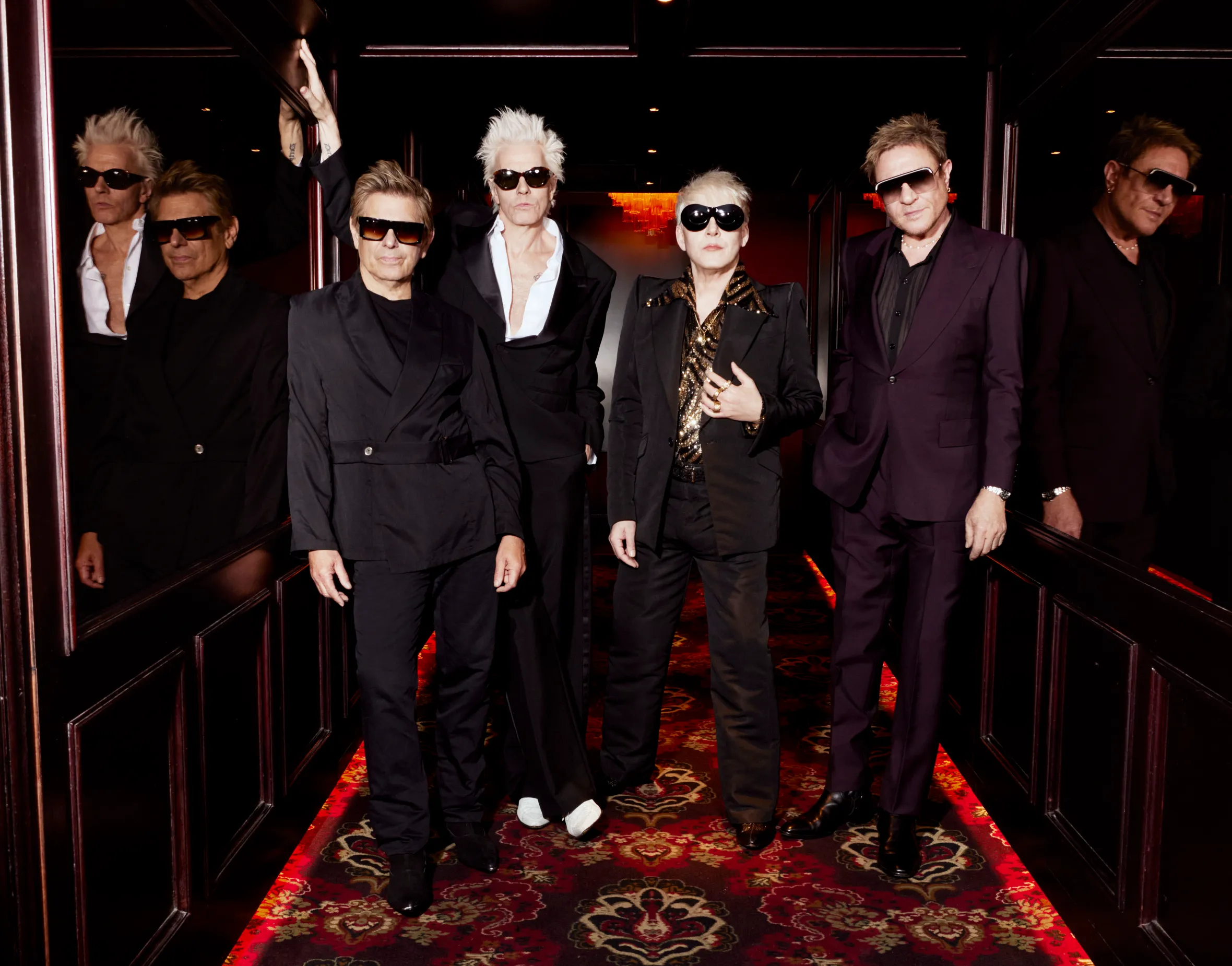 Roger Taylor, John Taylor, Nick Rhodes and Simon Le Bon of Duran DuranStephanie Pistel at Koko, Camden, asst: Christian Young; Stylist: Rebekah Roy, asst: Melania Peluso; Make-up: Grace Sinnott; Hair: Cristiano Basciu at Richard Ward Hair; Lighting Dir: Luke Johnson; Post prod: Stephan Lesger; Prod: Frankie Production
Duran Duran formed when the childhood friends John Taylor, whose father worked in a factory, and Rhodes, whose mother ran a toy shop, decided to form a band — their first gig was in April 1979 at the Birmingham Polytechnic. Soon they were joined by the others, including the Pinner County grammar schoolboy Simon Le Bon. They are named after Dr Durand Durand, a character in the cult sci-fi favourite Barbarella, an otherworldly name to show that pop music could offer an antidote to the doldrums of Britain.
“It was a total retaliation against what we went through in the Seventies,” Roger Taylor says. “Growing up in Birmingham was pretty grim. The city was in industrial decline — you would get ready to go to school in candlelight and so glam was a saviour for kids like us.” He means artists such as Bowie and Roxy Music. “This aspirational scene ran parallel to the grim reality and we were just copying our idols, really.” He remembers sharing a rehearsal space with their fellow Birmingham band UB40 when both groups were on benefits. “But while they were singing about being on the dole, we were writing Girls on Film.”
I meet Rhodes for a glass of chablis in Chelsea. He’s a fantastically attired man, in a sharp black suit and a prominently collared white shirt, his Brummie accent and shock of hair still intact. His main adjective for the city that he grew up in when he was a kid? “Grey. From the colour of the sky, to the buildings, to the looks on people’s faces.” He is a terrific raconteur. The video for Free to Love is a homage to the dearly departed Top of the Pops. “It was a great leveller,” Rhodes says. “The best songs could be held off the No 1 spot by Joe Dolce or Lieutenant Pigeon.” I always guessed that the atmosphere on that show was raucous. “Well, the BBC had rules for the audience,” he says, before adding cheekily, “Though I’m not sure the same could be said for their employees…”
Did he enjoy being famous? “Well, we had to leave Britain for a few years in the mid-Eighties because it was too difficult,” he says. “I would open my window and there would be someone outside with a long lens, and that’s not a fun way to live. But you don’t complain about it, you just deal with it. I simply moved to Paris.”
Mostly, though, Rhodes just seems proud. Thrilled that in 2019 Duran Duran played at the Kennedy Space Center to mark 50 years since the moon landing. “How has a band from Birmingham, who were little kids watching this on black-and-white TV, ended up celebrating this moment at Nasa?” he says, beaming. He is also rightly proud of the band’s superb and fame-weary early-1990s double whammy Ordinary World and Come Undone. “Times had changed and a lot of people wanted to lock the door on the 1980s and leave us on the other side,” Rhodes says. “So we had to find our way into the 1990s.” He even claims to have “pushed the button on the world’s first download” — something I have to check later, but lo and behold, he is right; in 1997, Duran Duran became the first major label artist to sell a download.
But then, the band was always at the forefront of technology. “Anyone who thinks AI will go away is certifiably insane,” Rhodes says. The band even went viral on TikTok with their recent song Invisible when some random user made it a theme for the video game Metal Gear Solid. “So, thanks for that, whoever you are,” Rhodes says, smiling. “Nothing to do with us.”
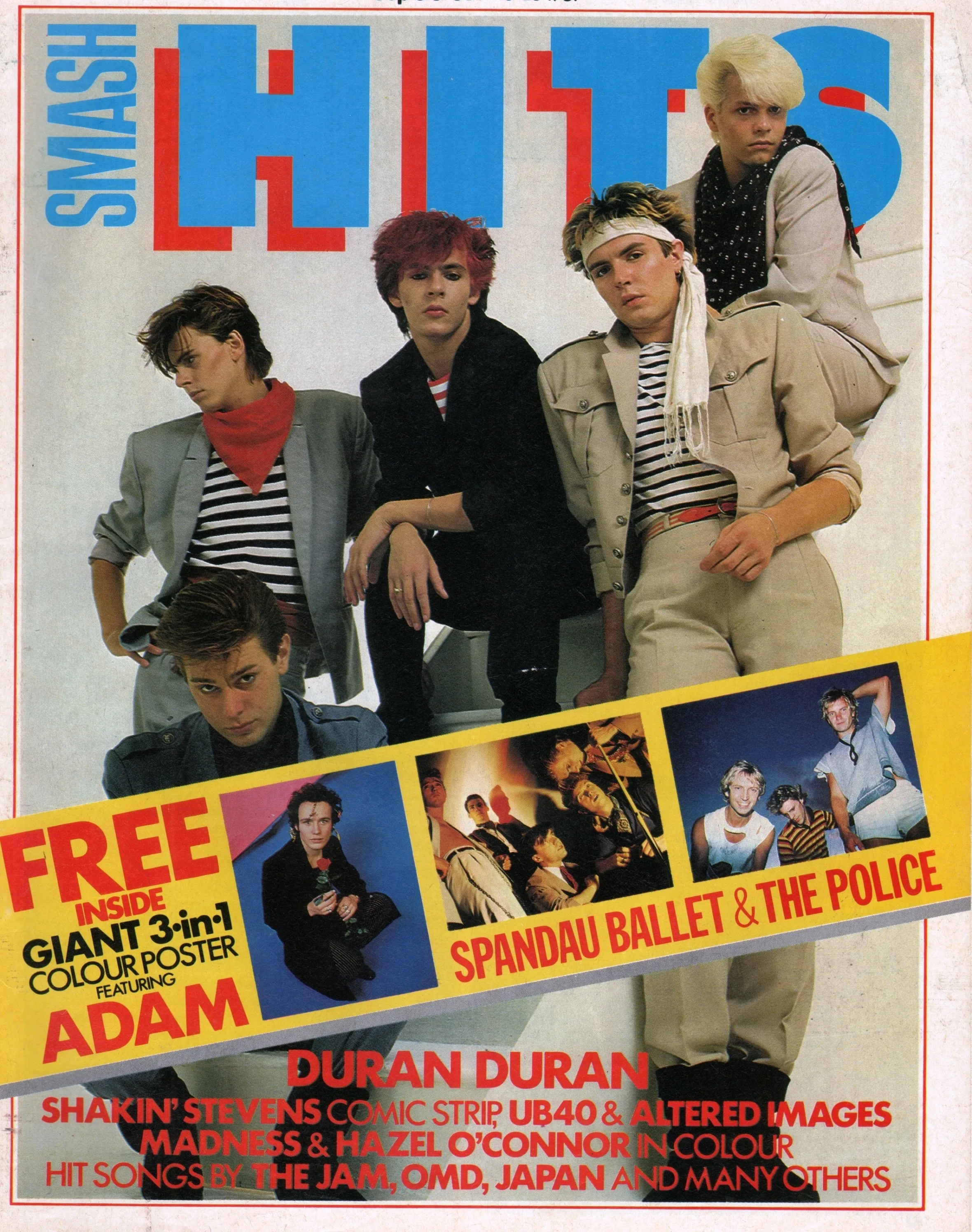 On the cover of Smash Hits magazine in October 1981
More in their control were the exuberant pop videos that took them global — with their self-titled debut album released in 1981, the same year MTV started, and Duran Duran’s manager meeting the boss of the channel before the launch in an attempt to capitalise on the new era. The Wild Boys riffed on Mad Max. Rio was on the high seas. Girls on Film? A romp, a sexual fantasy — if you’re into riding men like horses.
Has the latter video been discussed with the kids? The band have nine children between them. “Of course it comes up,” Rhodes says, laughing. “It’s very kitsch and of the period, but with what we’ve seen in hip-hop videos since, it’s pretty harmless. Yet would we make it now? Of course not.”
Was everybody in the band on board with these videos? “Simon was in his element,” Rhodes says. “He’d been to drama school, so if there was any acting he was there with his union card. I didn’t love the boat, but, then, it wasn’t difficult. Really, all a director said to us was, ‘OK, look like you’re looking for something…’”
John Taylor is at home in Wiltshire, in a black and yellow tracksuit, full of life, his face locked in a permanent smile. “We always had this thing about jeans,” he says, pondering Duran Duran’s image. “You just can’t go on stage in jeans.” He says that the band’s style, spread by MTV, was as crucial as their music. “People were able to identify with us, right?” he says. “Lonely, alienated people, sitting at home thinking that they don’t relate to anyone. Then some weird f***ing videos came on this music channel and they see themselves in us.” He stops. “Honestly, Jonathan, so many kids have said to me, ‘I was at home in Akron, Ohio, and MTV made me want to be a hairdresser. So I moved to New York!’”
Image in pop, though, is a funny old business. Duran Duran’s lavishness was seen as fluffy and contrived, while any artist who goes minimal and wears a T-shirt and dull trousers is seen as authentic. Surely, though, whatever a pop star wears is very much thought through? “Exactly,” Taylor says, exasperated. “Think about Born in the USA. Bruce has the jeans, trucker cap; it’s one of the most contrived covers around.” He smiles. “But, then, I just love clobber, you know? I love clothes.”
Taylor left the band in 1997, feeling wiped out, before rejoining in 2001, having needed time away playing small venues and even busking to realise he missed his friends. “I wasn’t sure I was a fan of Duran Duran any more,” he says. Indeed, every member apart from Le Bon and Rhodes has jumped ship at some point, although the present line-up has been stable for two decades. “It’s like a marriage, isn’t it?” Taylor says. “Even the best, long-lasting marriages go through periods where you go, ‘Is this it?’ And then you have to find something new about your partner, so that you want to be with them.”
When the band began, 48 years ago, was there an expectation of longevity? “No!” Taylor says. “Back then, even with the Rolling Stones and the Who, there was a sense that it was just a matter of time. ‘Surely it’s not long until they retire? This has to be the farewell tour?’ But, I think, we have all come to value longevity in a way that we did not [before]. I became a musician in the punk era. It was very much, ‘Out with the old.’ And when we got to the end of the Eighties Duran Duran felt passé. But then you reach a point where you go through a cupboard — a bit like into Narnia — and your music just becomes timeless. It just does.”
He laughs. “And as I always say, ‘Stay alive and anything’s possible.’”
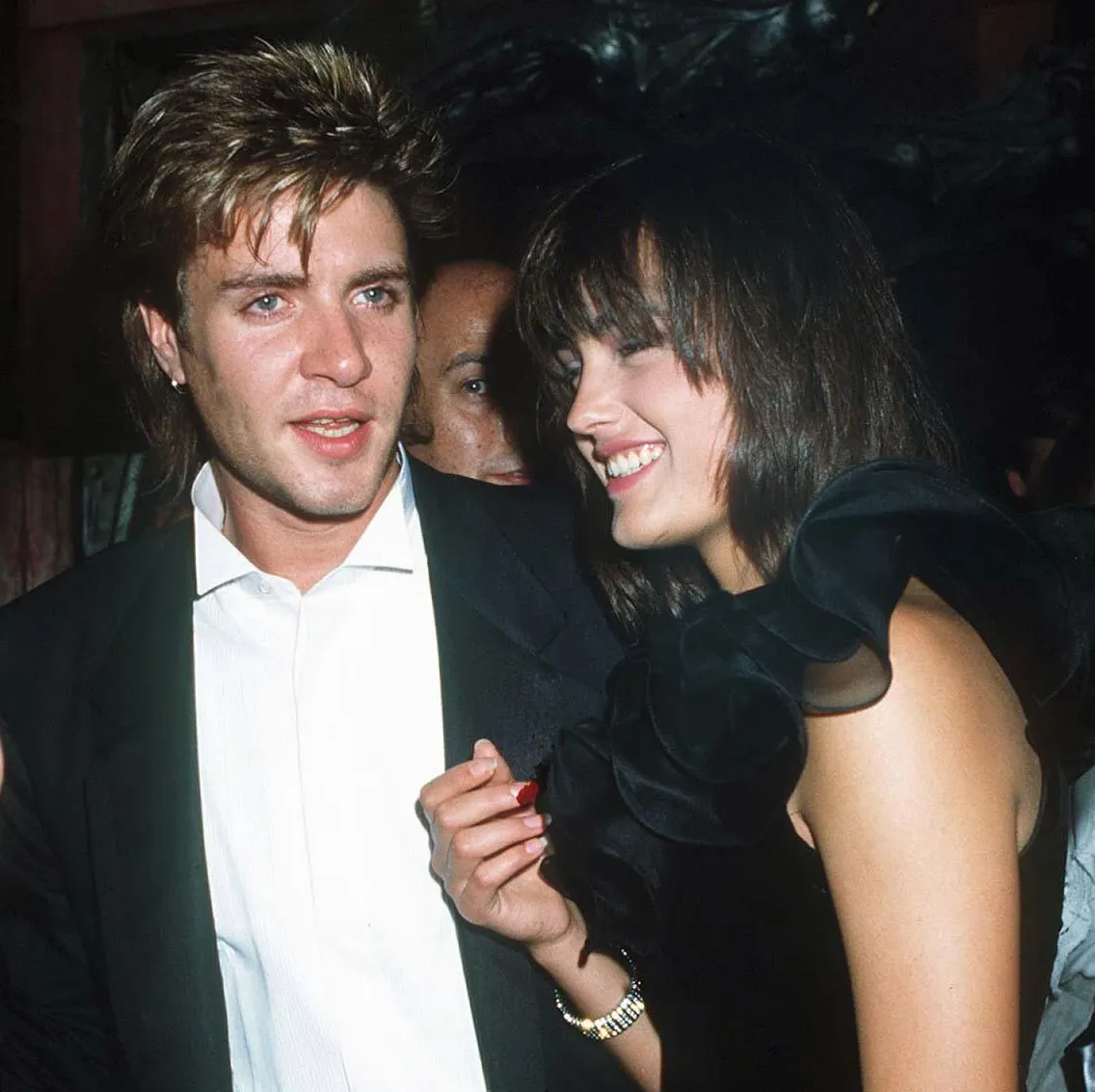 Simon Le Bon with Yasmin, his then future wife, in 1984Steve Blogg
Le Bon has been married to his wife, Yasmin, née Parvaneh, a model, since 1985. The couple have three daughters, Amber, Saffron and Tallulah. Was fame always fun? “Absolutely,” Le Bon says, bullishly. “Wouldn’t change a thing.” But surely it is harder with a family and children who have to live with a fame that’s not their own? “Yes, there is that,” he adds, more subdued. “And Yas and I are very lucky our girls haven’t been self-destructive, like so many children of famous people are. They’re just getting on with their lives and are in their thirties now — two of them are parents themselves, which is amazing. But the worst thing about the job was not the fame, but that it was so travel-intensive, so it took me away when the children were young. When I look back at that, it does make me sad.
“We were flown about the world,” he continues, “but also worked so hard, to exhaustion. The first half of the Eighties were just all up and then we hit issues around 1985. The innocence had gone. Reality caught up.” In what way? “A whole load of negative stuff. Our popularity waned and we were hanging on for dear life. But still, even when tired, you had to get yourself up the next day, so some resorted to drugs, which nearly killed somebody in the band.” (John Taylor and Andy Taylor were the heaviest users.) Was their cover of White Lines (Don’t Do It) like a note to self? “It was originally,” Le Bon says, laughing. “But I don’t think anyone needs the exact message now. The danger, though, is just the overwork. And then whatever you use to help, whether drugs or alcohol, turns out to be the thing that kills you.”
I put a theory I have about the 1980s to Le Bon: how that decade of mass MTV exposure led to more superstar casualties than from the 1960s and 1970s, how the new visual media gave artists such as Michael Jackson, Whitney Houston, Prince and George Michael less of a chance to escape. “There have always been casualties,” Le Bon says. “Heroin was the big killer. But I do think that the arrival of different psychoactive substances had an effect. When, for a while, cocaine was replaced by ecstasy for instance, that changed the survival rate for the better.”
When I ask Rhodes if drugs ever help creativity, he says: “It’s arguable, isn’t it? It’s hard to think of a great debut album made by someone who was not taking any drugs at all. The only one I can come up with is Abba.”
Le Bon and I end up chatting way over our arranged time — he is in his element, anecdote-heavy, frequently giggling over his extraordinary world. I ask if their music has ever been used in ways they did not approve? “There is always pressure on us to let Burger King use Hungry Like the Wolf,” he says. “But Nick, a committed vegetarian, won’t have it at all.”
We talk about Duran Duran’s masterful James Bond song, A View to a Kill, which he starts singing to me to prove that John Barry, one of the co-writers, was wrong about a particular chord change. “Because it only resolves at the end of the song!” he says, thrilled. A decade ago, Duran Duran suggested Kanye West could do a Bond theme. “Kanye, I really despair for him,” Le Bon says now. “Marketing swastika T-shirts is such a stupid thing to do — though it wasn’t in 1976, when Vivienne Westwood was doing it…” He is a music connoisseur, namechecking Angine De Poitrine, Thundercat and Young Fathers — his choice for a new 007 song today — as favourites, adding that hearing She Loves You by the Beatles on the radio in 1963 “blew my f***ing mind; it changed my life”.
Where next, then? An Abba-style hologram show? “I’d love to do one,” he says. “But I’d also like to do the Sphere in Las Vegas.” What about Glastonbury — they have never played the festival. “Well, we want to — but not in a disco tent at 3pm, which is what we were offered.” He scoffs. “We want the right slot.” Which would be? “We shouldn’t be below anybody on the bill,” he says, hinting that you can take the band out of the Eighties, but you cannot take the Eighties out of the band. “So, we’ll hold out because we’re a headline act — that’s all there is to it.”
Free to Love is out now. Duran Duran headline BST Hyde Park on Jul 5
What’s your favourite song by Duran Duran? Let us know in the comments