
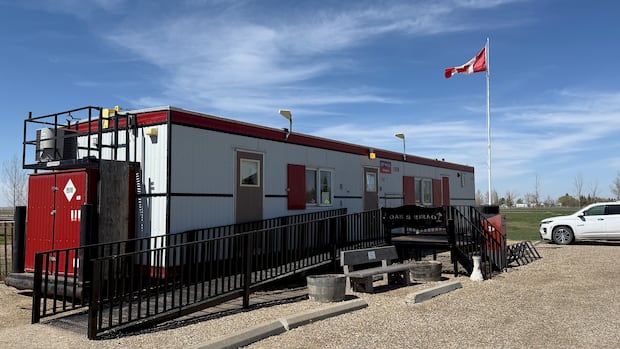
Rolling Hills, Alta., has good farming, a stable population and an office trailer for a post office.
Its residents are fighting to keep it that way.
This winter, they bought the building in the hamlet southeast of Calgary to help ensure a smooth transition as the long-serving postmaster retires.
That’s as Canada Post reviews facilities and service levels nationwide to cut costs. Locals didn’t want anything, especially a new lease, complicating matters for them.
“It’s more than a post office to us,” said Darcy Hemsing, head of the Rolling Hills Agricultural Society, which paid $30,000 after a community-wide fundraising effort.
“Canada Post and the government — everybody — has to realize that these smaller communities are slowly dying because we’re losing things.”
Checking the mail and running into neighbours is a daily ritual of rural life for Rolling Hills’ 250 residents.
It doesn’t have home delivery, but rather the trailer with 190 post office boxes for homes and surrounding farms, as well as a part-time clerk for parcel pickup because couriers and online delivery services don’t visit the hamlet.
It is one of almost 300 locations across rural Alberta where Canada Post has a facility beyond a community mailbox — like its own building, a lease with a postmaster or a franchise agreement with a local corner store or gas station.
The size and cost of that network is coming into sharp focus, however, after a moratorium on closing rural post offices was lifted in late 2025. At the same time, the Crown corporation announced a $1.5-billion loss.
Canada Post would not comment on the future of service in Rolling Hills or other rural outlets it operates, other than point to an April 16 release when it announced home delivery would end for 136,000 households next year.
WATCH | How will Canada Post phasing out home delivery impact the communities it serves?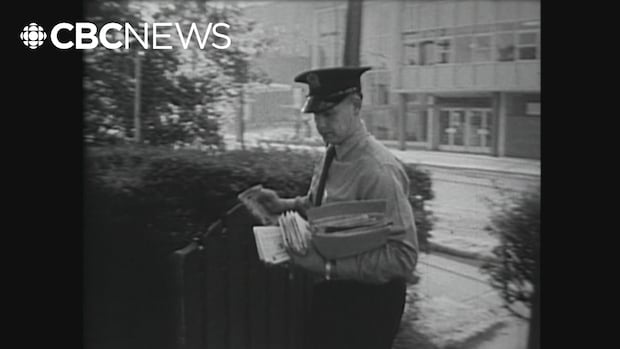
How will Canada Post phasing out home delivery impact the communities it serves?
Last week, Canada Post announced it will stop home delivery over the next few years and switch to community mailboxes across the country — a move intended to stem serious financial losses. CBC News spoke with a Canada Post letter carrier and union representative about what’s to come.
A “retail modernization” process will examine operating data from facilities across Canada before reviews of all locations are completed.
“We’ll start by making changes in urban and suburban areas that are currently over-served,” the release states, adding regional outlets would be “viewed through a community lens.”
Decisions would prioritize “service to Canadians and protecting it where it’s needed most.”
Service mandate could save some form of rural mail, says prof
Some say Canada Post can’t afford to wait as Canadians inevitably transition away from letter mail completely in the future, but rural communities present “a transition problem.”
“The policy has already been spelled out, so the question is: how are they going to get there?” said Ian Lee, a business professor at Carleton University in Ottawa, who has written extensively on Canada Post’s financial troubles.
LISTEN | Ian Lee joins Front Burner to discuss Canada Post:
Front Burner20:36Is Canada Post doomed?
He predicts there is no appetite for the federal government to cover increasing losses at the Crown corporation, but also little chance of the mass closures of rural outlets.
“I don’t think any political party is going to say to the 20 per cent of Canadians that are [considered] rural, ‘Too bad, so sad, you’re on your own,'” said Lee.
“The Government of Canada [may have to] maintain it as a social good, but only in rural and remote communities where couriers won’t go.”
On Friday — after CBC News interviewed Lee — a cabinet order gave Canada Post up to $673 million so it can “meet its operating and income” demands through next March.
Lee said cost cutting is still needed, like ending home delivery and reducing delivery days, along with reducing facility costs across the urban and rural networks.
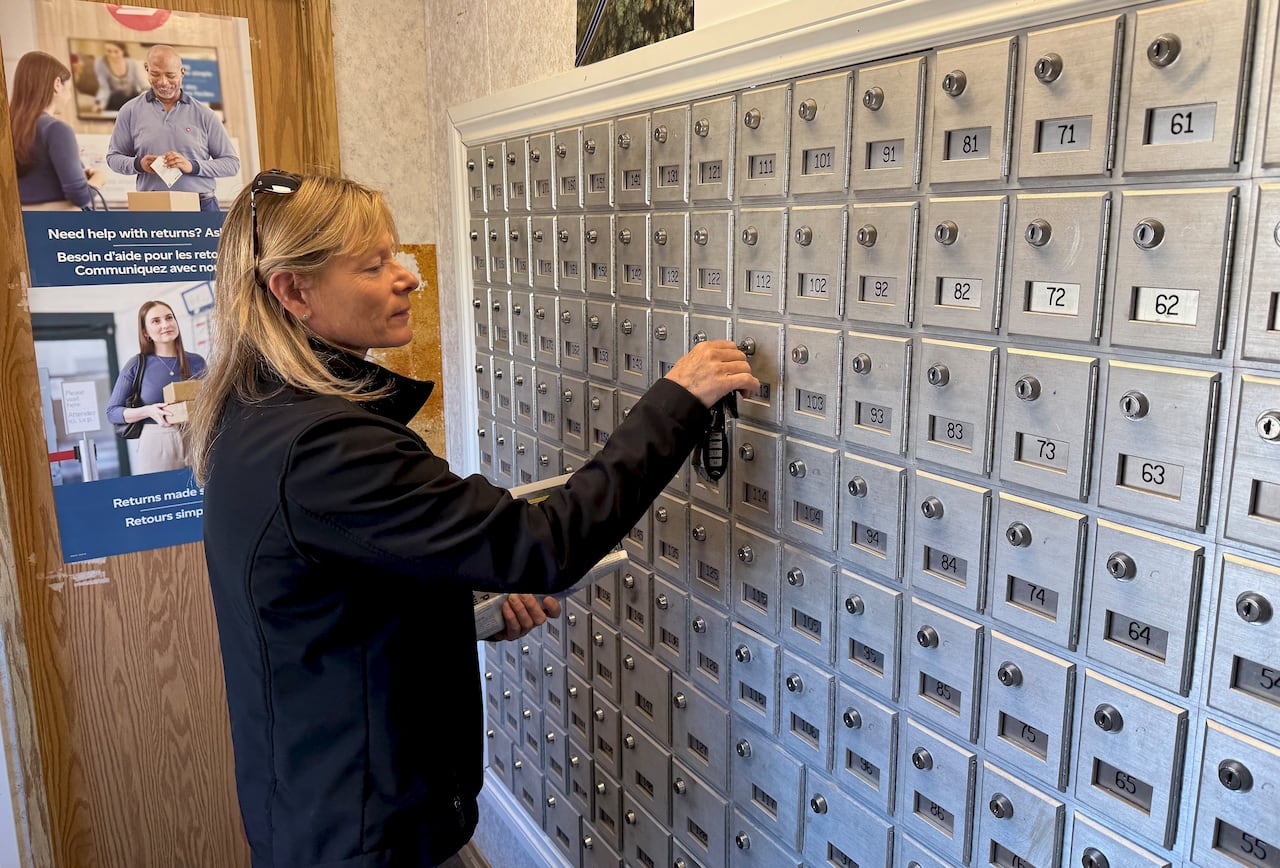 Deb Shackleton checks her mail at the Rolling Hills, Alta., post office. (Collin Gallant/CBC)Communities rally around their post offices
Leasing back buildings or even providing free space to maintain a Canada Post outlet has worked in some Alberta communities.
Donna Biggar helped organize an effort six years ago in her hometown of Carseland, another hamlet southeast of Calgary.
The agriculture society and service clubs rent a small storefront in the town’s only commercial strip for use by Canada Post, which covers staffing costs.
“We wrote a lot of letters — and I mean a lot,” Biggar told CBC News this week.
“You just try to keep your small town alive.”
Carseland has about 900 mailboxes, including those for outlying farms and acreages.
Another nearby hamlet, Langdon, lost its outlet in late 2022 when a new franchise partner couldn’t be found. The Chamber of Commerce is still advocating for a permanent post office in the hamlet, where population has doubled over 20 years to 5,600.
‘To get our mail every day … it’s really important’
In Rolling Hills, Hemsing laments there are no longer any retail businesses to act as potential franchise partners. The grocery store, gas station and, most recently, the bank branch have all closed.
Hamlets don’t have local councils. The agricultural society now operates the arena, the community hall and the Rolling Hills Reservoir Campground, and promotes fundraisers, like the annual Pumpkin Growers Ball.
A $50 entry fee gets you five pumpkin seeds — picked up at the post office — and the winner gets $1,000 and a hoodie at the weigh-in banquet in the fall.
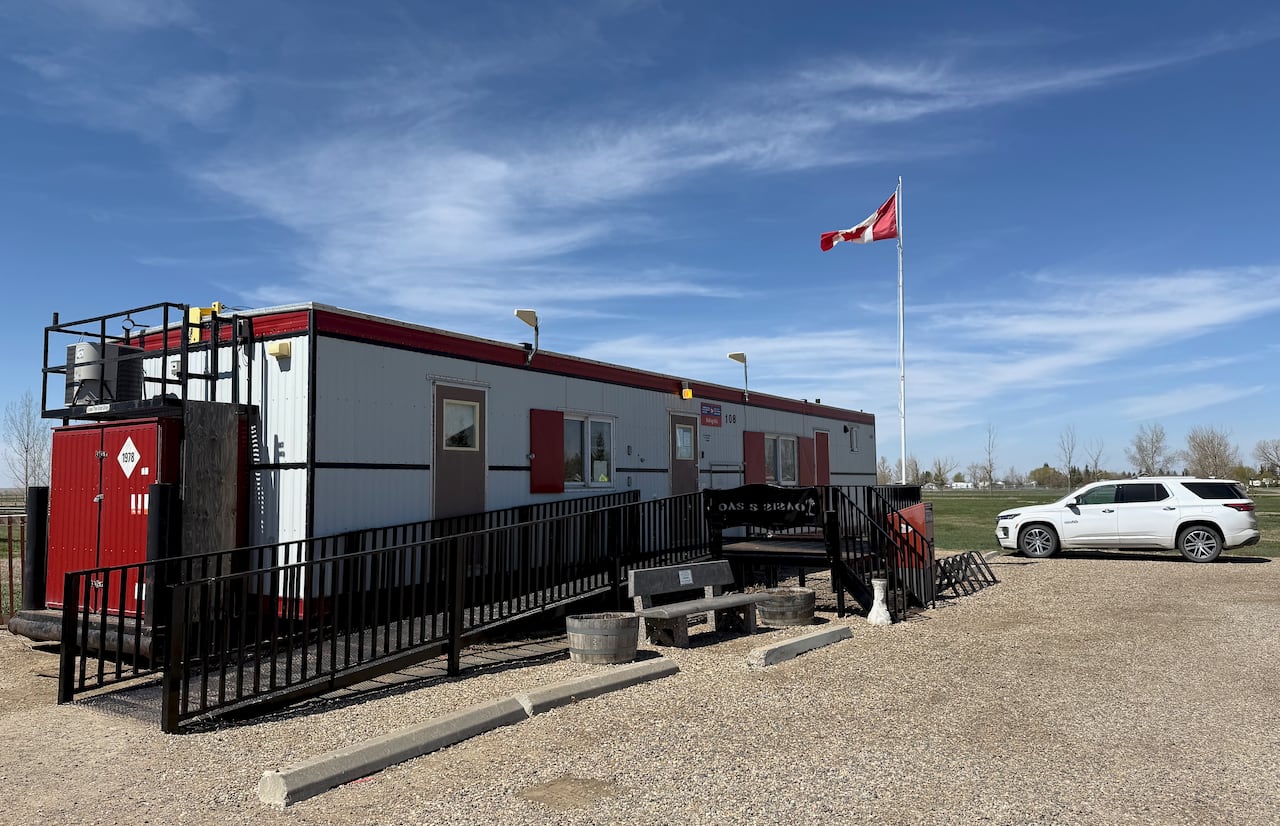 The Canada Post outlet in Rolling Hills near Brooks has been bought by local groups in hopes of keeping it open as the Crown corporation examines its national network. (Collin Gallant/CBC)
That sort of do-it-yourself, community spirit made it easy to rally around the post office, said 80-year-old lifelong resident Kathryn Holt.
“Everybody pitched in,” she said.
Her church group held a pancake supper to raise funds. Other clubs raised cash and sought donations to reach the $30,000 purchase price.
“I don’t want to have to drive to Brooks [45 kilometres away] to get my parcels,” she said.
“Just to get our mail every day … it’s really important.”