
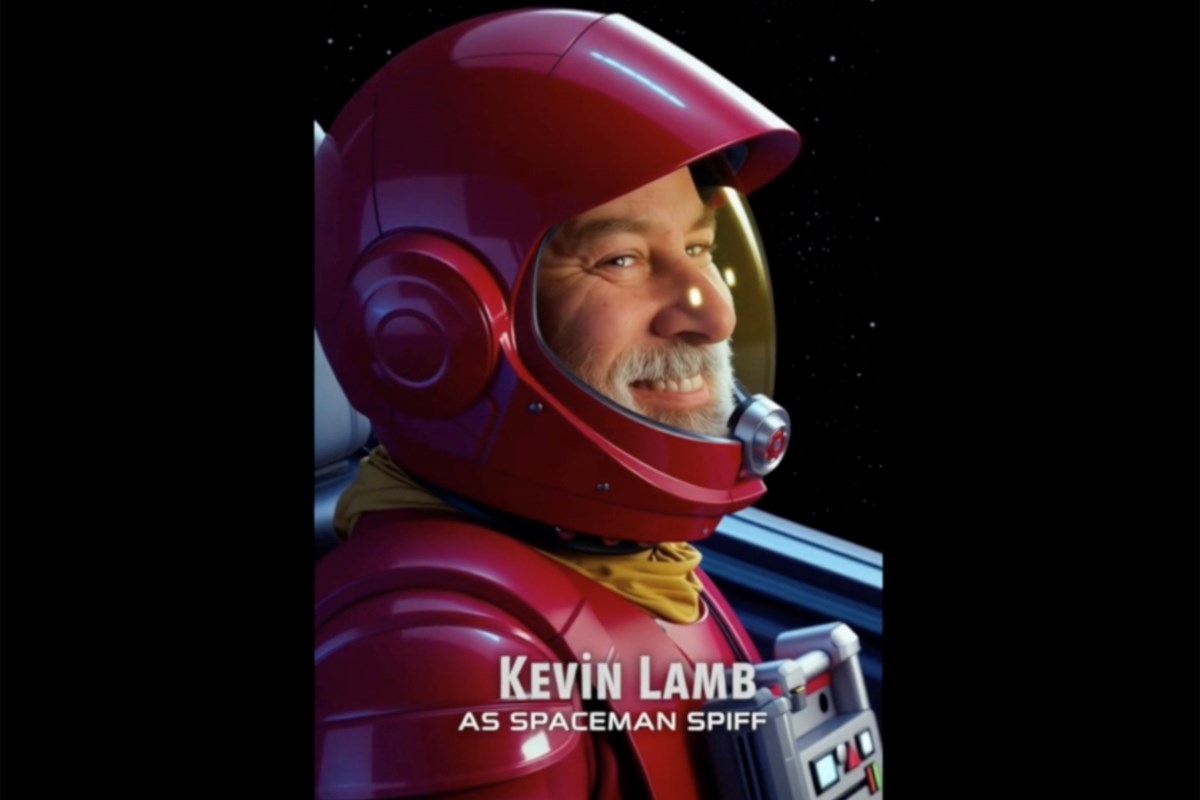
‘TV, an invention that was arguably the biggest cultural phenomenon of our time, is about to blow up even more, in ways only limited by our imagination,’ writes Kevin Lamb
With artificial intelligence (AI) looming large over our society, and how it will affect humanity overall, is a talking point endlessly discussed.
Many tech experts paint a picture of impending doom, and even go so far as to say AI will render humanity extinct if it’s not safely harnessed.
Others say AI will transform medicine by sleuthing out novel molecules which could help us in our losing battle against current antibiotic-resistant microbes.
These are the extremes of the AI discussion, of course, but what about more benign changes to everyday life?
How will AI impact how we entertain ourselves in the second half of the 21st century?
My strong belief is that TV, an invention that was arguably the biggest cultural phenomenon of our time, is about to blow up even more, in ways only limited by our imagination.
If you have been following entertainment business news in the past year, you will have read or heard about a massive and hostile corporate takeover battle played out between TV and movie giants Netflix and Paramount as each fought to acquire Warner Bros.
Paramount eventually won the fight and is purchasing Warner Bros., for a whopping $110 billion.
I’m going to bet that Netflix will be awfully sorry in the coming years for giving up on that battle, because that amount of cash won’t be all that whopping compared to the return on investment AI technology’s impact on TV and films will bring.
What has Paramount won with this sale?
Warner Bros. CEO David Zaslav said in a news release that the combined companies will create a “next-generation media and entertainment company.”
You can say that again.
One estimate says Paramount will now have roughly 200 million streaming subscribers.
But I don’t think that was really their main goal with the deal.
The company will now have the two largest film and TV content libraries on the planet.
Paramount already owns major film franchises and characters such as Mission: Impossible, Star Trek, G.I. Joe, Top Gun, Teenage Mutant Ninja Turtles, Avatar and The Godfather, just to name a few.
When Paramount absorbs Warner Bros., they will then have Batman, Superman, Wonder Woman, Harry Potter, The Lord of the Rings, Looney Tunes, Hanna-Barbera, The Matrix, Mad Max, A Nightmare on Elm Street and The Lego Movie, among too many others to name, in their vast stable.
And the copyright ownership of these likenesses is what will be worth more than gold in the long run.
If you are as fascinated about science and technology as I am, you no doubt have heard of and possibly used Sora, an AI video content app created by OpenAI.
It was just one of a handful of quality AI video generators online, and it quickly became a video content disrupter almost overnight in the past year. OpenAI shut down the Sora app last month, amid difficulties with copyright infringement, and has shifted focus to other AI projects.
While it was available, all you had to do was type in a few prompts describing what you wanted it to create, and a few minutes later you had a 10- or 15-second video clip made to your own specifications.
And most users included likenesses of themselves in the videos.
My wife and I had a ball with it for several weeks. Both of us had accounts and we would put each other in hilarious and ridiculous situations.
In one video, I was peering over the shoulder of famous Egyptologist Howard Carter as he opened the door to Tutankhamun’s tomb for the first time in 1928. I gave him a high-five for a job well done.
In another one, which stretched into a series of short clips, I was quietly paying off L.A. Dodgers baseball players to let the Blue Jays win each game of the World Series last year, with envelopes of cash, and delicious poutine. I even pitched in one of the games.
My Facebook and Instagram posts garnered lots of laughs from my friends, which is always my goal, of course.
One night, I decided to make a short film made up of a series of 10-second Sora clips of myself as ‘Spaceman Spiff,’ the sci-fi character Calvin daydreams about in the iconic comic strip Calvin and Hobbes, which you can watch yourself, below. There’s even a blooper reel after the end credits.
My sincerest apologies to Calvin and Hobbes creator Bill Watterson.
It’s safe to say that both Calvin and I are blessed with a wild imagination, which causes us both trouble when we are supposed to be completing some other more important task.
It’s a bit rough around the edges and you have to know how to splice together video files, but it was great fun.
Now, picture if you will, Rod Serling introducing your own appearance in a wildly bizarre episode of The Twilight Zone.
I’m betting Paramount is banking on your craving to do just that on a much larger scale, hence their purchase of the Warner Bros.-copyrighted content.
Mark my words: In a few years there will be an announcement that Paramount will either drop a mountain of cash to acquire a mid-level AI tech company or strike up a wide-ranging licensing deal with the big players, OpenAI, Google or Anthropic (the creator of AI agent Claude).
Gone with the wind will traditional movies be.
I see a wildly entertaining future where I can replace William Shatner in Star Trek II with myself as I battle Khan for control of the galaxy.
Instead of Mad Max, I could log into my Paramount account and use AI to create ‘Mad Kevin’ and create whatever plot and characters I could dream up by typing in prompts, hitting send – and a few minutes later – sitting on my couch with a bag of chips watching a two-hour movie I’m starring in.
I could animate myself and run around being chased by Yosemite Sam, and just for shits and giggles, I’ll toss in Batman and Freddie Krueger to make it even more ridiculously fun.
I would be limited only by my imagination – and I can imagine a lot.
It will become an entertainment revolution.
Let’s hope corporations can sort out the monumental environmental impacts of powering and cooling data centres before then, or we’re in big trouble.
Kevin Lamb is a photojournalist at BarrieToday.