
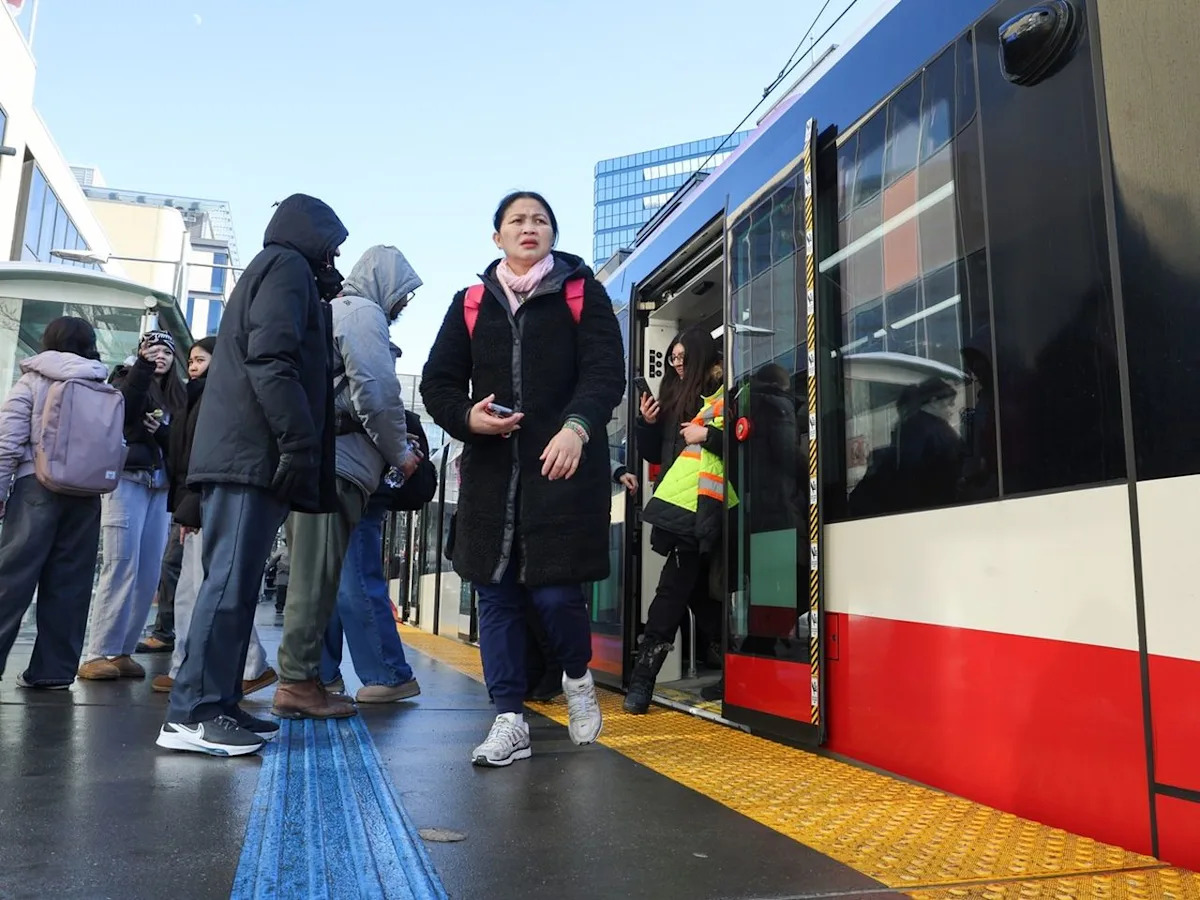
Despite opposition from downtown-area business groups and transit users, a Calgary council committee voted 7-4 Friday to endorse scrapping the free fare zone in the city’s downtown.
Administration is recommending the removal of the zone, which has been a fixture of Calgary’s public transit system since the CTrain began operations in 1981. It allows for passengers to hop on and off the LRT along 7th Avenue, from the City Hall-Bow Valley College station to the Downtown West-Kerby station, without needing to purchase a fare.
Calgary Transit director Sharon Fleming said the free-to-ride zone has made it difficult for transit peace officers to enforce fare compliance and has contributed to heightening public concerns around social disorder along the network.
“Ultimately, safety is the driving factor behind administration’s recommendation to remove the free fare zone,” she said, citing the results of citywide surveys and among transit users, particularly in the downtown.
“Ridership gains from expanded transit service, fare pricing or messaging are limited unless safety issues downtown are addressed first,” Fleming said.
Removing the free fare zone is expected to increase Calgary Transit’s revenue by $5 million a year, according to Fleming, who said administration recommends council reallocate any extra funding toward safety-related enhancements.
Eleven members of the 15-person council — comprising the infrastructure and planning committee — voted on the issue Thursday. Committee members who voted against the recommendation to remove the zone included Ward 7 Coun. Myke Atkinson, Ward 8 Coun. Nathaniel Schmidt, Ward 5 Coun. Raj Dhaliwal and Ward 3 Coun. Andrew Yule.
The free fare zone’s removal must still be voted on by city council at its May 26 regular meeting. If at least eight members support the recommendation, transit fees would be in effect along the CTrain downtown in August.

Calgary Ward 7 Coun. Myke Atkinson speaks to media outside council chambers on Jan. 27, 2026. He said the downtown free fare zone should remain.
“I don’t believe there is any justification for eliminating the free fare zone,” said Atkinson, the downtown-area councillor.
“We’ve been making massive investments to make sure the tax productivity of our downtown core rebounds from the bottoming out that we had a couple years ago. Something like this potentially means we have less people moving around, less people visiting businesses within the downtown.”
Ward 6 Coun. John Pantazopoulos sought to amend the motion by implementing an alternative rate structure for the LRT downtown that would see single-trip tickets priced at half the current rate, and for transfer times to be cut in half. He called it a middle ground.
The amendment was rejected in a 1-9 vote.
Yule also brought an amendment to defer the motion until next year’s fare strategy review is completed, to allow for additional engagement with downtown stakeholders.
“I think with a decision (like this) after four decades, I’d rather it not be a yes-no answer but an innovative answer that Calgarians can get on board,” he said.
“Let’s find a better solution.”
Yule’s amendment was also shot down, 4-7.
Committee chair Andre Chabot reiterated Fleming’s comments that removing the free fare zone will free up more revenue to bolster safety on the transit system.
“How can we not want that?” said Chabot, the Ward 10 councillor. “That’s the No. 1 thing people said will get them back on transit.
“For me, it’s not about the revenue, it’s about what it can potentially lead to.”
Before the vote, roughly a dozen members of the public addressed the committee, many representing downtown or business groups, with each urging councillors not to remove the free fare zone.
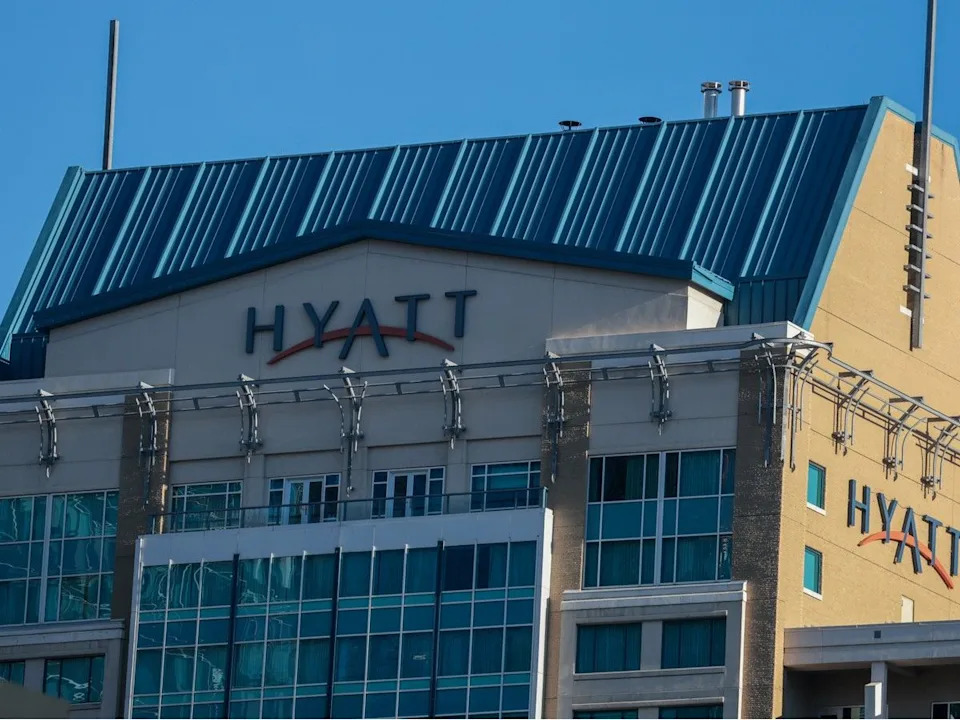
The downtown Calgary Hyatt Regency hotel. Downtown businesses and in turn the Calgary economy benefit from people having free use of the CTrain said
Carson Akroyd, senior vice-president of sales for Tourism Calgary, said many of the city’s convention and conference centres, as well as downtown-area hotels, are “built around” the free fare zone as an incentive to attract visitors. Removing it would make downtown Calgary less attractive and less competitive for hosting conferences and events, he said.
The free fare zone is not a transit subsidy, but rather one of Calgary’s highest performing economic assets, Akroyd argued. He cited that in 2025, conventions and conferences in the downtown generated $240 million for the city.
“We need to look at the free fare zone not as an expense, but as a strategic investment in Calgary’s economic growth and competitiveness,” Akroyd told the committee.
“At the end of the day, the decision before council is whether to trade roughly $5 million in revenue for a convention and visitor economy that generates hundreds of millions (of dollars) annually for Calgary businesses, workers and tax revenue.”
Another speaker was Andrew Doudican, urban strategy director for the Calgary Downtown Association. He called removing the free fare zone an “anti-downtown” proposition, adding the zone is an economic tool and a “critical connector” for moving people freely through Calgary’s core.
“The free fare zone has enabled that for more than 40 years,” he told the committee. “It makes the downtown feel connected, accessible and efficient. That matters. Downtown is Calgary’s economic engine — much of Calgary’s tax revenue is generated here — and when you reduce the ease of movement, you reduce economic activity. And that has real, fiscal consequences.”