
A Manitoban living in Iran fears generations will be lost amid a months-old war and deep uncertainty about what the future will bring, with or without its current regime.
The Iranian-Canadian man, who requested anonymity, painted a bleak portrait of living conditions after the regime’s deadly crackdown against protests, air strikes by the U.S. and Israel, and sharp cost-of-living increases.
“Obviously, I am sad. There are young people with no jobs, no future,” the man told the Free Press. “Imagine, they don’t see any future for themselves. Two or three generations burnt like woods.”
JOHN WOODS / FREE PRESS
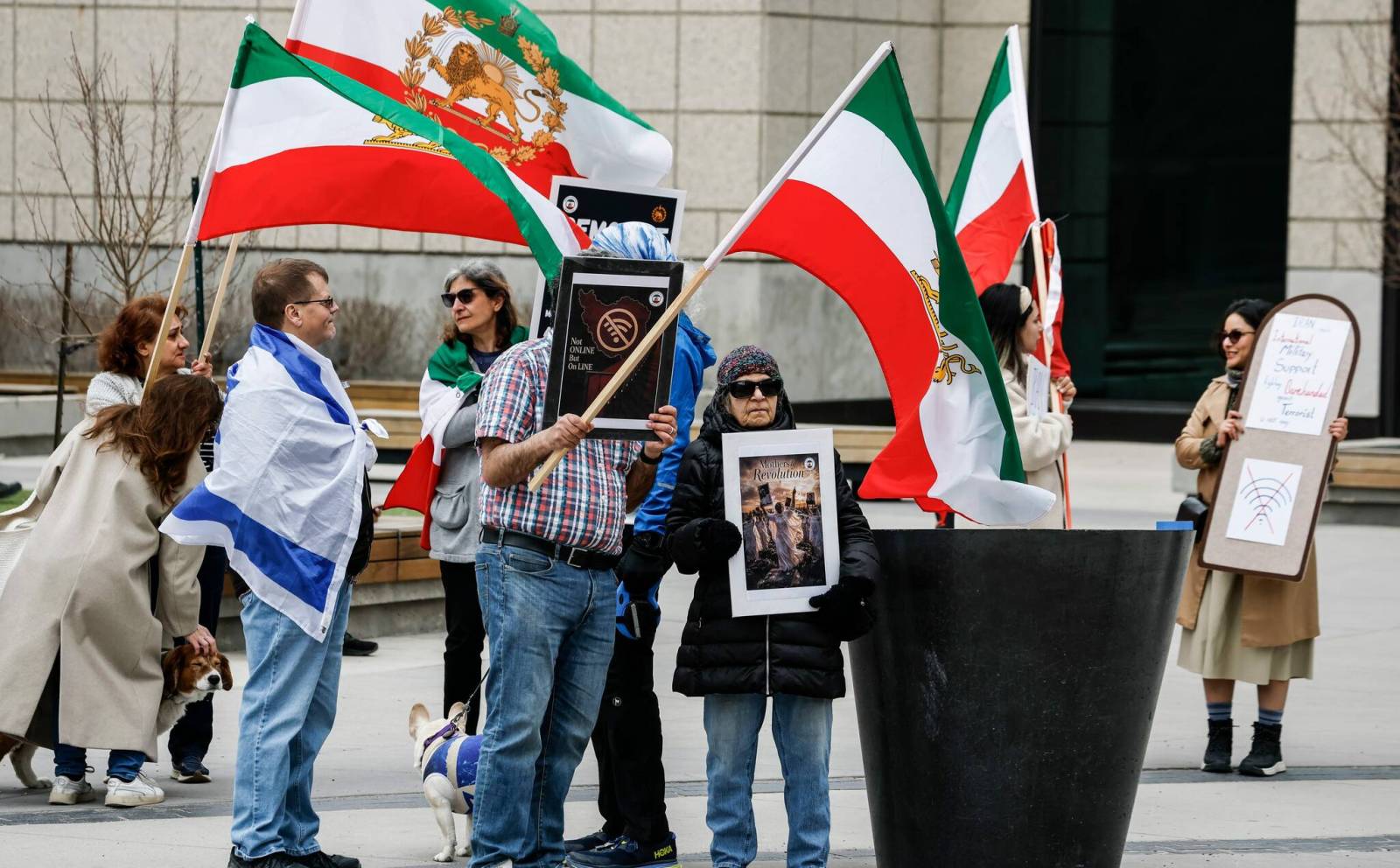
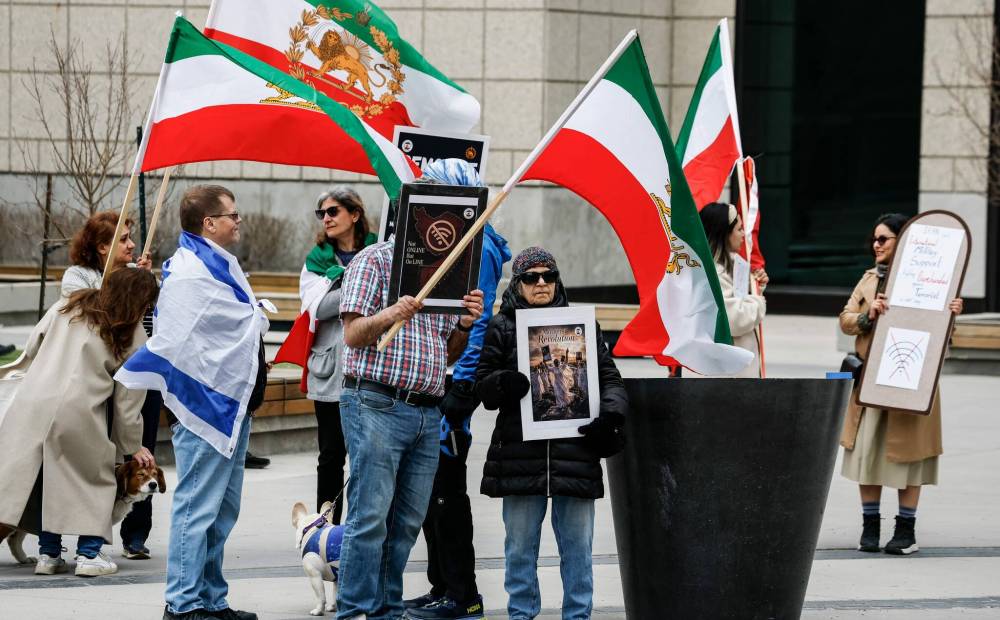
People gather at the corner of Portage and Main in Winnipeg to rally for regime change in Iran, Sunday.
He fears the war will continue for a long period without regime change, or that Iran will enter a situation similar to Gaza or Lebanon.
“Constantly being bombarded and destroyed,” he said.
The war began Feb. 28 when the U.S. and Israel launched air strikes — killing Supreme Leader Ayatollah Ali Khamenei — in an attempt to topple Iran’s Islamic Republic, which responded with strikes against Israel and U.S. air bases allies.
U.S. President Donald Trump claimed Iran was trying to rebuild its nuclear program and develop missiles, making it a growing threat to Israel, U.S. overseas military bases and European allies.
The war has expanded to other Middle Eastern countries. The civilian death toll is in the thousands, according to figures provided by governments or human rights groups.
Global fuel prices have soared and markets have been shaken. Households in oil-rich Iran have been choked by rising prices for food, housing and other necessities, while the country suffers extreme economic damage.
The Manitoban who lives in Iran expressed concern for the safety and well-being of Iranians, especially those who were already struggling.
“Life is bad for poor people. Iranians are used to saving a lot. Otherwise, when their jobs close down due to war, they would go hungry,” he said. “There are thousands who won’t have savings. Rent doubled, groceries doubled in just one week.”
“Obviously, I am sad. There are young people with no jobs, no future… Imagine, they don’t see any future for themselves. Two or three generations burnt like woods.”
Negotiations to end the war and reopen the Strait of Hormuz’s shipping lanes are taking place through a mediator. Attacks have been reported despite an agreed ceasefire.
The federal government has said about 3,000 Canadians were in Iran at the start of the war. Ottawa urged Canadians to leave if they can do so safely.
Canada warned that Iranian border officials may prevent people with dual Canadian-Iranian citizenship from leaving.
For many Iranians, internet blackouts make it difficult to communicate and provide reassurance to loved ones who live in Canada and other countries. Some members of the Iranian diaspora in Manitoba have gone weeks or longer without hearing from relatives or friends in Iran.
Protests were held in Winnipeg and cities around the world Sunday to raise awareness of the blackouts.
About two dozen demonstrators, most of whom have family and friends in Iran, gathered outside 201 Portage Ave., a downtown high-rise at Main Street, where the U.S. consulate is among its tenants.
Shahla Shojaei, founder and manager of the Iranian Monarchists of Manitoba, was relieved after she received a phone call from her mother in Iran. Shojaei was able to wish her a happy Mother’s Day.
She hasn’t communicated with some family members since the war started. She believes those who are able to call or send messages are shielding her from horrors of the war.
“Life is bad for poor people. Iranians are used to saving a lot. Otherwise, when their jobs close down due to war, they would go hungry.”
“Most of the time that they are calling, they just say, ‘We are OK, everything is good,’” Shojaei said.
She became emotional while discussing her family, and the health and safety of Iranians in the war zone.
“Many people are in danger. Many people have no human rights,” Shojaei said.
She said Iranians are in a state of limbo and do not know what will happen next, with many asking, “Why didn’t (the U.S. and Israel) continue to complete regime change?”
“Why did they stop in the middle? Why did they leave us in the middle of this catastrophe?” Shojaei said.
She wants to see the clerical regime toppled and the Pahlavi monarchy return to Iran.
Shojaei carried the Lion and Sun flag that was Iran’s state flag until the monarchy was overthrown by the 1979 Islamic Revolution.
Winnipeg Free Press | Newsletter
Sunday’s demonstration in Winnipeg condemned the executions and arrests of anti-regime demonstrators in Iran.
“Why did they stop in the middle? Why did they leave us in the middle of this catastrophe?”
The 2026 war was preceded by an Iranian regime crackdown on nationwide protests. Human rights groups said tens of thousands of people, including children, were killed, injured or detained by security forces.
The United Nations human rights office said victims or detainees included lawyers who sought to represent protesters, medical professionals who treated the wounded, journalists, and writers, artists and human rights defenders who supported the protests.
“I personally cried a lot when I saw every day, (and) they say their names on (an independent TV news channel),” the Manitoban in Iran said.
chris.kitching@freepress.mb.ca

Chris Kitching is a general assignment reporter at the Free Press. He began his newspaper career in 2001, with stops in Winnipeg, Toronto and London, England, along the way. After returning to Winnipeg, he joined the Free Press in 2021, and now covers a little bit of everything for the newspaper. Read more about Chris.
Every piece of reporting Chris produces is reviewed by an editing team before it is posted online or published in print — part of the Free Press‘s tradition, since 1872, of producing reliable independent journalism. Read more about Free Press’s history and mandate, and learn how our newsroom operates.
Our newsroom depends on a growing audience of readers to power our journalism. If you are not a paid reader, please consider becoming a subscriber.
Our newsroom depends on its audience of readers to power our journalism. Thank you for your support.