
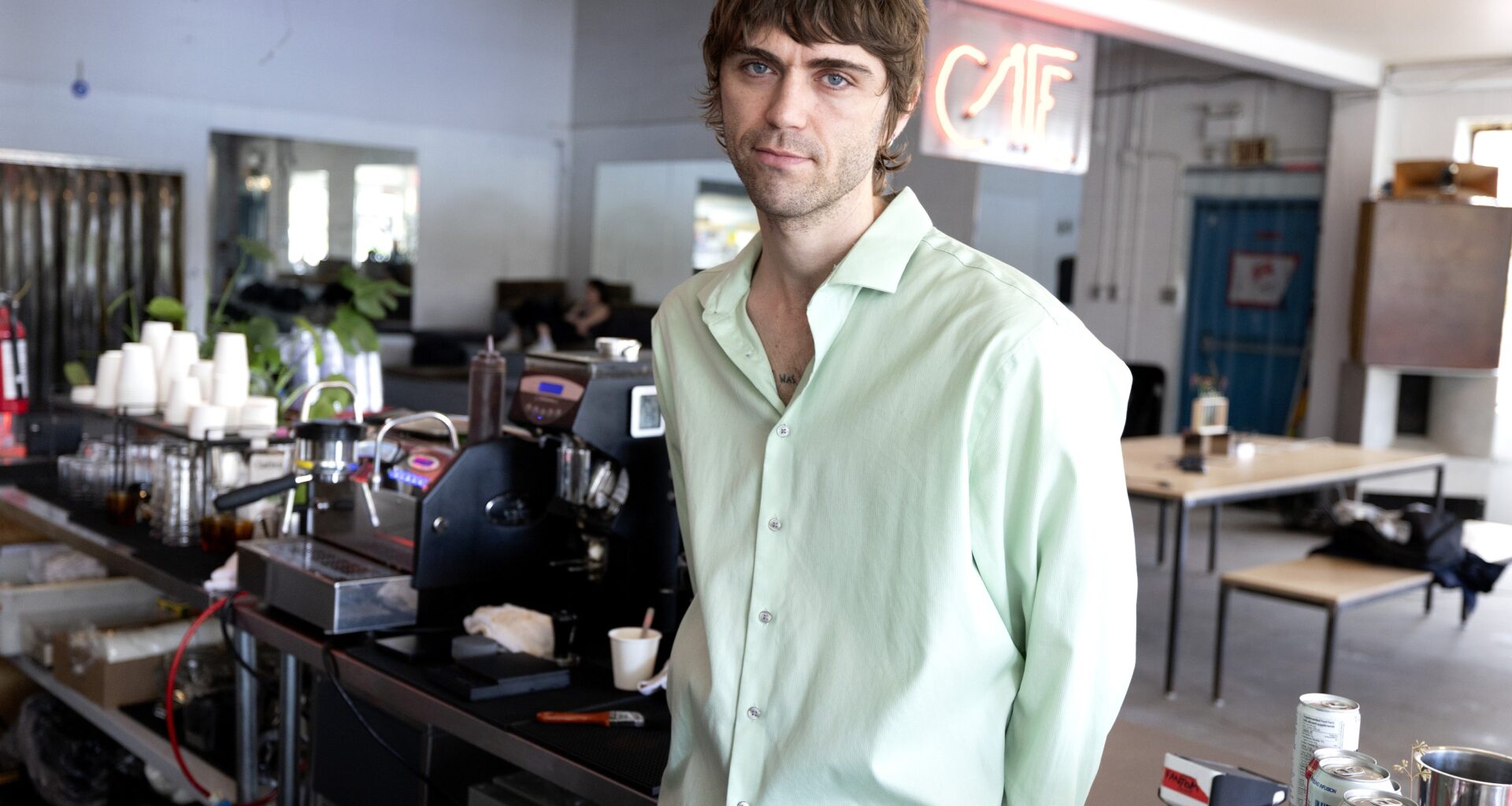
A Montreal artist-run café and nightclub may be forced to close before the end of its lease amid legal hearings over an alcohol permit dispute.
Parquette, one of the first multi-use venues of its kind in the borough of Rosemont—La Petite-Patrie, has been a hub for the electronic music scene and queer community since opening in an abandoned gym on Bellechasse St. last spring. In addition to serving as a nightclub and café, it functions as a DIY community centre, also offering workout classes, art markets and a weekly choir.
Jacobi Vanderham, a staff member and director of the weekly choir, says for many members of the queer community, Parquette has “saved their life.”
“The fact that we’ve all been able to meet here so regularly, and that the space has been a steady habitat that (allows) cross-pollination to happen,” allowed Parquette to build a strong creative community, Vanderham said in an interview.
The project was always meant to be temporary, because the building is slated for demolition at the end of this year. Parquette’s management intended to continue operating until the fall of 2026, but an administrative issue with the Régie des alcools, des courses et des jeux means the project could end sooner than planned.
For most of the week, Parquette is open during daytime hours, serving coffee and pastries. But a few weekends a month, it transforms into a nightclub and serves alcohol. It previously relied on one-off special event permits, called reunion permits, granted by Quebec’s liquor licence board for each party, explained Oliver Philbin-Briscoe, who has helped manage Parquette since its opening.
“Because it was a former gym, none of the zoning that it had allowed us to either get a full (liquor) licence or an accessory permit,” with the latter allowing venues that are not primarily bars or restaurants to sell liquor as a secondary activity, Philbin-Briscoe said in an interview.
“Both would have been less precarious than the reunion permits,” he added.
The Régie des alcools is taking Parquette to court, alleging it has overused the reunion permits, according to Philbin-Briscoe.
On top of the allegation of permit overuse, the venue was flagged to authorities when an ambulance was called to Parquette during an overnight party last winter; management was told they would not be able to obtain another nighttime liquor licence if such an incident happened again. Philbin-Briscoe said two 911 calls were made to the address this year — one in January and another in March.
A party they hosted in April was originally meant to serve alcohol and happen overnight, but after a legal notice was handed down by the liquor licence board, the organizers pivoted to a dry day party. Revenue from that event was about one-10th of what it would have normally been, according to Philbin-Briscoe, because of the absence of alcohol sales.
Parquette’s management and the Régie des alcools appeared in court in April; the hearing was pushed to May 15. Philbin-Briscoe hopes management can reach an agreement with the liquor board that would allow the space to stay open with adjusted programming until the fall, because Parquette relies on alcohol sales to pay rent. They have agreed with the landlord to pay rent until at least the end of June, and negotiated a rent reduction to alleviate the financial loss.
A few dry daytime parties and other community events are scheduled throughout May and June, but Philbin-Briscoe said Parquette’s management is looking into other buildings they could potentially move to, ideally in the Rosemont—La Petite-Patrie borough or a neighbouring one.
“It’s a neighbourhood that we felt really welcomed as a project and has allowed this project to grow,” he said.
A spokesperson for Rosemont—La Petite-Patrie, Alexandra Proulx, said the borough is “fully available to discuss the matter” with Parquette’s management to understand their concerns and “determine whether action on our part is required.”
Given the limited nature of the lease and the planned demolition of the building, it was never guaranteed Parquette would survive through 2026. For Vanderham, being allowed to stay open in 2026 at all has been a “bonus.”
“Considering that this thing was always temporary, I just feel like once we’ve moved on from this space, the connections and the new relationships and artistic practices that have grown from this space, it’s gonna transcend these walls,” he said.
“It’s been very complex and full of so many ups and downs for people organizing it but, ultimately, for the community, it’s just been a gift. And we just have to enjoy the present moment of it.”

Leora Schertzer is a reporter at the Montreal Gazette who thrives on the chase. Whether it’s producing a documentary about sewage or investigating a Nazi gold scandal, it’s the novelty and adrenaline that keep her in this challenging industry. Send her tips at lschertzer@postmedia.com.