
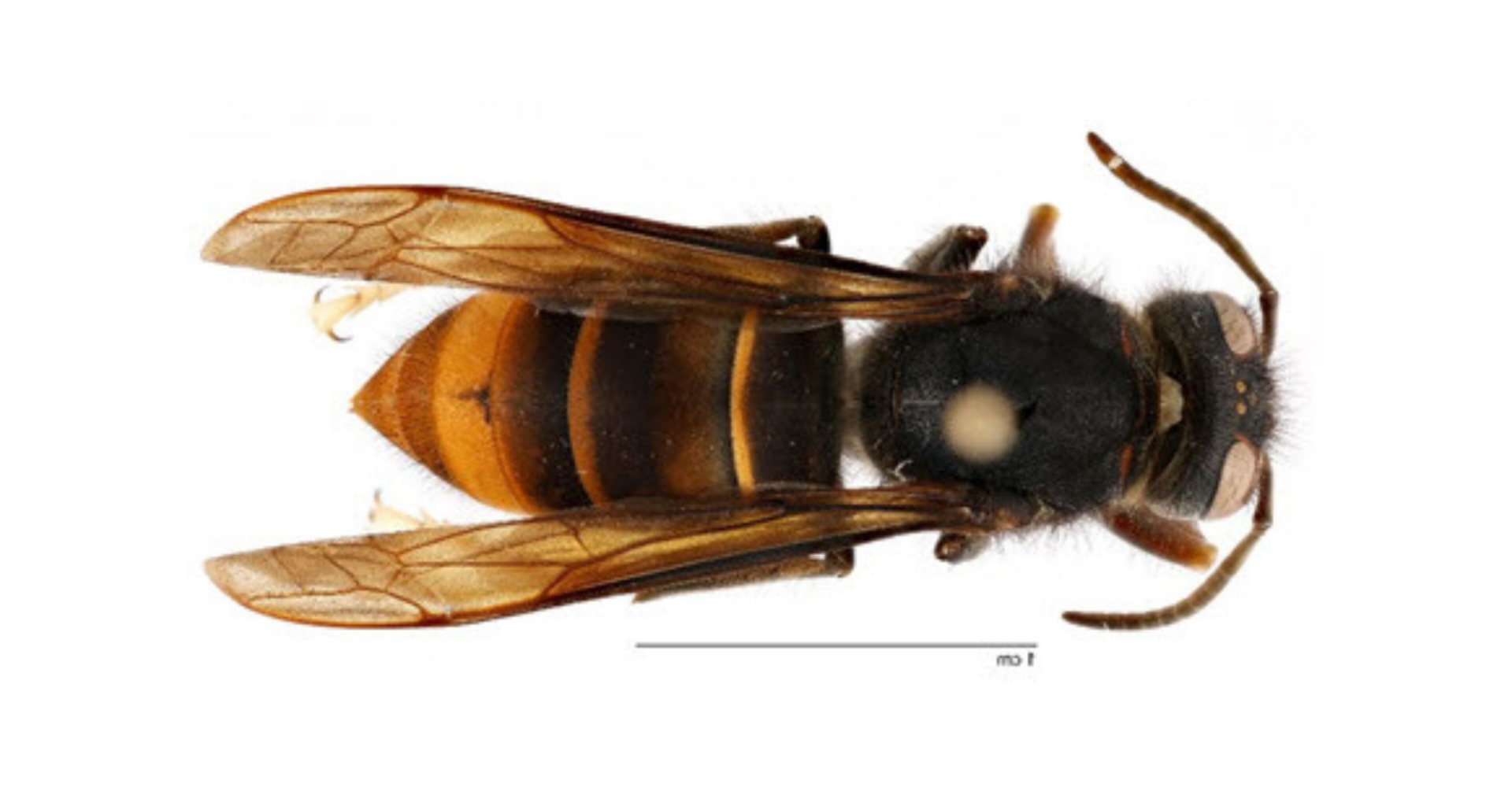
Its ability to “hitchhike” across oceans is one reason the hornet species is considered a threat.
The recent sighting in Vancouver, Washington, is the first confirmed detection in the U.S. state, following previous reports in Georgia and South Carolina, according to NPR.
Yellow-legged hornets thrive in warm, summer weather. Most will die off when temperatures fall below freezing, but pregnant queens will hibernate by finding shelter in wood piles, tree bark, or man-made shelters like garages or, in some cases, via cargo ship containers, emerging when weather conditions are warm enough in the spring.
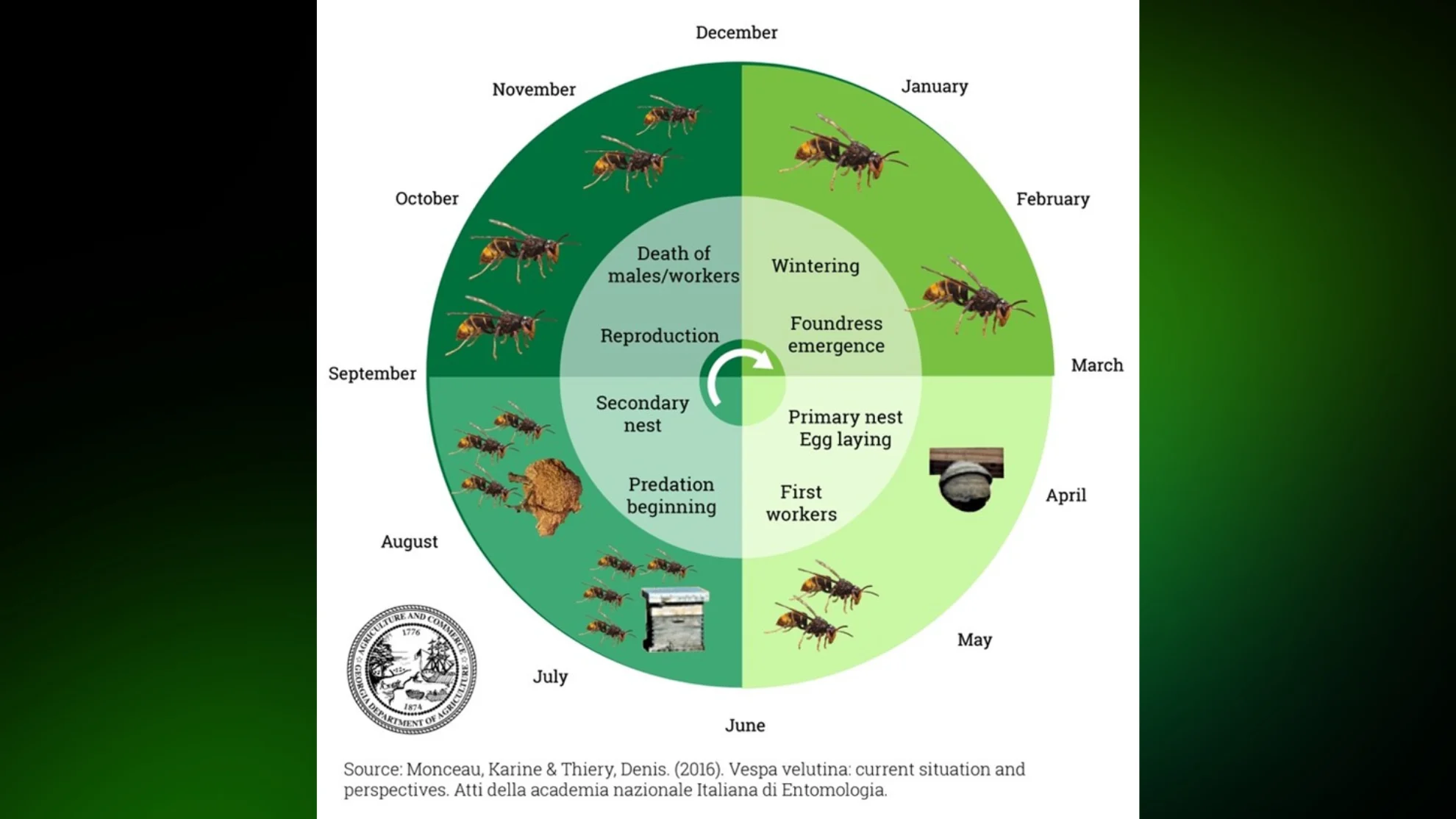
The life cycle of the yellow-legged hornet. (Georgia Department of Agriculture)
Why is the yellow-legged hornet dangerous?
The yellow-legged hornet, which is native to Southeast Asia, can spread rapidly in North America due to a lack of natural predators.
Considered to be “highly invasive” by the WSDA, the species can decimate native honey bee hives.
“It was introduced to Georgia near the Port of Savannah in 2023 and has since spread to nearby South Carolina. Both states are currently undergoing eradication efforts,” the WSDA writes in a press release.