

Listen to this article
Estimated 4 minutes
The audio version of this article is generated by AI-based technology. Mispronunciations can occur. We are working with our partners to continually review and improve the results.
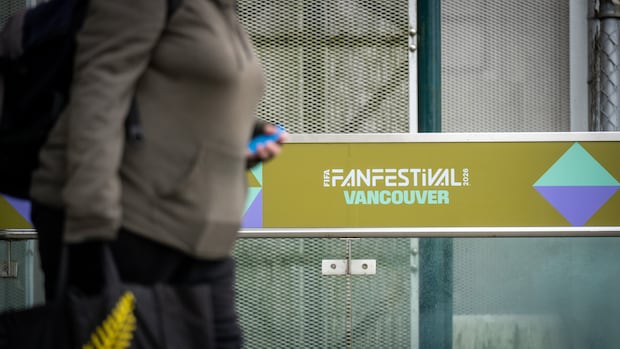
Vancouver residents may soon notice more structures, louder nights, and tighter rules around public spaces as the city enters the FIFA World Cup “event period” on Wednesday.
With the province estimating roughly 350,000 visitors to B.C. Place during the tournament, the city says it is enacting temporary changes intended to create a “clean, safe, and organized” experience.
The FIFA World Cup 2026 Bylaw gives the city expanded powers over advertising, vending, noise, graffiti removal and the management of public space from May 13 to July 20, 2026.
City officials say the changes are necessary to host one of the world’s biggest sporting events. Critics say the bylaw hands extraordinary influence to FIFA while increasing pressure on residents already living at the margins.
The changes arrive as Vancouver prepares to spend between $532 million and $624 million hosting seven tournament matches, with the city responsible for up to $281 million.
Changes to local laws
According to the bylaw, several changes will take place on Wednesday:
Relaxed rules for building temporary event infrastructure, such as fan zones, signage, and other installations near key sites.New restrictions on street vending, busking, and certain advertising activities in event areas. Faster removal of unauthorized commercial signs to protect FIFA branding.Extended noise allowances, particularly to accommodate international broadcast schedules and event operations. Truck routes and deliveries may also be adjusted in busy parts of the downtown core to accommodate security and event logistics.
Most changes apply to a two-kilometre “controlled area” around B.C. Place and the FIFA Fan Festival site at Hastings Park.
For most common violations, bylaw officers can issue tickets ranging from $250 to $1,000.
The enforcement of these laws is a joint responsibility between the City of Vancouver and the Vancouver Police Department.
Advocates fear displacement
Some housing advocates and legal experts say the bylaw’s emphasis on “cleanliness” could lead to the displacement of unhoused residents.
“This is basically the privatization of public space,” said Penny Gurstein, professor emeritus at the University of British Columbia’s School of Community and Regional Planning. “I think people should be worried, especially people who are experiencing homelessness, living on the streets.”
WATCH | FIFA Congress protests in Vancouver: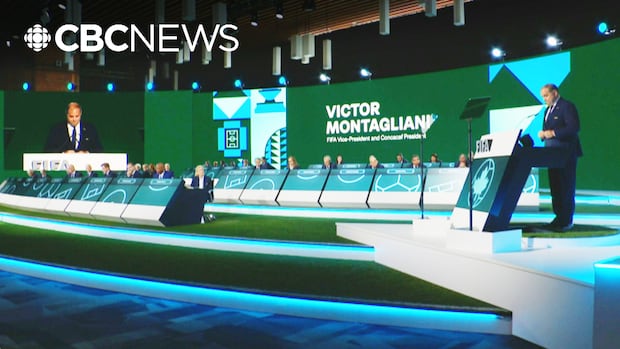
FIFA Congress brings international delegates — and protesters — to Vancouver
The international soccer organization FIFA held its annual congress at the Vancouver Convention Centre this week. The ceremonial event came with tight security and a string of protests outside. As Jon Hernandez reports, it could be a sign of what’s to come when the World Cup arrives.
The city says the bylaw doesn’t change existing protections for unhoused residents.
Officials say people experiencing unsheltered homelessness will still be allowed to erect temporary overnight shelter in parks where existing bylaws permit it.
On the matter of beautification, the city says this term refers to physical infrastructure repairs, like sidewalks and decorating construction sites, and they say this work has “no assessed impact on human rights.”
Celebration or disruption?
Margot Young, a constitutional law professor at UBC’s Allard School of Law, says the impact of the World Cup will not be felt equally.
“There will be disruption, but that disruption will be different for different groups in the city depending really upon their … social and economic status,” Young said.
Young said affluent residents may experience the tournament as a celebration, while lower-income residents could face disruptions.
“For those with money, they maybe can go to games, they can take part in the parties,” she said. “But for individuals who are at the bottom of our … income and wealth distribution … they will be moved around by the reordering of city space by FIFA.”
She also questioned whether the city’s promises of trauma-informed enforcement will hold up in practice.
“There’s no system in place to sort of monitor what is happening with respect to the vulnerable populations,” Young said.
City says services to continue
The city says homelessness services and outreach programs will continue throughout the tournament.
Officials say Vancouver currently has more than 1,500 shelter beds and approximately 8,100 supportive housing units, alongside outreach teams, hygiene services and storage programs.
In a written statement, the city described the World Cup as a “once-in-a-generation opportunity” to showcase Vancouver.