
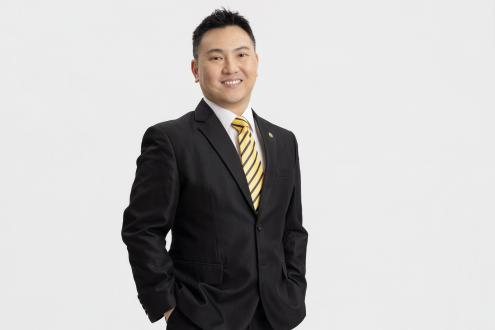
As wealth clients across ASEAN become more sophisticated, mobile, and solutions-driven, Maybank’s wealth management proposition is being shaped around three core client needs: protection, growth, and legacy. For Alex Chong, Head, Wealth Management Products at Maybank, the opportunity lies not only in delivering investment products, but in building a more complete wealth platform that can support clients across life stages, geographies, business interests, and increasingly complex portfolio requirements.
Maybank’s position as a universal bank with a substantial ASEAN footprint gives the group a distinctive role in the regional wealth landscape. Its proposition is particularly relevant for business owners and higher-net-worth clients whose banking, investment, corporate, and cross-border requirements often overlap. In this context, wealth management is not treated as a standalone product shelf, but as part of a broader banking ecosystem that connects private wealth, corporate banking, investment banking, financing, and regional market access.
A Universal Bank Proposition Anchored in ASEAN Connectivity
Maybank’s wealth management offering is built around a broad interpretation of client need. At its core, the platform is designed to provide wealth solutions across protection, growth, and legacy planning, positioning the bank as a one-stop centre for clients seeking investment, insurance, and longer-term wealth structuring support.
Chong points to Maybank’s differentiation in the depth of its regional connectivity and the breadth of its institutional capabilities. For clients with commercial interests across ASEAN, this matters. A business owner in Singapore looking to expand into Malaysia, Indonesia, Thailand, or the Philippines may require more than portfolio advice. They may need access to regional banking relationships, corporate finance expertise, lending capabilities, and local market understanding.
“We are a universal bank, with a strong presence across the region,” Chong explains. “That allows us to help customers, particularly business owners, tap into a wider set of capabilities beyond wealth advisory.”
This is where Maybank’s wealth model extends beyond traditional advisory. Through linkages with corporate banking and investment banking colleagues, the bank can support clients whose personal wealth is closely connected to operating businesses, regional expansion, and cross-border capital needs. Chong highlights cross‑border transaction support and the ability to offer continuity across multiple markets as key strengths for clients navigating complex regional requirements.
From Product Access to Maybank-Specific Solutions
Maybank offers clients access to a wide product universe, spanning funds, structured products, capital market solutions, managed investments, and other investment capabilities. However, Chong is clear that the direction of travel is increasingly solution-led rather than purely product-led.
For mass and retail clients, simple fund-based solutions remain important. These clients typically seek accessible, understandable investment options that can help them participate in markets without excessive complexity. But as clients move up the wealth spectrum, requirements become more specific. Higher-net-worth and private clients increasingly expect tailored portfolio construction, risk alignment, and solutions that reflect individual objectives rather than generic product distribution.
This has encouraged Maybank to develop more of its own focused propositions. Chong points to the Maybank CIO funds, including both conventional and Islamic strategies, as important examples. Maybank Asset Management announced in January 2026 that its CIO-powered franchise had surpassed RM1 billion in assets under management and had expanded its CIO-led framework into a Shariah strategy.
Chong notes that the conventional and Islamic CIO fund propositions gained strong early traction, with significant assets raised within a short period. The model is designed around Maybank’s own investment views, with the CIO team setting the asset allocation framework and external managers supporting implementation where appropriate. In the case of the Islamic CIO fund, Schroders provides execution support, while Maybank retains ownership of the strategic allocation view.
“The CIO comes up with the asset allocation view, and Schroders does the execution for us,” Chong says, framing the partnership as a way to combine Maybank’s client and market understanding with specialist implementation capability.
Building Around Retirement, Risk Profiles, and Life Stage Needs
Maybank’s partnership model also extends into retirement solutions. In February 2025, Manulife Investments and Maybank launched customisable investment solutions in Singapore designed to support retirement planning across different life stages. Maybank’s retirement solution proposition is built around client risk profiles, with portfolios designed to reflect different needs and time horizons.
For Chong, this reflects a broader shift in how wealth platforms need to respond to clients. The conversation is no longer only about accumulation, but also about income, decumulation, longevity, and the ability to adapt investment portfolios as life circumstances change.
Maybank’s direction is therefore to create more specific, Maybank-focused solutions for its own customers, rather than relying solely on third-party products. This does not mean the bank will manufacture everything internally. Instead, the approach is to define the client proposition, investment framework, and advisory logic, then use internal and external capabilities to deliver the right outcome.
Discretionary Management and the Shift in Execution Models
On the discretionary portfolio management side, Chong observes that the market has changed materially in recent years. Historically, many discretionary mandates were managed and executed internally by private banks, with clients receiving bespoke propositions built around the bank’s in-house capabilities.
However, as cost, scale, and operational efficiency have become more important, more institutions have shifted execution to external platforms or third-party managers. In this model, the private bank or wealth platform continues to define the advisory proposition and client solution, while specialist partners handle implementation more efficiently.
Maybank continues to have legacy discretionary solutions executed in-house, but the group is also studying how third-party execution models could support future growth. Chong sees potential in building on the success of the CIO funds by developing mandate-based solutions linked to Maybank’s CIO capabilities.
The objective is not to dilute the advisory proposition, but to scale it. “We still want to retain the key proposition of delivering customised solutions for our customers,” Chong says, while acknowledging that execution models must evolve if discretionary solutions are to become more scalable and cost-effective.
Alternatives, Private Assets, and the Liquidity Conversation
Client interest in alternatives and private assets has increased sharply, driven in part by the democratisation of private markets through digital and robo-advisory platforms. Products that were previously accessible only through very large ticket sizes, often around US$1 million, are increasingly being offered at lower thresholds through digital platforms.
This has changed client expectations. Some clients now approach banks asking whether similar private market access can be delivered at smaller ticket sizes than traditional private banking structures have allowed.
Chong recognises the demand, but he is measured about the risks. Private assets may be more accessible than before, but they remain fundamentally different from daily dealing funds or liquid public market investments. Clients need to understand the implications of illiquidity, time horizon, capital lock-up, and return expectations.
“It is about managing expectations,” he says. “When customers invest in private assets, they need to understand these are not products designed for daily or monthly liquidity. They have to stay invested for the longer term for the returns to come through.”
This balance between access and suitability is likely to become a more important advisory theme. As private markets become more visible to a wider client base, wealth managers will need to explain not only the potential upside, but also the structural constraints and behavioural discipline required.
Islamic Investing as a Broader Investment Philosophy
Maybank’s Islamic wealth capability is a natural area of strength, particularly given its Malaysian roots and broader regional franchise. However, Chong is careful not to frame Islamic investing solely as a faith‑based proposition.
In his view, the principles underpinning Islamic investing can also appeal to investors who are focused on responsible capital allocation, social value, and investing in companies aligned with ethical and sustainable practices. While Shariah structuring is an important foundation, the broader philosophy is equally relevant.
“We are not presenting Islamic investing only from a faith perspective,” Chong explains. “At its core, the principles are about investing for good – for society, for investors, and for the companies we invest in.”
This framing is particularly relevant in Singapore, where Islamic products may attract interest beyond faith-based demand. For Maybank, Islamic investing forms part of a wider proposition around discipline, screening, alignment, and values-based allocation.
AI, Advisory Scale, and Product Delivery
Artificial intelligence is becoming a growing priority across Maybank’s wealth platform, but Chong does not view it as a narrow product function. Instead, he sees AI touching multiple parts of the wealth management value chain, from product delivery and advisory support to investment research, solutioning, and internal productivity.
He describes a group-wide process in which different stakeholders, including product teams, CIO teams, analysts, and investment consultants, are helping to train and refine chatbot capabilities. The aim is to shape how these systems respond, learn, and support the broader advisory process.
“AI is definitely becoming a larger part of what we do,” he says. “But it is not just one small area. It cuts across product, advisory, solutioning, and competency.”
The goal is to use AI to scale Maybank’s ability to deliver timely, consistent, and relevant insights to clients, while preserving the role of human judgement where interpretation, suitability, and relationship context remain essential.
Digital Assets and a More Homogeneous Regional Product Suite
Another strategic area of focus is digital assets. Chong points to the establishment of a group-level digital asset working group, which is examining opportunities across investment banking, custody, asset management, and wealth management.
For Maybank, this is not only about cryptocurrency as a standalone asset class. It is also about understanding how digital assets may become part of the broader financial infrastructure, and how a regional banking group should position itself across custody, investment products, capital markets, and client access.
At the same time, Maybank is working to create a more consistent product experience for wealth clients across the region. Historically, product offerings were often driven country by country. Chong says there is now a stronger mandate for product teams across markets to work more closely together, ensuring that clients banking with Maybank in Singapore, Malaysia, Indonesia, and other ASEAN markets can access a more coherent suite of appropriate wealth solutions.
A Future Defined by Digital Advice and Human Intermediation
Looking ahead, Chong expects the wealth management industry to become more digital, particularly for mass-market and lower-complexity client segments. Over time, more investment, insurance, and wealth-related decisions are likely to be supported by online advisory tools, digital journeys, and chatbot-led engagement.
However, he does not expect human advice to disappear. For affluent, high-net-worth, and private clients, the need for intermediation will remain, particularly where clients require access, interpretation, structuring, and active advice.
At the product level, Chong expects passive solutions to become more prominent, especially as digital advisory models expand. If clients are paying primarily for the advisory layer, rather than for expensive product construction, then low-cost instruments such as ETFs are likely to form a larger part of underlying portfolio delivery. This is already visible in Maybank’s conventional CIO fund, where the CIO team determines asset allocation while parts of the execution are implemented through passive funds and ETFs.
For higher-net-worth clients, however, active management and active advisory will continue to matter. Areas such as private credit, private assets, pre-IPO opportunities, and other less liquid or less standardised investments cannot be replicated through passive exposure alone. Clients still need advisers who can assess access, suitability, timing, and longer-term trajectory.
Despite the rise of digital tools, Chong does not expect the hiring of relationship managers in Singapore to slow meaningfully in the near term. Wealth flows into Singapore remain strong, and banks still need people on the ground to serve clients while self-service advisory platforms continue to mature.
“People still want someone to talk to,” he says. “As long as wealth continues to grow, banks will still need people to meet that requirement.”
Key Priorities
Maybank’s wealth management agenda is being shaped by three major priorities:
AI-Enabled Scale: Embedding artificial intelligence across product delivery, advisory, research, solutioning, and internal capability development to support more scalable client engagement.
Digital Assets: Building group-level capabilities across digital assets, with potential applications spanning investment banking, custody, asset management, and wealth management.
Regional Product Consistency: Creating a more homogeneous wealth product suite across ASEAN, so clients banking with Maybank in Singapore, Malaysia, Indonesia, and other regional markets can access more consistent and relevant solutions.
Into the Future
The wealth management industry is likely to become more clearly segmented between digital-led mass advisory and human-led higher-net-worth engagement.
For mass and emerging affluent clients, online advisory, chatbots, and low-cost portfolio solutions are expected to become more prominent. Passive instruments, including ETFs, are likely to form a growing part of the underlying investment architecture, particularly where clients pay for advice and platform access rather than expensive product manufacturing.
For affluent and private clients, human intermediation will remain critical. Active advice, access to private markets, interpretation of complex opportunities, and judgement around suitability will continue to define the value of the relationship manager.
As Chong sees it, the advisory profession will not disappear, but it will evolve. The relationship manager of the future will need to be supported by better technology, stronger data, and more efficient product architecture, while still providing the human judgement that complex wealth clients continue to require.