
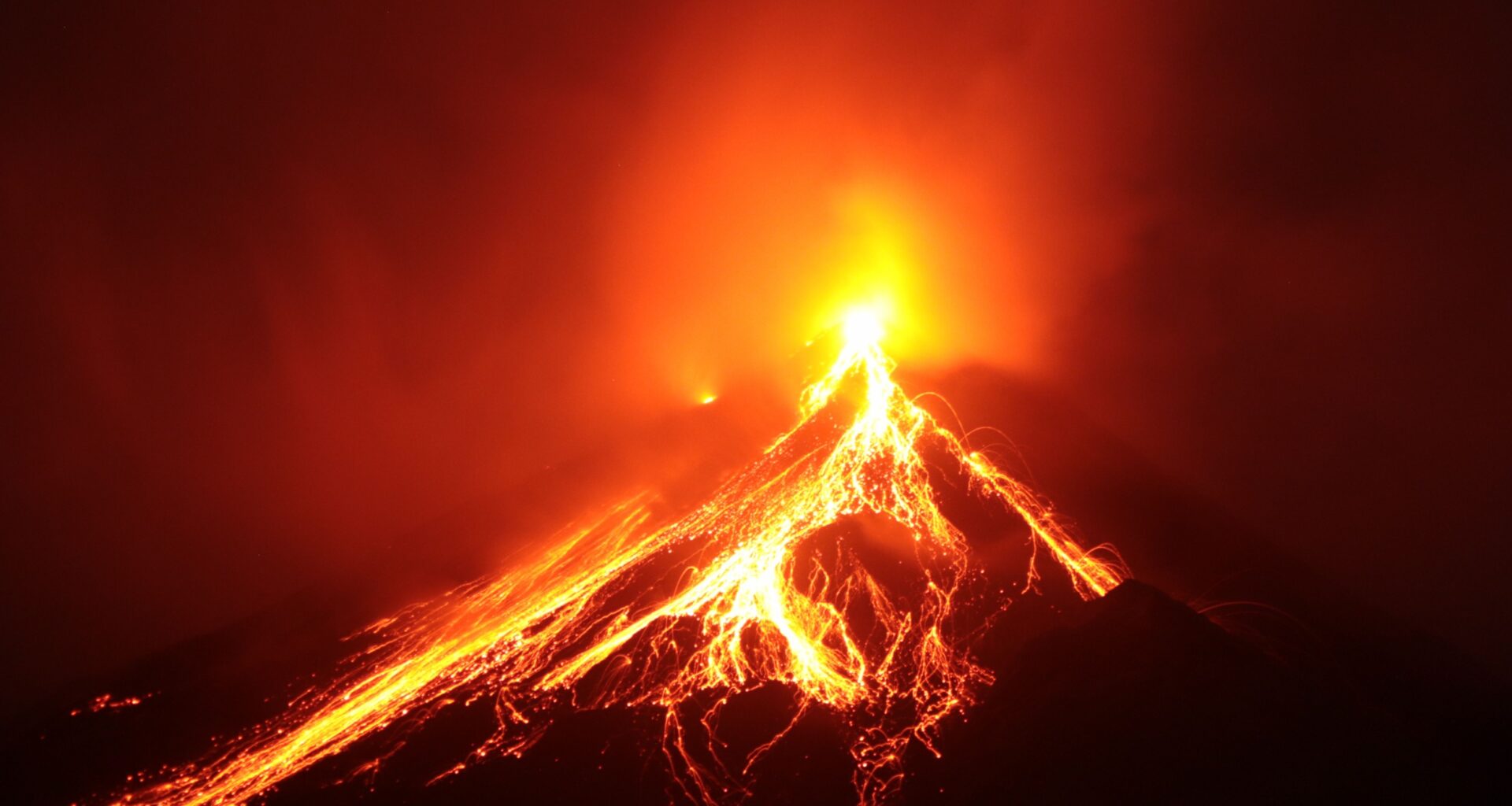
Climate models can explain both how a global ice age begins and how it ends – carbon dioxide from volcanoes builds up in the atmosphere, the planet warms, and glaciers retreat.
Working through standard equations, that process takes roughly four million years.

One ancient ice age lasted 56 million years. Nothing in those equations could account for it, and for decades, it stayed that way.
The freeze that lasted too long
The freeze in question is the Sturtian glaciation, named for ancient glacial deposits in Australia.
It falls inside the Cryogenian period, roughly 717 to 660 million years ago, a stretch that produced what geologists later dubbed Snowball Earth.
New research was led by Charlotte Minsky, a graduate student at the Harvard John A. Paulson School of Engineering and Applied Sciences (SEAS).
Minsky and her colleagues argue that the standard math never quite added up.
A later glaciation, the Marinoan, lasted only about four million years. Standard models reproduce that one easily. The Sturtian, 14 times longer, defies them.
Volcanoes may have triggered global ice
The research team focused on a vast Canadian volcanic feature called the Franklin Large Igneous Province.
Around 717 million years ago, volcanoes erupted across what is now the high Arctic, flooding the region with lava and blanketing a massive area in fresh basalt.
The volcanoes may have helped trigger the Sturtian ice age by removing huge amounts of carbon dioxide from the atmosphere.
The timing was almost eerie. Within one or two million years of the Sturtian’s onset, the Franklin event had dumped enough fresh rock onto the planet’s surface to alter the chemistry of the entire atmosphere.
Earlier work from the group had already made that case.
A 2025 paper traced how the chemistry of cooling basalt could pull enough carbon dioxide from the atmosphere to trigger one global freeze – just one, not a chain of them.
Carbon vanished into stone
When fresh basalt sits exposed to rain and air, it reacts slowly with atmospheric carbon dioxide.
Minerals leach out of the rock, wash into rivers, and then flow into the ocean, where the carbon becomes locked away in seafloor sediments.
This kind of basalt weathering is one of Earth’s most powerful long-term climate thermostats.
Spread across a continent-sized lava field, basalt can remove carbon dioxide from the atmosphere faster than volcanoes can replace it. Temperatures fall. Ice spreads.
Once the ice reaches far enough toward the tropics, a runaway effect begins. Bright white surfaces reflect sunlight back into space, making the freeze self-reinforcing.
Ice ages came in cycles
That’s where the standard story stops. Carbon dioxide slowly builds back up from volcanic activity over a few million years, eventually warming the planet enough to trigger a thaw.
A separate study of rocks in Namibia pinned the shorter Marinoan glaciation at about four million years. But the Sturtian’s 56 million years remained unexplained.
Minsky’s model offers a different ending. When the ice retreats, fresh basalt from the Franklin field – only partly weathered – becomes exposed all over again.
In the simulation, the chemistry restarts. Carbon dioxide gets pulled back down, triggering another freeze.
These cycles repeat until the basalt is finally depleted. The team argues that they played out multiple times across the Sturtian’s 56 million-year span.
Life endured Snowball Earth
Long, unbroken glaciations create a serious problem for life.
Photosynthesis grinds to a halt beneath continent-spanning ice, while volcanic gases continue reacting with oxygen and pulling it out of the atmosphere.
After tens of millions of years without replenishment, the atmosphere should run out of breathable oxygen entirely.
That idea has never matched the fossil record, which shows oxygen-breathing life persisting throughout the Cryogenian.
Shorter freezes separated by ice-free intervals help resolve that contradiction. Plants and microbes have time to recharge the atmosphere between cold spells, allowing the oxygen reservoir to survive.
“This could help explain how aerobic life persisted through such an extreme interval,” said Minsky.
Sediments reveal repeated freezes
Sturtian sedimentary deposits found on every continent – from Australia to Svalbard – are not uniform.
The layers show evidence of glacial advance and retreat, which is not the kind of pattern expected from one unbroken ice age.
Minsky’s cycle model fits those layers more comfortably. Each warm interval would have left behind ordinary marine sediments, while ice-covered stretches would pile up new glacial debris.
In other words, the rocks may already have been telling exactly that story for years. Nobody had interpreted them that way until now.
Minsky’s simulation is a simplified box model – it tracks carbon and oxygen flows without capturing every physical and biological process active during the Sturtian.
How many cycles occurred, and how extreme each one became, remain open questions. The model captures the general pattern, but the specifics are still unknown.
Volcanoes reshape distant climates
Until this study, no model could sustain a 56-million-year Sturtian glaciation without invoking conditions unsupported by the geological record.
The new work removes that barrier. The findings suggest that ancient volcanoes may have helped drive Earth’s longest ice age by repeatedly exposing fresh lava rock that stripped carbon dioxide from the atmosphere.
The implications extend far beyond Earth. Astronomers continue finding rocky planets in habitable orbits, and massive volcanic events appear common across rocky worlds.
Similar geology elsewhere could push other planets through repeated cycles of freezing.
This work suggests that habitability itself may be far less stable than scientists once assumed – both on Earth and on rocky worlds beyond it.
The study is published in the journal Proceedings of the National Academy of Sciences.
—–
Like what you read? Subscribe to our newsletter for engaging articles, exclusive content, and the latest updates.
Check us out on EarthSnap, a free app brought to you by Eric Ralls and Earth.com.
—–