
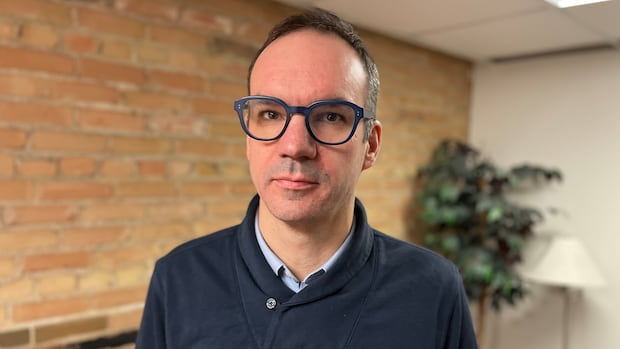
Winnipeg’s drug crisis is putting staff and students at schools in danger, says the head of the city’s largest division, who is calling on all levels of government to start taking concrete action.
“We’ve had principals who have had to resuscitate people on playgrounds.… We have kids stepping over people,” Winnipeg School Division superintendent Matt Henderson told CBC Manitoba Information Radio host Marcy Markusa on Wednesday.
“That’s hugely problematic for a million reasons. One is that we have vulnerable people who, you know, who have lost their dignity, but also, it does at times present safety issues for our kids and our staff.”
Henderson didn’t identify any particular area as problematic.
“It’s pervasive throughout the city and the whole division. It doesn’t matter the neighbourhood,” he said.
But he did say Gordon Bell High School in the West Broadway area is adding two safety hosts from Zoongizi Ode to its staff to help people in the immediate community. The non-profit organization’s safety hosts also work inside the Millennium Library downtown.
The school also has a partnership with the West End BIZ, which has two community patrols that visit the property every morning between 8 a.m. and 9 a.m.
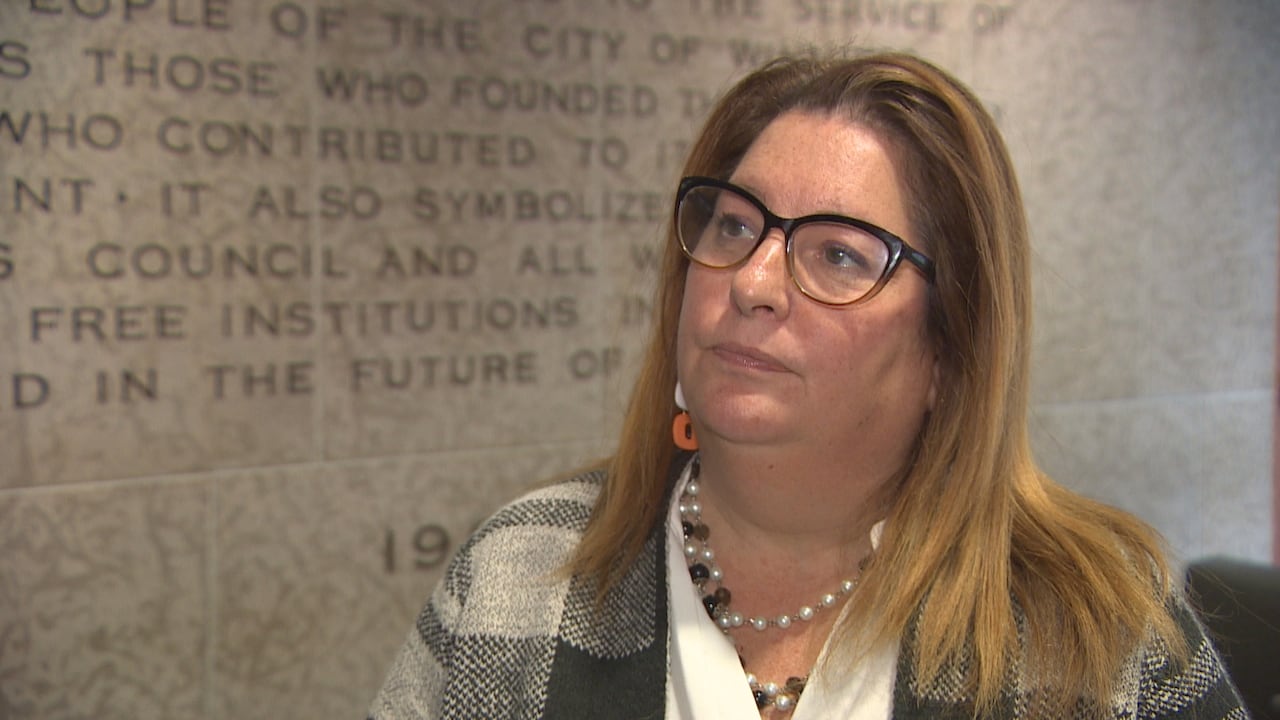 Coun. Cindy Gilroy has suggested temporarily removing bus shelters where open drug use is taking place. (Tyson Koschik/CBC)
Gordon Bell was highlighted by city Coun. Cindy Gilroy in an Information Radio interview on Tuesday about the rise in drugs and vandalism along Portage Avenue downtown and in the West End.
“Many of these children have to walk by the open drug use or violence that is occurring, so it’s definitely a huge concern in the community, not only for businesses but also for many residents,” said Gilroy, whose Daniel McIntyre ward includes a significant portion of the West End.
“I’m also having issues along Sargent Avenue, really close to Burnell [Street]. So there’s a lot of businesses that are really impacted, a lot of people that are just on the streets, they’re in the corridors of people’s buildings using [drugs] openly, selling, purchasing drugs.”
Gilroy has suggested bus shelters, where much of the drug use occurs, be removed.
“It is a temporary measure that could help the congregation [of people] in an around that area, especially around Gordon Bell High School. If people are not using the bus shelters for what they’re supposed to be used for, there’s no reason to have them, right?” she said.
“As fast as we move people on out of those shelters, they’re just moving right back in. The city cannot even keep up with the demand that we’re seeing on that [Portage and Maryland] corner. So something to help with the businesses and the school’s concern would just be temporarily removing them until we come up with other solutions.”
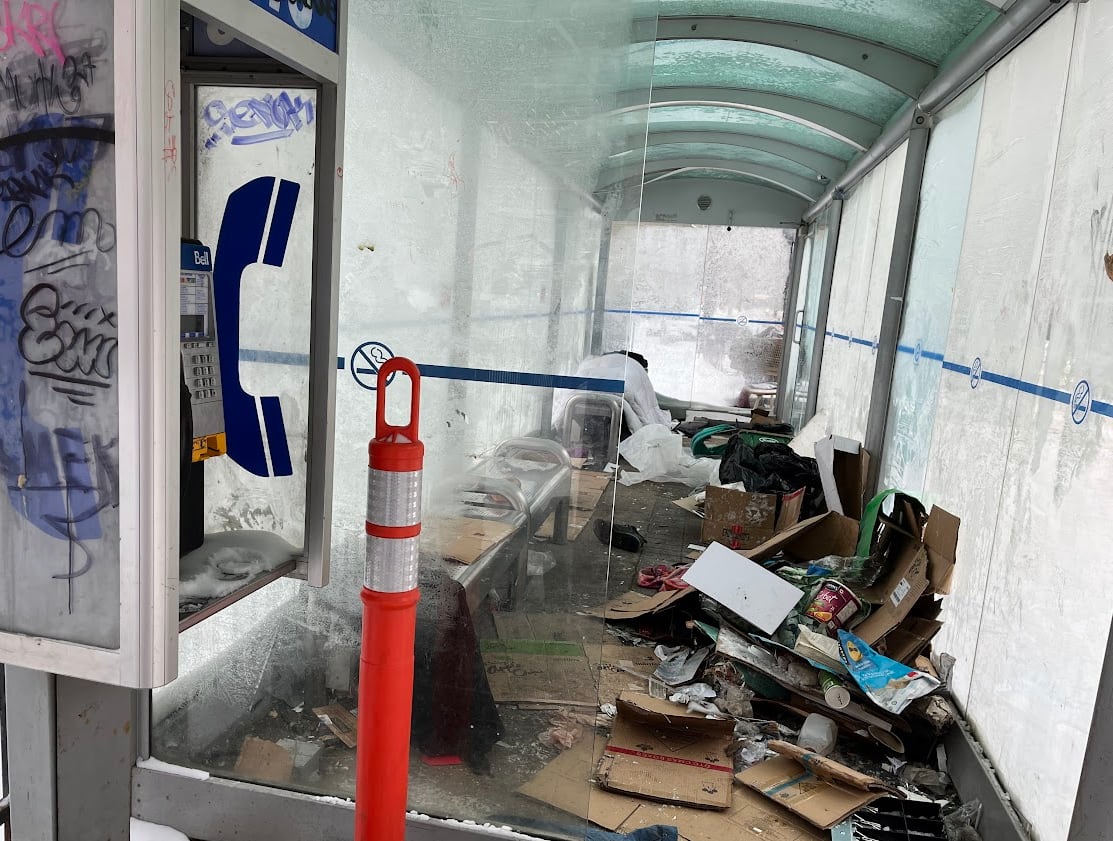 A downtown Winnipeg bus shelter is filled with trash in this file photo. (Darren Bernhardt/CBC)
Henderson said while he appreciates Gilroy is proposing ideas, that one is more of a Band-Aid.
“Getting rid of bus shelters is not the solution when we’re dealing with the fact that we have organized crime and drug dealers on corners selling drugs to people who are really vulnerable,” he said.
Drug dealers are a “pervasive” problem in he commercial parking lot across Maryland from Gordon Bell, he said.
“We got to get rid of the drugs and we have to get rid of the gangs and we have to get rid of the the drug dealers. This is a wicked problem. This is the worst I’ve seen it.”
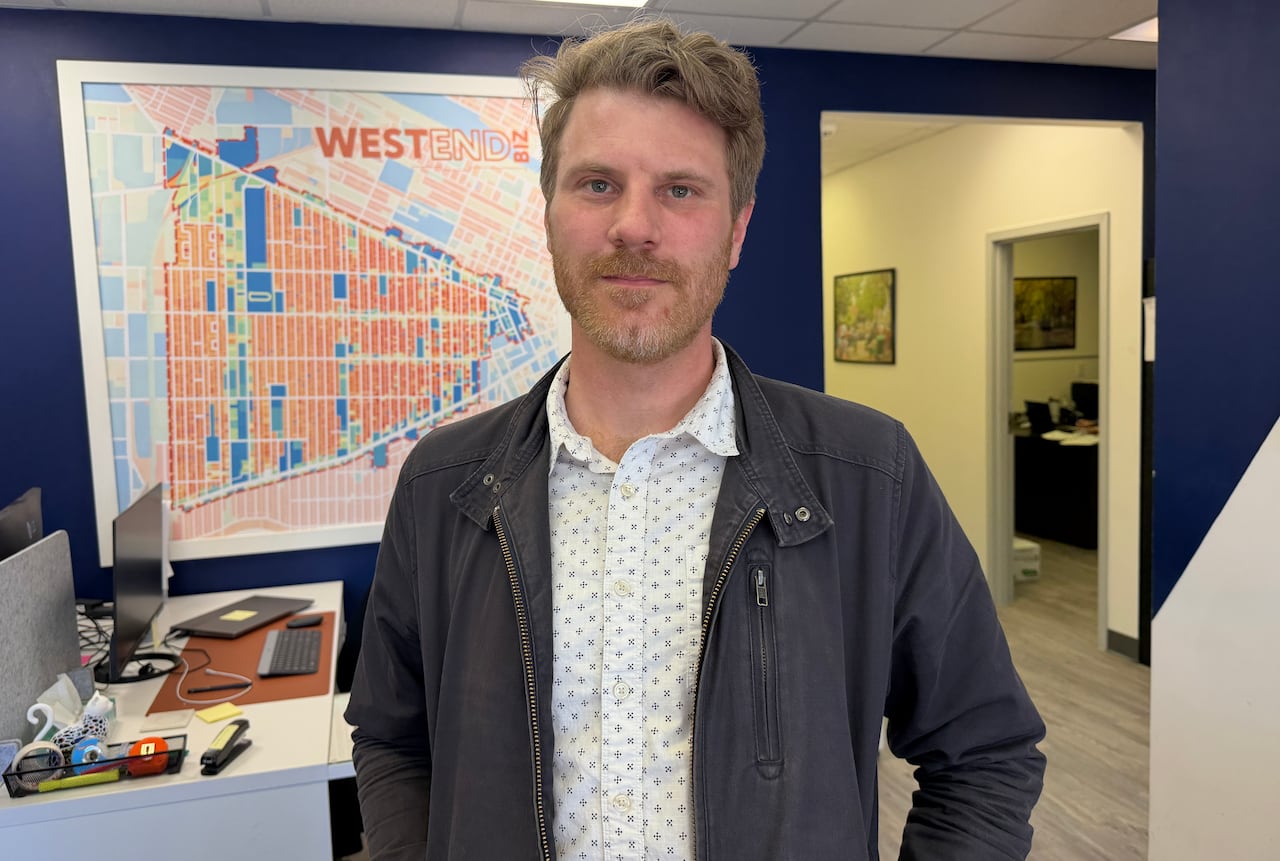 West End Biz executive director Joe Kornelsen says problems have increased since the province’s Your Way Home strategy began moving people from homeless encampments into housing. (Jeff Stapleton/CBC)
West End Biz executive director Joe Kornelsen said the problems have increased since the province’s Your Way Home strategy began moving people from homeless encampments into housing.
“It’s quite concerning to us. So, we’ve been communicating those concerns to the province,” he said.
“What we need to see is a standard of safety around these buildings and what community expectations can be. Where each one of these has been opened, we have seen an increase in property damage, violent language, threatening language. We’ve seen fires set next to businesses.”
Kornelsen said he understands what the province is trying to achieve and supports that part of the strategy, but said something needs to be done “to ensure that these kinds of things aren’t happening.”
Gilroy echoes those comments, saying there has been a great deal of focus on housing, “But what we’re not talking about is the addiction.”
“Housing isn’t gonna solve the problems. We’re not really coming up with some solutions on how we’re going to manage this while we deal with the housing shortage …. [and] the supports that are really needed to deal with what we’re seeing on the streets.”
Henderson, who said he lives in the Gordon Bell neighbourhood, is also frustrated by what he calls a lack of action by both the municipal and provincial governments.
He said the City of Winnipeg applauds itself for its low municipal taxes while “we see the city crumbling” and services are offloaded to school divisions, which have no choice but to address the concerns themselves, raise education taxes and lean on organizations like Bear Clan, Zoongizi Ode and “countless others” to support the community.
“I think that’s irresponsible. The impact of methamphetamine and fentanyl has just obliterated the city,” Henderson said.
“There are beautiful things happening all the time, magical things happening in the city of Winnipeg. I love this city. It’s my city. But until we’re really wanting to tackle [organized crime and drugs] … I don’t know what else we can do other than just simply putting Band-Aids on.
“We need people at the table who are really looking at solutions.”
Mayor Scott Gillingham said he hasn’t heard about the problems around schools, as outlined by Henderson, but isn’t surprised that it is happening.
He said open drug use is happening around the city and he has given full support to Winnipeg Police Service Chief Gene Bowers to enforce the law around that.
Gillingham said he encourages schools to hire resource officers, whose presence can be “very, very useful.”
“They can serve a benefit on a number of fronts, and this would be the case as well,” he said.
WATCH | Drug crisis putting schools in danger, Winnipeg superintendent says: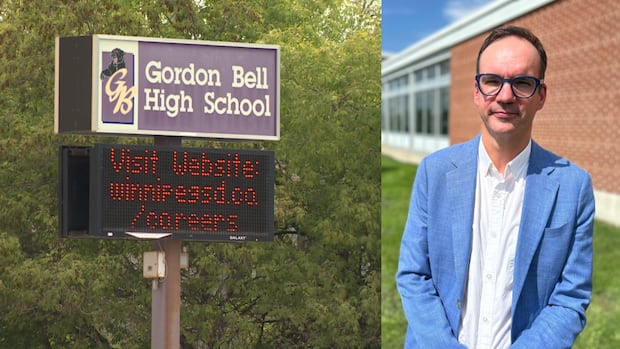
How Winnipeg schools are navigating the city’s drug crisis
Open drug use near Winnipeg schools is an alarming reality. Matt Henderson, superintendent of the Winnipeg School Division, joins us to discuss what students and staff are dealing with, including instances when principals have had to perform life-saving resuscitations on school playgrounds.