


Listen to this article
Estimated 4 minutes
The audio version of this article is generated by AI-based technology. Mispronunciations can occur. We are working with our partners to continually review and improve the results.
The first week of use of the province’s new electronic medical records system in the central health zone is getting positive feedback, two of Nova Scotia’s top health officials say.
Health Minister Michelle Thompson told a crowd of more than 200 people attending a Halifax Chamber of Commerce luncheon Thursday that “despite all of the negativity that you may have heard,” people working in the central zone have risen to the challenge.
“To date, the implementation has been very, very successful,” she said.
One Person One Record (OPOR), the clinical information system that collapses more than 50 different workflows into a single system, first launched in Nova Scotia at the IWK Health Centre in December.
It was brought online Saturday in the province’s central zone, which includes the Halifax area, the Eastern Shore and West Hants.
Thompson said there have been some challenges, including delays related to certain services, but she’s pleased to see a system that’s been years in the making finally rolling out. The province signed a 10-year, $365-million contract with health-care giant Oracle in 2023 for the software.
“There’s going to be problems. People run the system, people come to the system, we are all fallible,” said Thompson.
“And so if we just hold each other with a bit of grace and support, we’ll get through it.”
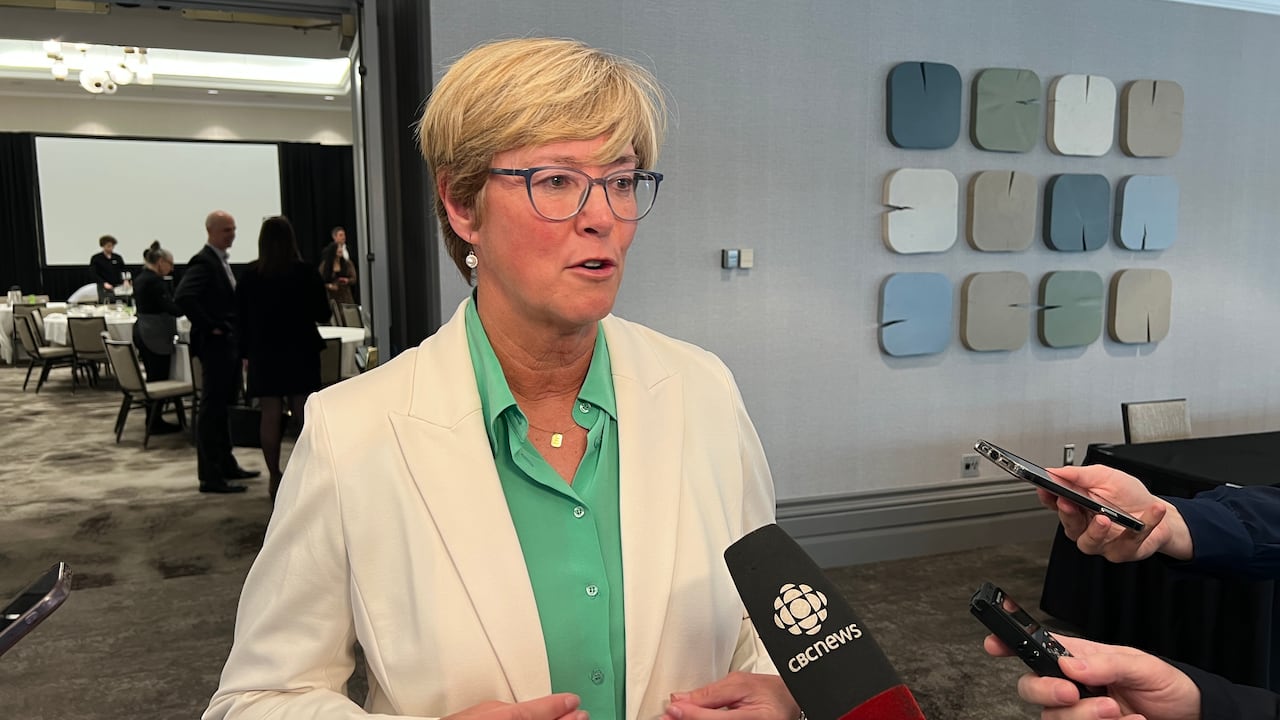 Karen Oldfield is interim CEO of Nova Scotia Health. (Paul Poirier/CBC)
Karen Oldfield, interim CEO of Nova Scotia Health, told the crowd she’s already heard from doctors talking about the system’s benefits, including being able to walk into work and know what’s happening with a patient before having seen them, and not having to hunt down charts or deal with handwriting that might be difficult to read.
“We are at the front end of embedding that and once it gets across the province and we really start rolling, you can just imagine the time and how we can optimize clinicians’ time and people’s time and the whole system all of a sudden unlocks a whole bunch more efficiency,” Oldfield said.
Growing pains have persisted since the system was rolled out five months ago at the IWK in Halifax.
But heading into Saturday’s launch, officials talked about lessons learned from the IWK experience and how that informed training and preparation for staff and doctors.
Oldfield noted as an example that emergency department doctors from the children’s hospital helped their colleagues at Dartmouth General Hospital to better prepare them for Saturday’s rollout.
She said that despite the trepidation people felt, feedback has been “surprisingly good” since the launch.
Issues addressed ‘lickety-split’
Fewer tickets than she anticipated have been filed for IT assistance, Oldfield said, although she could not provide exact numbers. She said the most common request by far has related to help accessing the system.
“And they’re being dealt with lickety-split,” she told reporters.
A chatbot developed after the IWK launch has already been accessed 4,000 times since Saturday, she said, giving health-care workers the ability to address issues without always having to seek out another person.
Rollout continues throughout the year
Thompson told reporters she’s not aware of any issues related to patient care since the central zone launch. She said clinicians can bypass the system in the event of an emergency to ensure care can be delivered when and where it’s needed.
“It’s always been the way as technology has been introduced into health care,” she said.
“People know what to do and we’ll work the kinks out and it will be better for all of us in the end.”
The system is scheduled to roll out across the rest of the province throughout the year.
MORE TOP STORIES