

Listen to this article
Estimated 4 minutes
The audio version of this article is generated by AI-based technology. Mispronunciations can occur. We are working with our partners to continually review and improve the results.
A group of Upper Beaches residents say they’re being thrown under the bus by the province’s transit agency, Metrolinx.
About 400 people in the Woodbine-Gerrard area recently signed a petition asking that Metrolinx include noise-reducing barriers and vibration-mitigating technology in its Lakeshore East Line GO Expansion project.
At a community meeting on May 5, the agency told residents those measures aren’t in the cards, even though a 2017 Metrolinx environmental assessment shows noise and vibration will go up seven per cent or higher when a new, fourth rail line is completed through the neighbourhood, sometime in the 2030s.
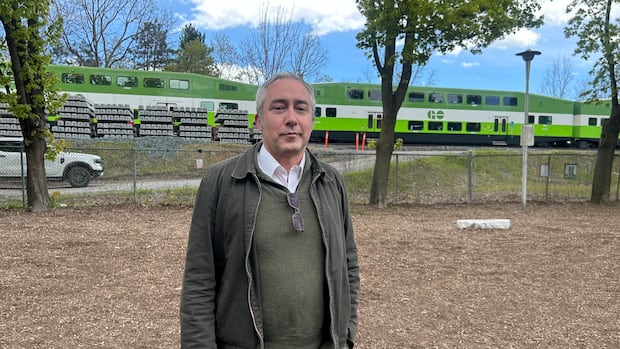
“It feels like it really is condemning the whole area,” resident Rafael Pascual-Leone told CBC Toronto. “Not only us, but generations to come are being left by the wayside.”
The project has been under construction for about six years, and has been in the planning stages for at least a decade.
4th rail line to be added to corridor
It will see a fourth rail line added to the corridor that runs along GO’s Lakeshore East line from Union Station into Durham Region, and the 2017 environmental assessment states that vibration mitigation should be part of the plan.
Metrolinx did not agree to an interview with CBC Toronto but said in an email that it’s living up to regulations governing excess noise and vibration in the neighbourhood.
The Metrolinx website says the Lakeshore East expansion plan is one part of a southern Ontario-wide project. It will result in many more commuter trains running between Toronto and Durham Region — from about 3,500 trips a week to 10,000.
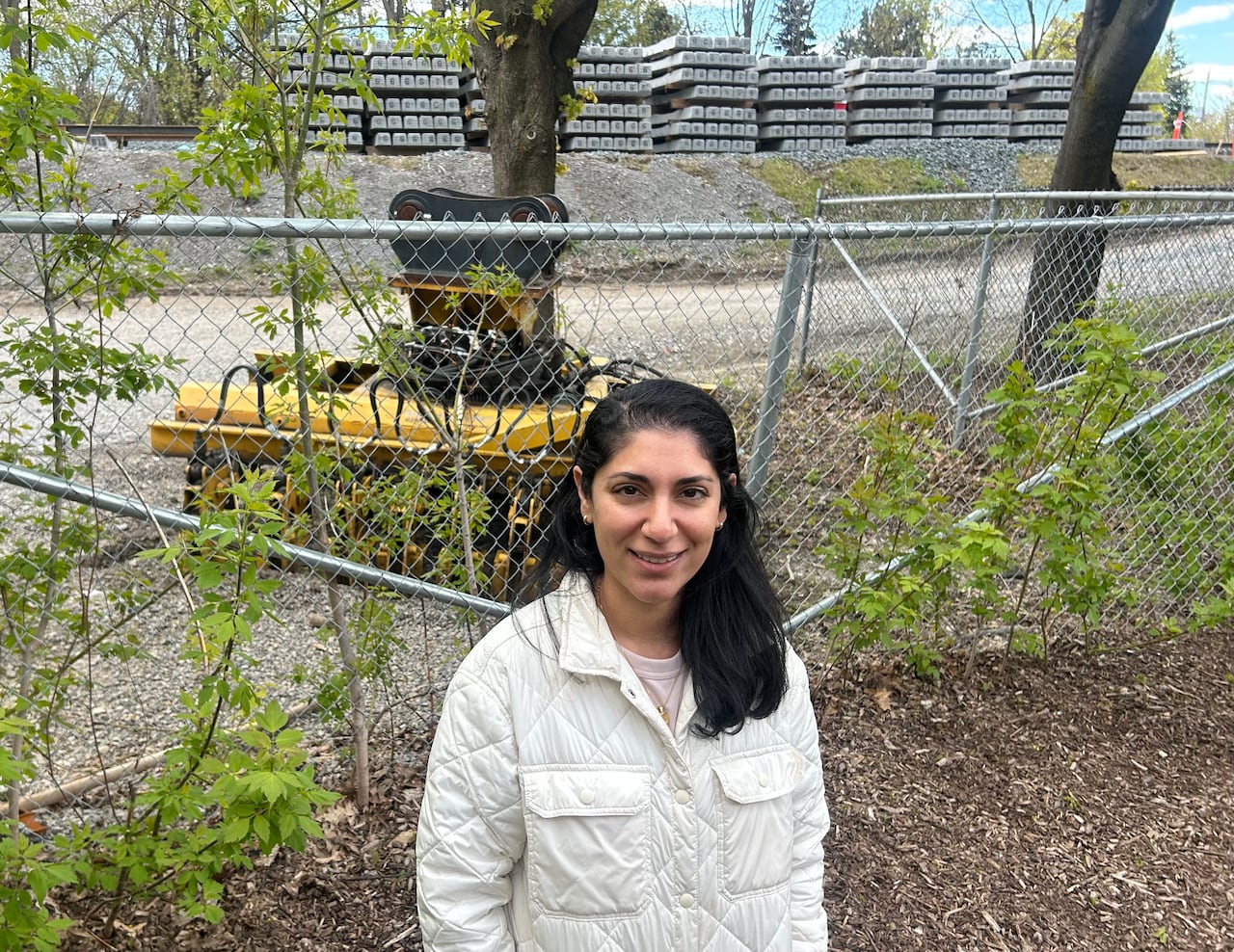 Rula Altoumah says she expected noise when she and her family moved into a neighbourhood, but as the route becomes much busier, she says there should be measures put in place to dampen the noise and vibration. (Michael Smee/CBC)
Residents say they don’t question the need for better transit, but they do expect proper noise and vibration mitigation measures to protect communities near the soon-to-be-busier rail corridor.
“What we’re asking for is that this project be done right, with modern technology, to today’s standards,” said Pascual-Leone, who’s lived in the neighbourhood for around a decade.
His neighbour, Rula Altoumah, who’s lived in the area for two years, says that when she and her family moved into a neighbourhood beside the tracks she knew there would be noise.
But the addition of a new set of tracks should be addressed with noise barriers, she said.
“I feel a sense of helplessness because it seems the issue of mitigating the noise for the community, preserving the quality of life for the community is not an issue on Metrolinx’s radar at all,” she said. “That’s my frustration.”
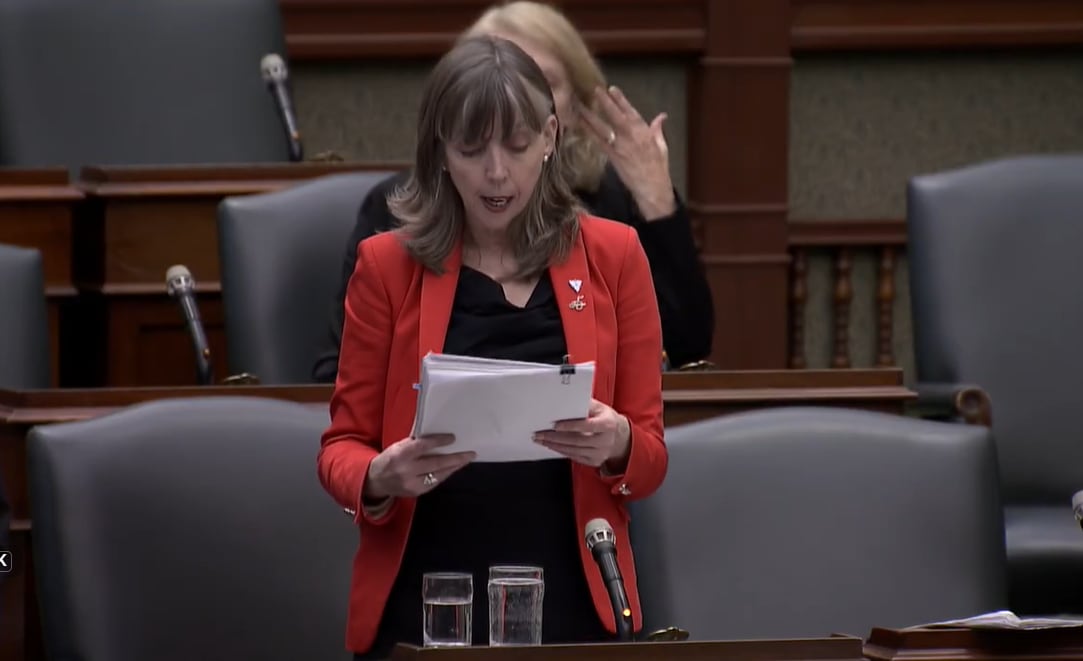 Mary-Margaret McMahon, the MPP for Beaches-East York, reads a petition from her residents into the record at Queen’s Park March 31. (Mary-Margaret McMahon BEY/YouTube)Noise barriers needed to protect neighbourhood: city report
The residents quote a 2025 report from city staff that mentions the need for noise barriers to protect neighbourhoods beside the rail corridor between Pape Avenue and Kennedy Road as the expansion project moves ahead.
Former city councillor and current Liberal MPP for the area, Mary-Margaret McMahon, delivered the residents’ petition to the legislature at the end of March.
It calls on Metrolinx to include noise barriers, green buffers between neighbourhoods, vibration-reducing technology at switches and modulated train speeds.
“It’s not a NIMBY situation,” McMahon said in an interview Tuesday. “They’re just asking for Metrolinx to cooperate and collaborate with them.”
She said it’s clear the technology exists to include up-to-date noise and vibration mitigation in the plan, and asked Metrolinx to do more to incorporate those measures into the project.
“We should have this in place … if you’re going to build world class transit in a world class city, you need to be on top of this,” she said.
Metrolinx says no such measures were ever promised to the residents, but in an email the transit agency said it’s prepared to look into the idea.
“Metrolinx follows regulatory requirements on noise mitigation and continues to explore all options to help mitigate these factors with our maintenance teams on new projects,” the email states.