
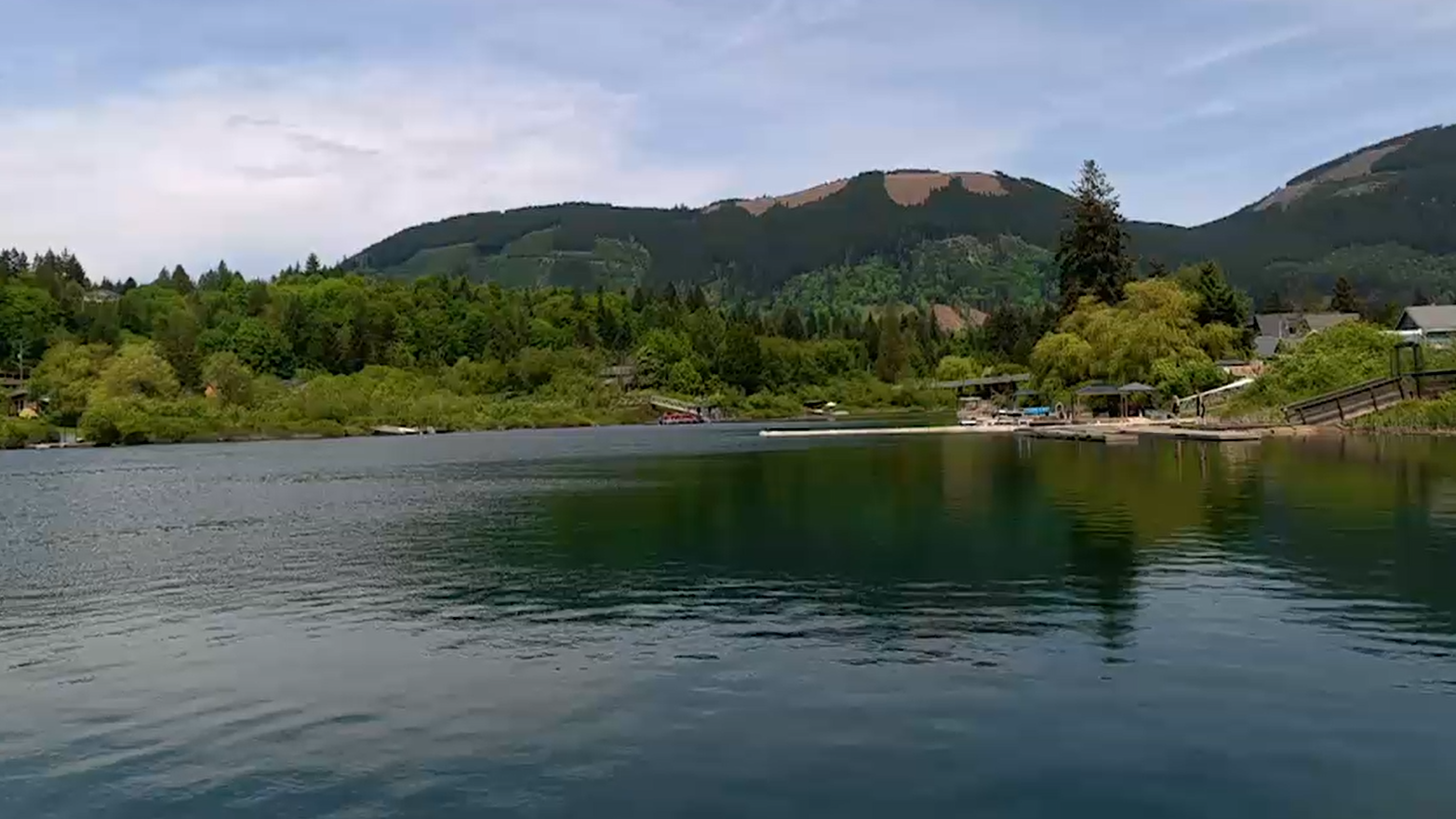
Low water levels on the Cowichan River are becoming an increasingly familiar sight, as Vancouver Island faces one of the lowest snowpacks in British Columbia heading into spring and summer.
The Cowichan River is currently flowing at about 6.8 cubic metres per second, a level longtime river advocate Joe Caysell says would have been unusual to see this time of year just a decade ago.
“Being here 77 years… if we were standing here 10 or 15 years ago, would we even be able to stand here where we are now?” reporter Tchadas Leo asked while standing along the riverbank.
“With your shoes like that, no,” he replied with a laugh. “I might with my gumboots.”
Caysell has spent decades living beside the Cowichan River and advocating for its protection, but says repeated years of drought and low water flows are making it difficult to stay optimistic about the river’s future.
“This just breaks you in half to see what’s going on,” he said. “It could be better. We could fix things and we don’t, so it’s really hard.”
According to the provincial government’s May 1 snow survey, Vancouver Island’s snowpack is sitting at just 27 per cent of normal levels, down from 44 per cent a month earlier. Provincewide, B.C.’s average snowpack is currently at 83 per cent of normal.
Story continues below…
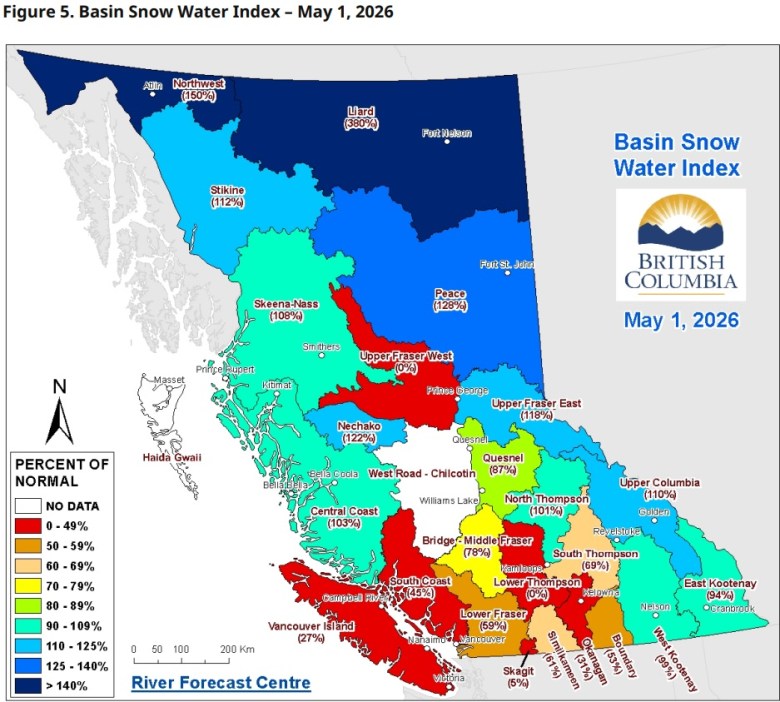 May 1, 2026 Basin Snow Water Index Map of British Columbia. (courtesy/BC Ministry of Water, Land, and Resource Stewardship)
Hydrologists say the Island’s low snowpack combined with warmer and drier spring weather is already pushing river levels toward historic lows.
“A combination of low snowpack and drier conditions, warmer than normal to start the spring, means river levels are very low across the Island,” said Jonathan Boyd with the BC River Forecast Centre. “In some cases they are actually at their all-time low for this time of year.”
The dry conditions are also reviving memories of the severe drought of 2023, when low water levels and warm river temperatures contributed to a large fry die-off in the Cowichan River.
“If there isn’t additional flow from snowpack high in the mountains, we’ll really need to rely on precipitation throughout the rest of the spring and summer to bump us out of the potential for drought conditions,” Boyd said.
Environment and Climate Change Canada says long-range forecasts point toward warmer-than-normal temperatures through much of the summer, though precipitation forecasts remain uncertain.
“There is a clear signal that temperatures are likely to be above normal,” said Environment Canada & Climate Change meteorologist Ken Dosanjh. “But when we look at precipitation, there’s very low certainty at this point.”
Caysell says stronger forestry regulations, improved sewage systems and better protections for fish habitat could help lessen some of the strain on the river, though he acknowledges climate change remains one of the biggest challenges.
READ MORE: Dry conditions, tourism surge prompt water restrictions in Tofino