
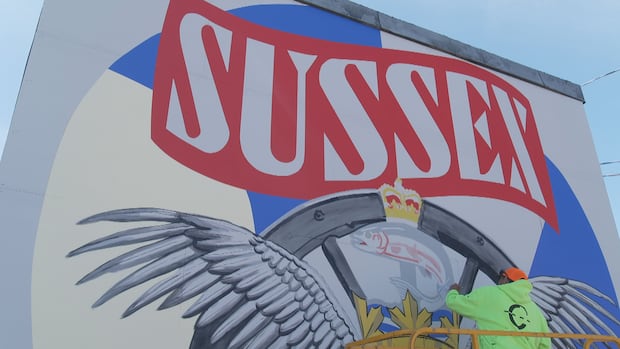
The small town of Sussex is known for a few things — the dairy industry, covered bridges, the Atlantic Balloon Fiesta.
But it holds another moniker as well: the mural capital of Atlantic Canada. And one only has to go for a short walk down Main Street to see why.
Over 20 murals of all shapes and sizes adorn the facades of many buildings in downtown Sussex.
The movement to paint the murals began in 2005, as a tourism draw for the town. But the murals that were painted over 20 years ago are starting to peel, fade and, in some cases, crumble apart entirely.
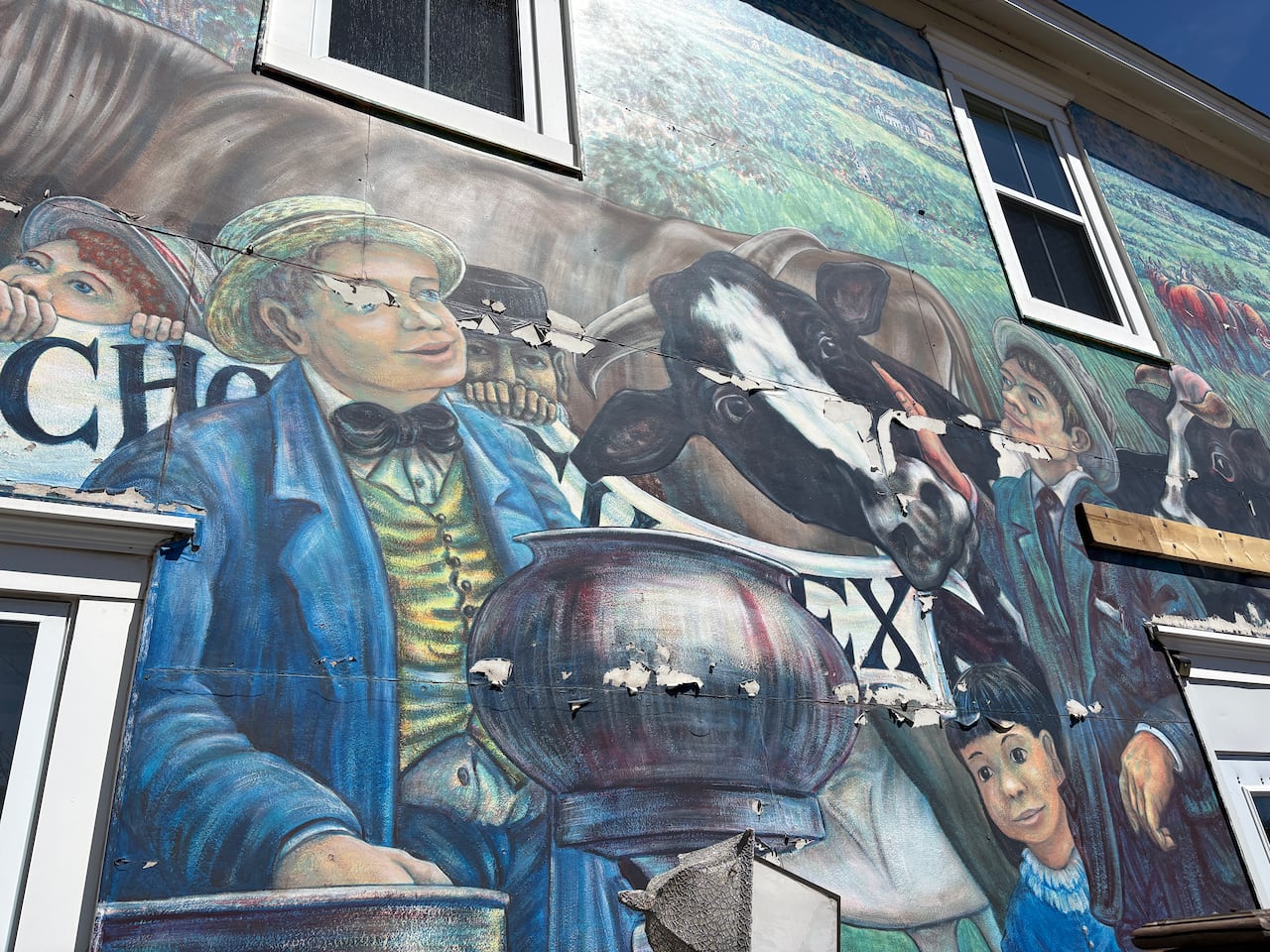 Many of the murals around Sussex are showing their age, with peeling paint and crumbling surfaces. (Danielle McCreadie/CBC)
The town is currently in the midst of removing and replacing the old murals with new artwork, painted by renowned mural artists from around the world.
“They are beaten by the elements, rain, snow. And so at this point, unfortunately, they’re at a point where we can’t just touch them up. They do require new art or to be removed,” said Jill Wood, director of community services for the town of Sussex.
WATCH | Artists from around the world are creating a new generation of murals:
‘Mural capital of Atlantic Canada’ revamps its downtown art
It’s out with the old and in with the new in Sussex as the town’s mural replacement project continues.
Wood said five murals were in such bad shape they will have to be removed entirely, while others are being replaced with new art.
Two murals were replaced in 2024, and another two were completed in 2025. Wood said she hopes to finish eight more replacement projects this year. The rest of the murals will slowly be tackled in the years to come, as the town works with the building owners the art resides on.
A call for submissions that went out in February saw 213 artists from around the world apply, said Wood.
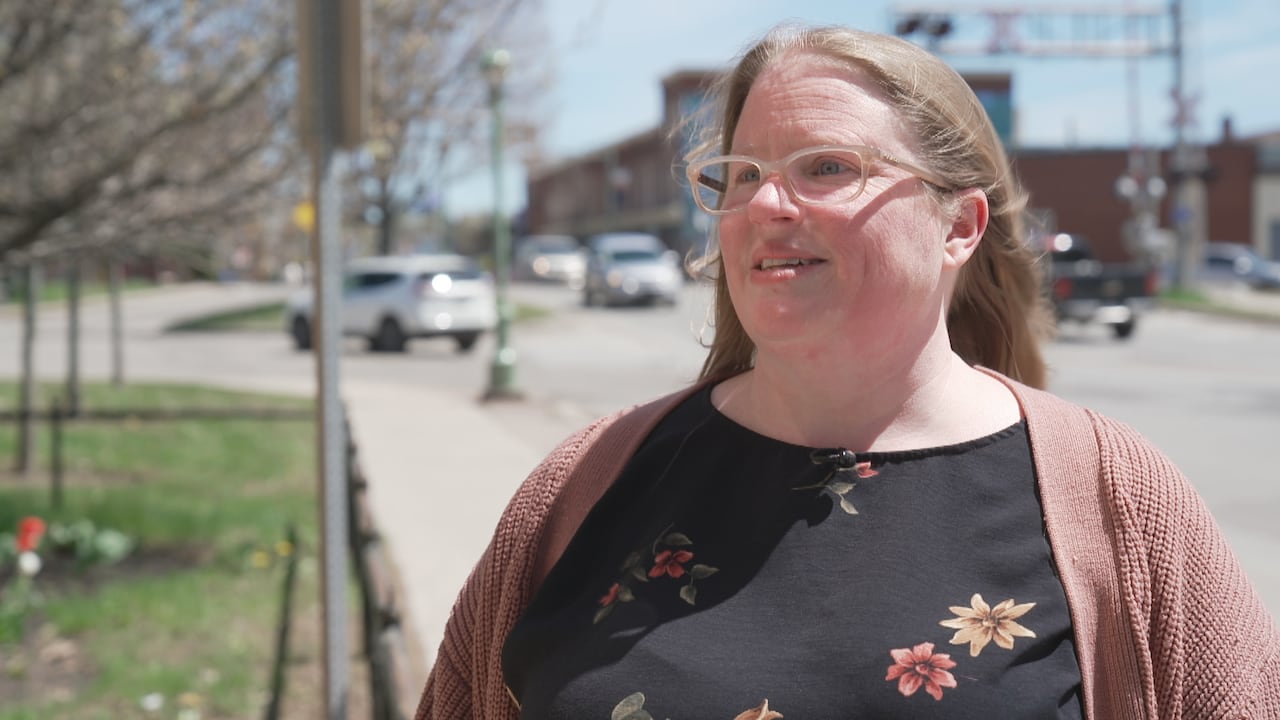 Jill Wood with the town of Sussex said there has been some pushback on the mural replacement project. (Michael Heenan/CBC)
“Those were then judged by a jury of Canadian artists. And then we’ve had our finals selected and approved by council as well as the building owners,” she said.
This year’s chosen artists are coming from around the region — and the world, including an artist from Sussex itself. Others are coming from Fredericton, Saint John, Halifax, Toronto, Ottawa, Ohio, Cincinnati, the Netherlands, and Mexico.
There are also four local Indigenous artists working on murals around the town — Pier-Luc Cimon from Madawaska First Nation, Sussex-based Sixties Scoop survivors Joanne Munroe and Minda Burley, and Cree artist Marie Fox, who lives in Saint John.
The town received a $350,000 grant from the Atlantic Canada Opportunities Agency to go toward the removal of old murals, installation of panels for the new ones as well as paying the artists for their designs, some of which cost upwards of $11,000.
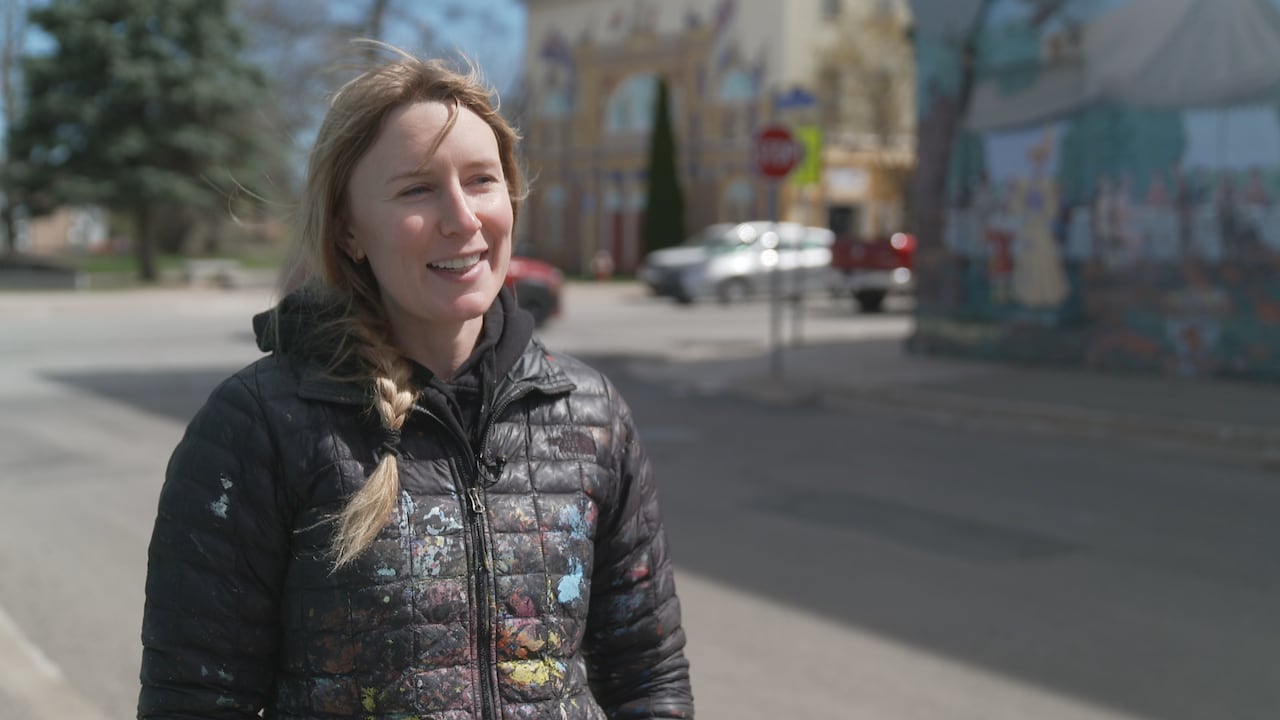 Megan Oldhues is a mural artist from Toronto. She paints realism and “slice of life” imagery. (Michael Heenan/CBC)
Toronto’s Megan Oldhues will spend almost two weeks transforming a wall of the local Home Hardware into a new mural. Oldhues has painted murals in Mexico City, Germany, Italy and more.
Each scene in her mural will depict people riding bikes. She’s been drawing inspiration from the town itself, and the people she sees while up on her cherry picker.
“So there’s two boys on the bike right there and I got their photo, like, two days ago. They were biking by and I said, ‘Do you guys want to be on my mural?’ And they were about it. So they were doing wheelies for me and it was really cute,” she said.
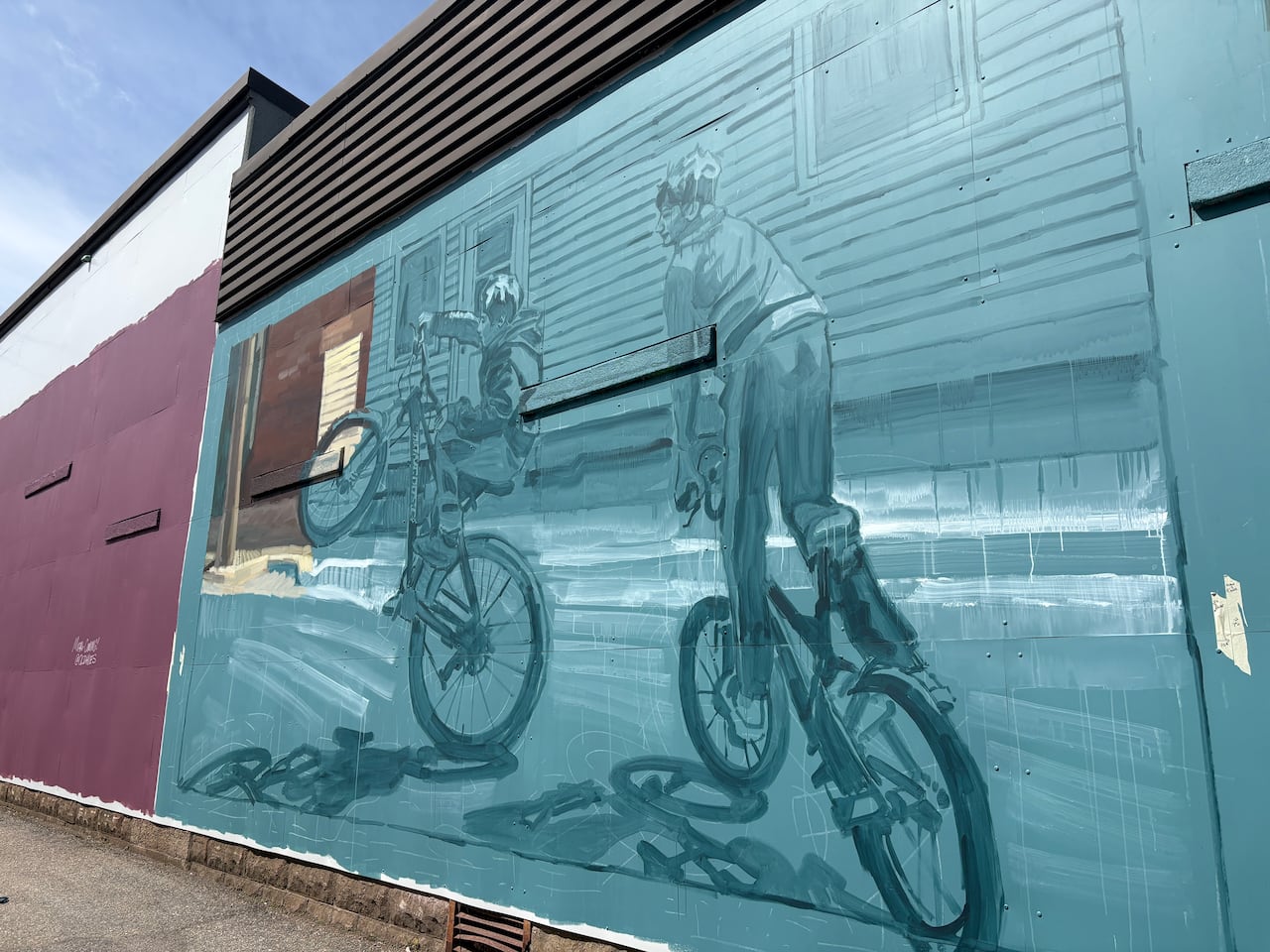 The base layer of Megan Oldhues’s newest mural project in Sussex was inspired by two local boys riding their bikes nearby. (Danielle McCreadie/CBC)
Artists Matthew and Zach Dayler of Chroma Projects, a group based in Cincinnati, created a piece for the back of the TD Bank on Main Street. The over 100-foot-long wall features classic Sussex iconography — a train, a covered bridge, a ginger ale logo.
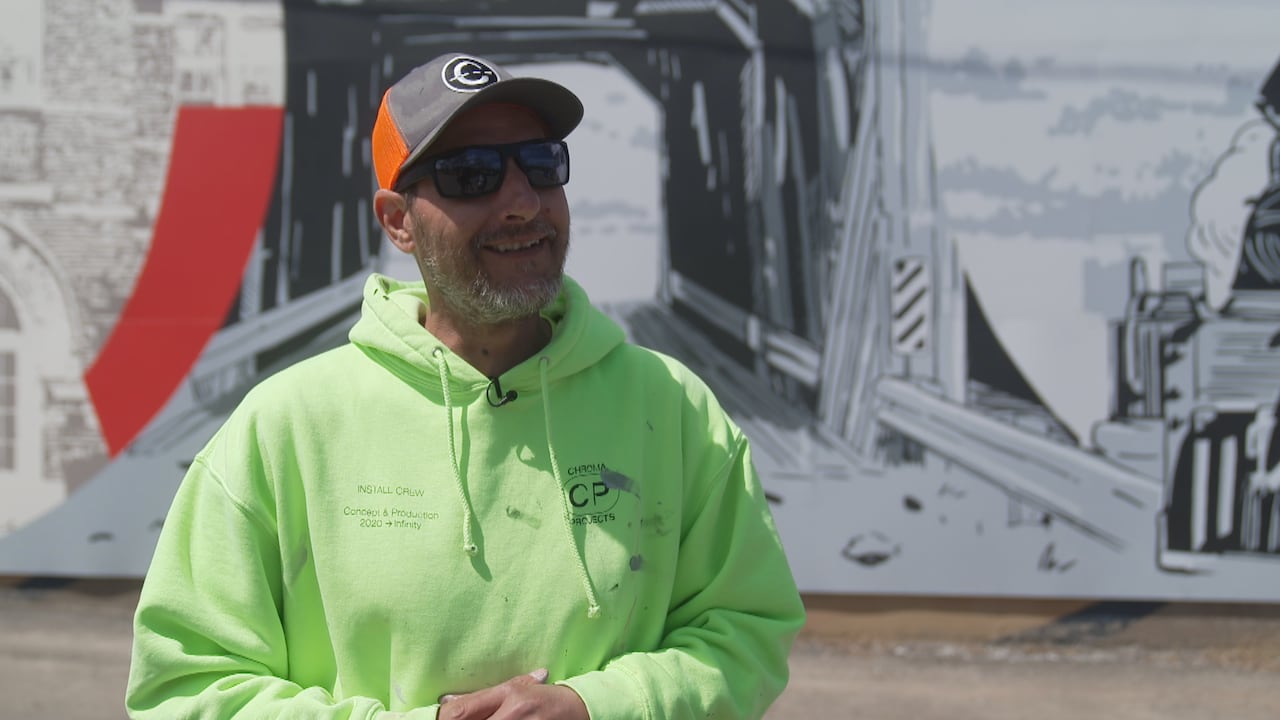 Matthew Dayler of Chroma Projects primarily works in Cincinnati. This is his first mural project in Atlantic Canada. (Michael Heenan/CBC)
“I looked at all the murals that they have in their rich portfolio they have here, you know, sort of traditional, folky, history-based, right? And so I wanted to put a contemporary spin on that,” said Matthew Dayler.
Art for art’s sake
Wood said the reception of the new murals has been mixed.
The old murals depict important moments of Sussex’s history, she said, and many residents have grown attached to the art — despite their weathered appearances.
“We have had a little bit of pushback about it,” said Wood.
“What I’m really hoping is that with these new additions, that once it comes time to renew them, that those are the ones that they are now at some point holding close to their heart.”
Oldhues said she’s experienced the mixed emotions of residents while working.
“I think when I first started, people were very nervous. One person said I was ruining their town. But then he came by the next day after I started the sketches and he said that he actually liked it,” she said.
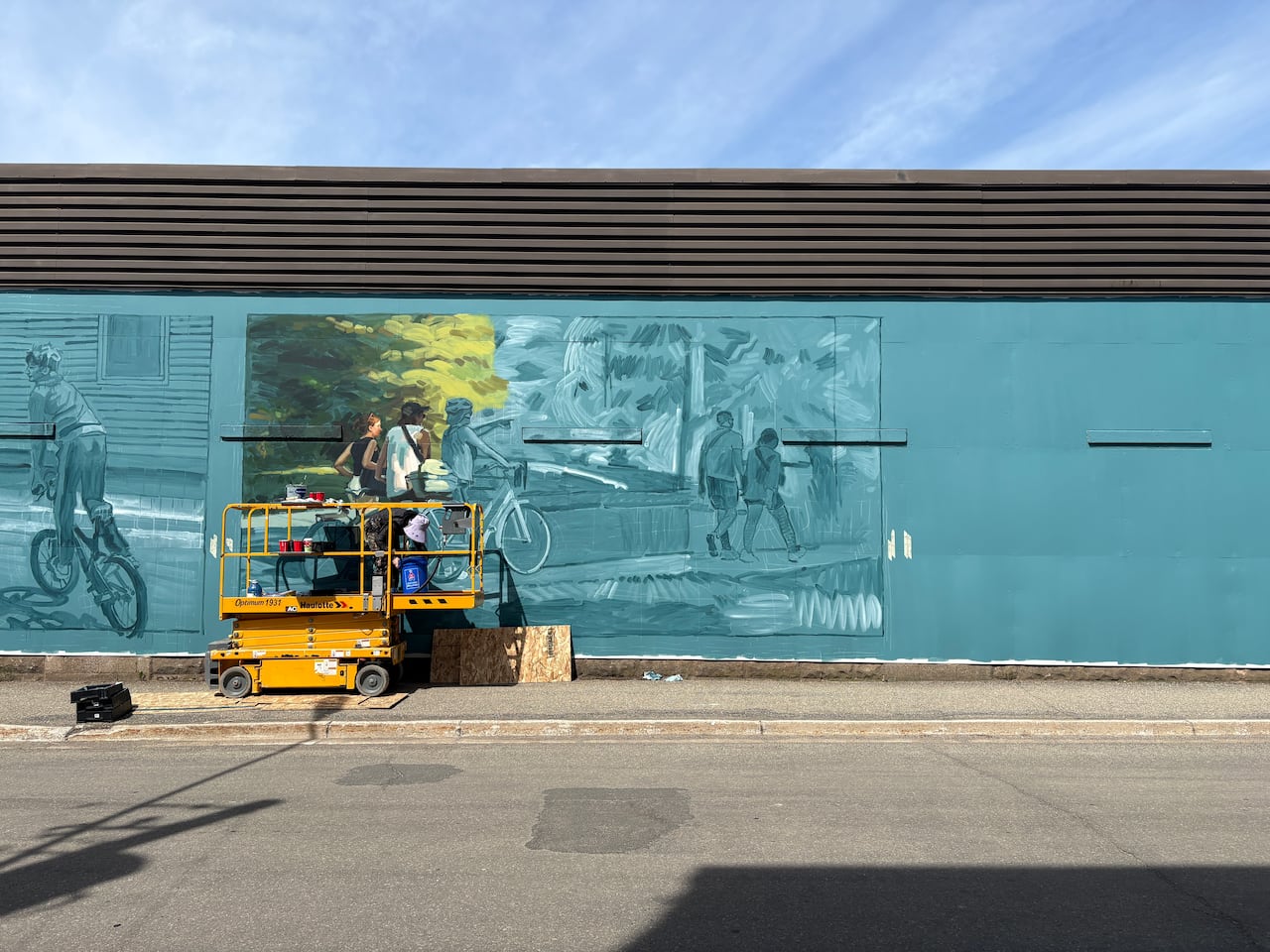 Megan Oldhues plans on titling her piece “I saw my neighbour on the bike ride home.” (Danielle McCreadie/CBC)
Wood aims to implement a five- to seven-year mural replacement cycle to ensure the art remains fresh.
“So what it will allow us to do is to stop it getting to a point where the murals themselves have deteriorated the infrastructure behind them,” she said.
While older murals were painted on concrete boards that damaged buildings and lacked longevity, the town now utilizes aluminum boards with a 30-year lifespan.
“It gives people a reason to come and see the murals in Sussex because there will always be, on a regular cycle, something new,” she said.
As for the artists, that’s the point.
Matthew Dayler believes if a piece is no longer relevant, it should be painted over.
“It’s just paint,” added Zach Dayler.
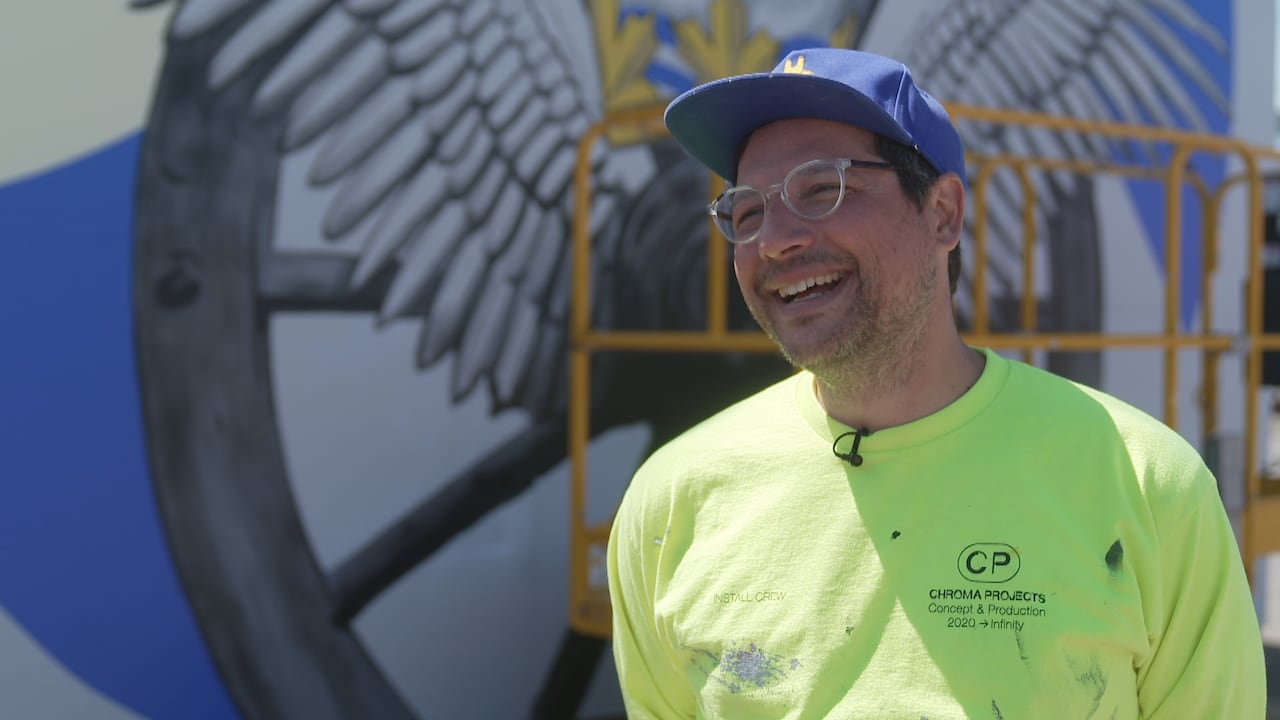 Zach Dayler of Chroma projects wanted to create a landmark for the town that will draw tourists in. (Michael Heenan/CBC)
Oldhues agreed.
“I don’t expect them to last forever,” she said.
“One of the best things about public art is that it’s such a documentation of the time we’re in. So even if this isn’t that relevant, like, right now, I’m sure when it was made it was. And then in 20 years, my piece is going to be irrelevant, too. And it’s beautiful how things get to age and change like that.”