

Listen to this article
Estimated 4 minutes
The audio version of this article is generated by AI-based technology. Mispronunciations can occur. We are working with our partners to continually review and improve the results.
Ontario could be paying roughly $20 million a year to not sell a hefty stockpile of delisted U.S. alcohol it already owns, according to a Brock University operations expert.
Michael Armstrong is an associate professor at Brock who studies operations and logistics. He has researched alcohol sales trends as part of his work on how they interact with sales in the cannabis industry.
He estimated the annual carrying costs associated with storing $79.1 million worth of delisted U.S. alcohol, including warehousing, insurance, security and tied-up capital, could range from roughly $10 million to $30 million annually.
“We’re willing to spend $20 million a year to not sell your booze,” he said. “Is that worthwhile? I have no way to judge that.”
Armstrong said he settled on $20 million as a “ballpark” estimate based on a common industry rule of thumb: annual inventory carrying costs often roughly equal to a quarter of the product’s value.
“You would find it in an introductory textbook,” he said. “If you don’t know what your costs are, here’s a number that might be in the right realm.”
Secrets in Ontario’s cellar
The LCBO did not respond by deadline when asked how much taxpayers are spending to store roughly $79.1 million worth of unsold U.S. alcohol.
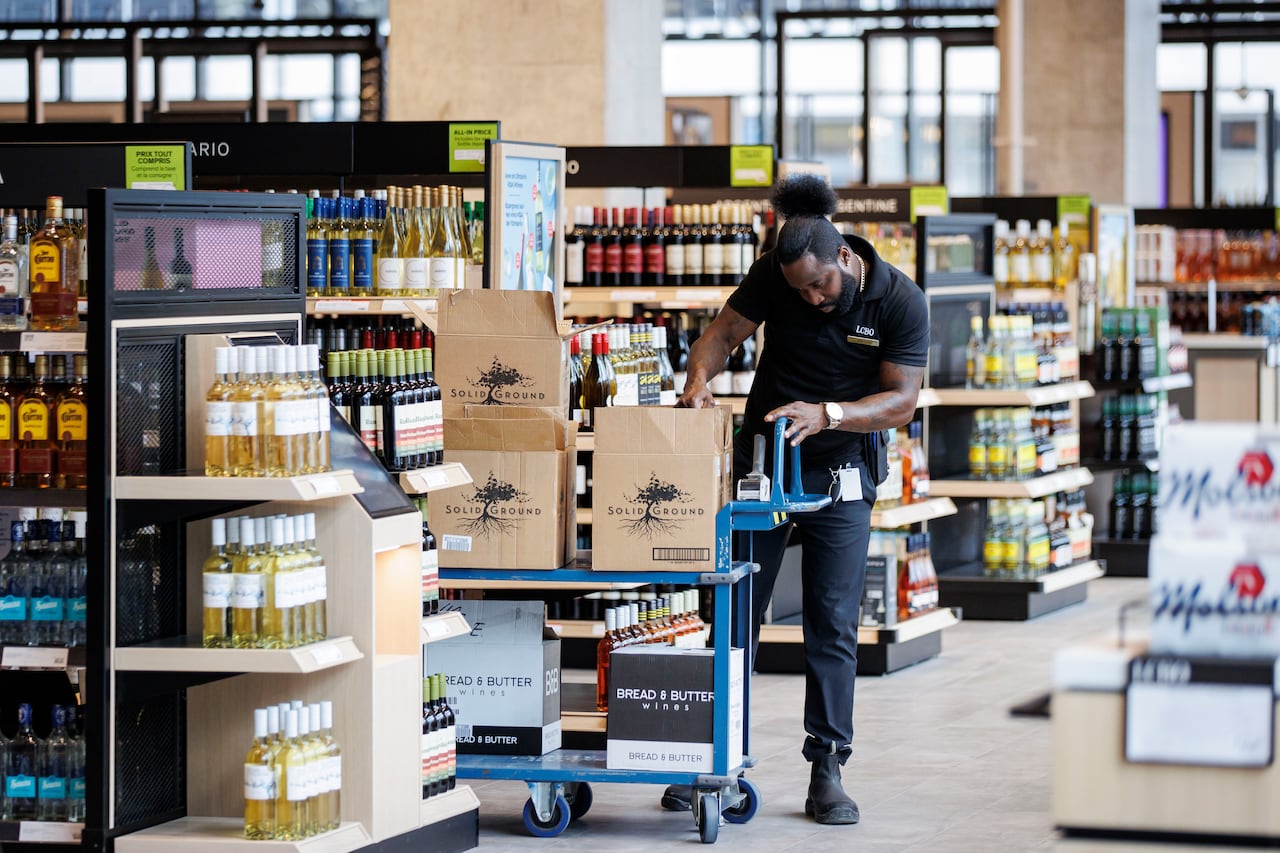 Staff at a Toronto LCBO remove American wine and spirits from store shelves on March 4, 2025. (Evan Mitsui/CBC)
In November, records obtained by CBC News through Ontario’s freedom of information act revealed the scale of the LCBO’s stockpile, though large portions of the documents were heavily redacted.
CBC News has contested the redactions by the Crown corporation with Ontario’s Information and Privacy Commissioner.
Armstrong said the LCBO, like the Ontario Cannabis Store, often operates with a high degree of secrecy, though he questioned why broad details about the inventory would need to be confidential.
“I don’t think there’s any particular reason to withhold that information from the public.”
The market shifts
Ontario’s removal of U.S. alcohol from shelves became one of the province’s most visible responses to tariffs and annexation threats from U.S. President Donald Trump.
 American wine sits behind a sign at a Toronto LCBO store on March 4, 2025, as part of the Ontario government’s response to Trump’s imposition of tariffs on Canadian goods. (Evan Mitsui/CBC)
More than a year later, the LCBO is still sitting on roughly $79.1 million worth of unsold inventory — raising questions about the long-term cost of maintaining a symbolic trade protest after the initial economic damage may already have been done.
The liquor ban has unfolded alongside a broader consumer backlash that has seen some Canadians avoid U.S. products, cancel trips south of the border and seek alternatives to American brands.
It leads some experts believe the broader Canadian boycott of U.S. products, especially when it comes to booze, may still reshape consumer habits long-term.
Andrew Muhammad, a University of Tennessee agricultural economics professor who studies trade issues related to alcohol, said prolonged boycotts can permanently reshape consumer habits as drinkers experiment with alternatives and become accustomed to non-American brands.
“The real question becomes: how long does it take for a market to make these inefficiencies permanent?”
The boycott’s afterlife
LCBO data suggests Canadian and European producers quickly moved to fill the gap left by delisted American wines, with Ontario wine market share jumping from 27 to 31 per cent immediately after the ban.
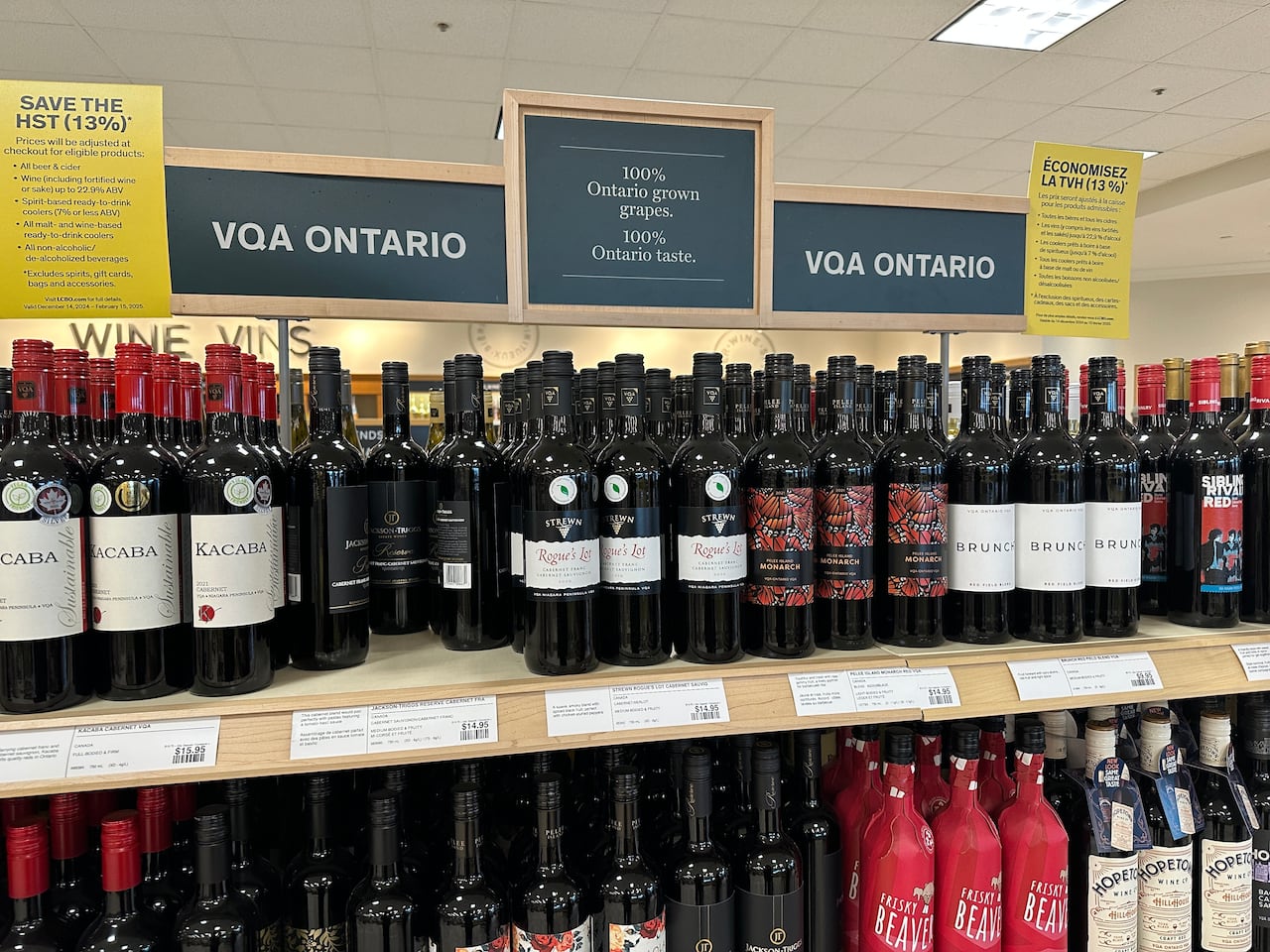 Ontario wine market share rose after the LCBO removed American products from shelves in 2025. (Pratyush Dayal/CBC)
Muhammad said there is growing concern within the U.S. alcohol industry that temporary trade measures could lead to longer-term market losses if Canadian consumers permanently shift toward domestic and European alternatives.
“I do think there’s real concern about some permanent loss in the Canadian market,” he said.
Canada imported $221 million US worth of U.S. spirits in 2024, making it the industry’s second largest export market after the European Union.
Muhammad said the boycott’s effectiveness stems from the fact that, with the exception of Alberta and Saskatchewan, alcohol sales in Canada are largely controlled by provincial Crown monopolies capable of rapidly removing products from shelves.
“What’s important here is rarely are bans this effective,” Muhammad said. “This is unique for such a big sector, I think.”
Provincial responses have diverged since the March 2025 ban. Alberta and Saskatchewan have resumed imports through their privatized retail systems, while Manitoba, Quebec and the Atlantic provinces have resumed selling existing stock rather than continue warehousing it.
Ontario and British Columbia remain among the hardest-line holdouts, continuing to block both the sale and import of American alcohol despite the growing financial costs.