
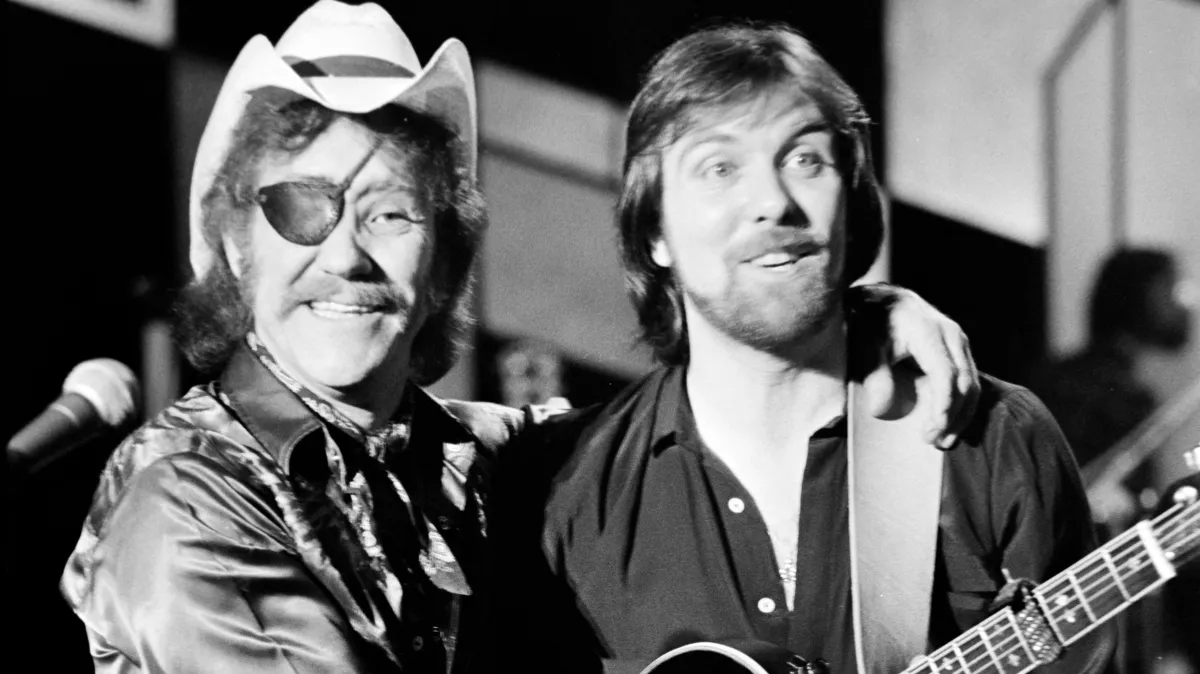
As the bearded lead singer of Dr Hook, Dennis Locorriere spent three decades singing about Sylvia and her meddlesome mother — and then he met her.
Written by Shel Silverstein, Dr Hook’s recording of Sylvia’s Mother topped charts around the world in 1972, a novelty song parodying teen-heartbreak with Locorriere pleading in vain to be allowed to talk to his girl, even if it was only “to tell her goodbye”.
In fact, as Locorriere later revealed, it was based on a true story “about a girl Shel knew when he was a young man and the phone call in the lyrics happened almost as they say it did. Shel called, and Sylvia’s mother had other ideas and wouldn’t let her speak to him.”
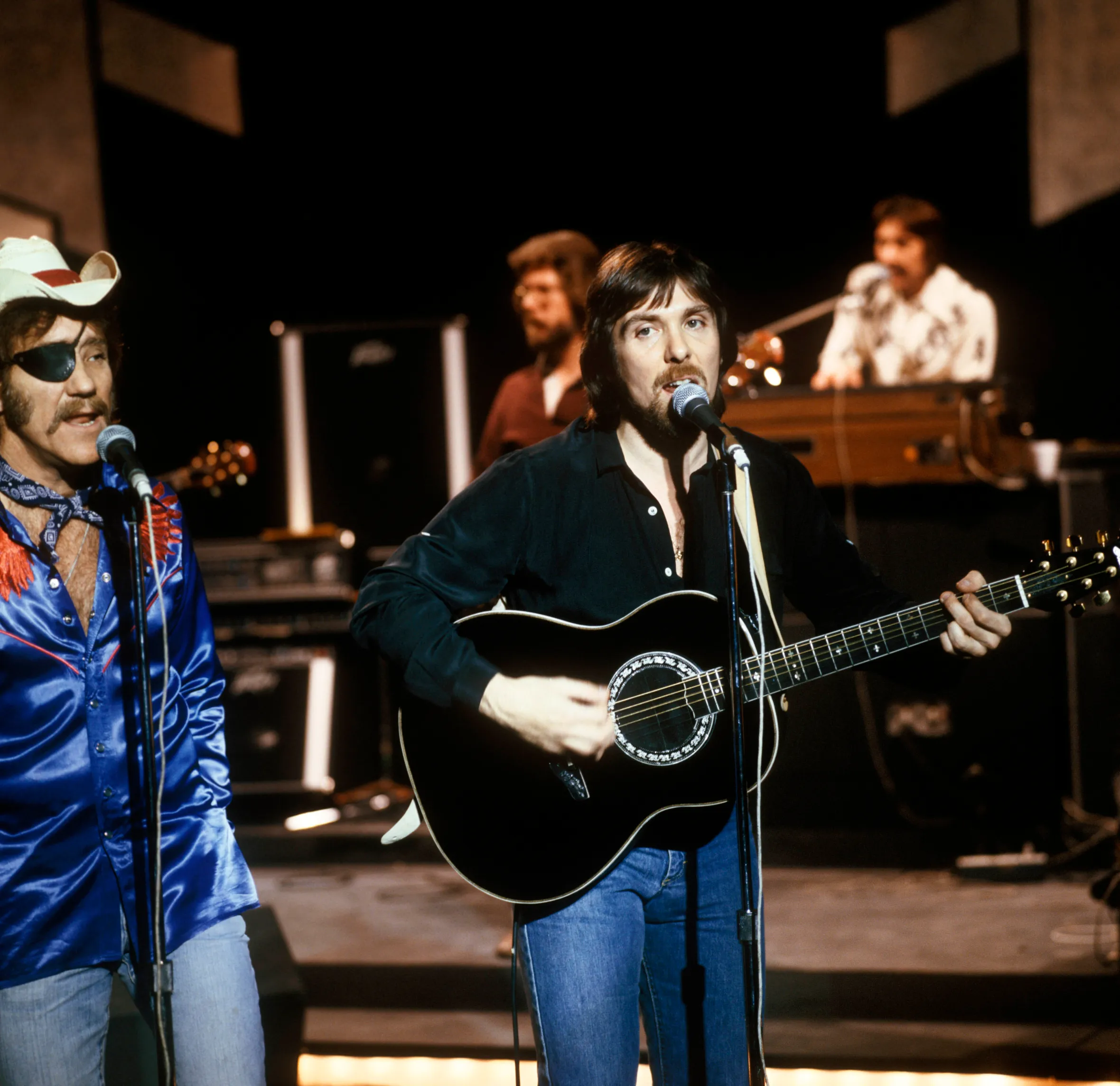 Locorriere was resentful that Sawyer was considered the face of Dr Hook, despite that fact that he was lead vocal on many of the band’s biggest hitsDavid Redfern/Redferns
Sylvia was Silverstein’s girlfriend, Sylvia Maria Pandolfi, who became engaged to another man and subsequently became the curator at the Museo de Arte Carrillo Gil in Mexico City. Her mother — the “Mrs Avery” in the song — was Emma Louisa Pandolfi, and many years later, a television company made a documentary about the song featuring Sylvia’s mother and Locorriere. “She was about 92 and was sweet, but she still disputed the lyrics and said ‘I was not rude to the boy when he called,’” he recounted.
The documentary led to Locorriere and Sylvia arranging to meet for lunch, and he confessed that he was so nervous that right up until the last minute, he thought about cancelling. “It was like having lunch with the Loch Ness monster, this legendary creature,” he said. “It was exciting and startling at the same time.”
In the event, they shared a laugh about the song her one-time lover had written inspired by their doomed teenage love affair. “The greatest thing about it was she knew Shel years before I did,” Locorriere said. “But after that phone call, she never saw him again.”
For much of the group’s existence, Dr Hook had two lead singers, with Locorriere sharing vocal duties with Ray Sawyer, whose eyepatch and battered cowboy hat made him the group’s visual focus and, in the words of NME, “the most instantly recognisable mug in the rock business”.
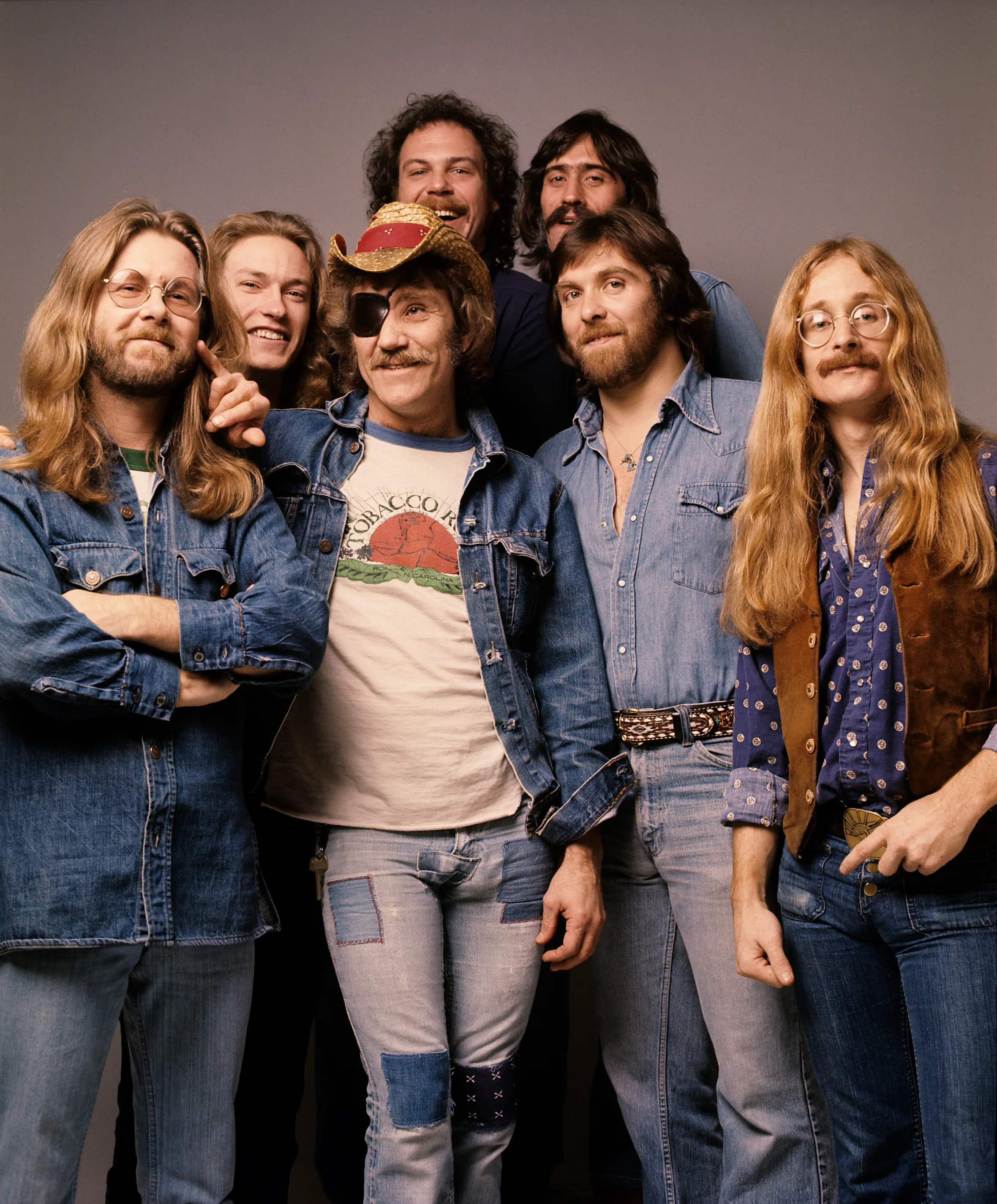 Locorriere, second right, with the rest of the band in Atlanta in 1976. Locorriere was a decade younger than most of his bandmatesTom Hill/Getty Images)
To many, Sawyer — who had lost his right eye in a 1967 car crash — was “Dr Hook” and Locorriere, whose conventional hippie look of straggly long hair and beard made him look like the band’s roadie, was ignored.
“That used to really hurt my feelings,” he candidly admitted. “When we’d walk into radio stations, everybody would run and talk to Ray like I was the caterer. Then I’d sing on the air, and they’d realise. I was nobody’s friend on the way in, but everybody’s pal on the way out.”
Sawyer sang lead on the group’s hit The Cover Of The Rolling Stone, but in addition to Sylvia’s Mother, it was Locorriere who sang lead on hits such as The Ballad Of Lucy Jordan, famously covered by Marianne Faithfull, and When You’re In Love With A Beautiful Woman, which spent three weeks at No 1 in the UK in 1979. On other songs, such as the group’s 1978 easy-listening hit Sharing The Night Together, they harmonised with each other.
“I like songs which tell stories,” Locorriere said. “It means I can be more than just a singer; it almost steps into acting. When you’re singing Sylvia’s Mother, you have to be that guy in the phone booth.”
 Locorriere on stage in Punchestown Racecourse in Ireland in 2017Debbie Hickey/Getty Images
Sawyer left the group in 1983, and Dr Hook continued touring until 1985 with Locorriere as the lone frontman. After the group broke up, he retained legal ownership of the band’s name but licensed it to his former co-singer to tour as “Ray Sawyer of Dr Hook”.
After recording several solo albums under his own name, Locorriere eventually resumed performing as Dr Hook, including a 50th anniversary tour which was delayed for a year due to Covid.
Sawyer died aged 81 (obituary January 2, 2019), and there was not a lot of love lost between the two former bandmates. “There were years of wrangles with lawyers and shit,” Locorriere said. “It’s no different from if you used to love somebody and now they want to cut your throat.”
In 2002, Locorriere moved to England, where he took dual citizenship and lived in West Sussex with his third wife, Claire Anne, who survives him. He is further survived by a son, Jessejames Locorriere, an actor, and a daughter, Lily.
His first two marriages ended in divorce, although he would not say if his chequered career as a husband had anything to do with his lyrics for Dr Hook’s 1976 hit If Not You, intended as a love song but for which he got some flak for lines such as “Who’s gonna iron my shirts?” and “Who’s gonna keep me fed?”
 Locorriere performing with Dr Hook at Lead Belly Fest 2015 at the Royal Albert HallEdu Hawkins/Redferns via Getty Images
Dennis Michael Locorriere was born in 1949 in New Jersey, the son of teenage parents, Ruth (née Mantovani) and Lenny Locorriere, who separated soon after he was born. Growing up in Union City, New Jersey, just over the Hudson River from New York, he was raised mostly by his maternal grandmother, Angelina.
By his late teens, he was singing and playing guitar in local clubs. “I just knew that I didn’t want to have a regular job because at that time I was a hippy,” he said. “I would go to bars at night and play until three in the morning, playing and having fun with my friends, and I really wasn’t thinking too much about it.”
At 18, he became a founder member of Dr Hook and the Medicine Show, joining Sawyer, the guitarist George Cummings and the keyboard player Billy Francis, all of whom were older by a decade and more, and had moved north from Alabama to form a new band.
The group signed to CBS Records in 1971 and hit the top a year later with Sylvia’s Mother. It was followed into the charts by The Cover Of The Rolling Stone, and within a few weeks, Dr Hook were indeed on the front of the magazine. “The only thing I regret is that when we got on the cover, we were a bunch of assholes and we had nothing to say,” Locorriere noted laconically.
Despite a string of hits and working incessantly, playing up to 300 dates a year, by 1974 the band was forced to file for bankruptcy. “I closed my eyes, and I sang, and by the time I opened my eyes, half the shit I should have had was not mine,” Locorriere said. “But that’s life, and I’m not going to blame anyone for it. If we were in the black when we finished a tour, we’d party into the red.”
Although many of the group’s best-known songs were written by Silverstein, Locorriere was a talented and versatile songwriter in his own right, as his solo albums showed. He was also credited alongside Silverstein with co-writing Dr Hook’s A Couple More Years, which was covered by Bob Dylan and Willie Nelson, among others.
Asked how he would like to be remembered, he replied that the hits and the gold and platinum albums on the wall were unimportant. Rather, to have sung with “an entertaining musical group who spread joy and goodwill everywhere we went” was all the satisfaction he could ever have wanted.
Dennis Locorriere, Dr Hook singer, was born on June 13, 1949. He died of kidney disease on May 16, 2026, aged 76