
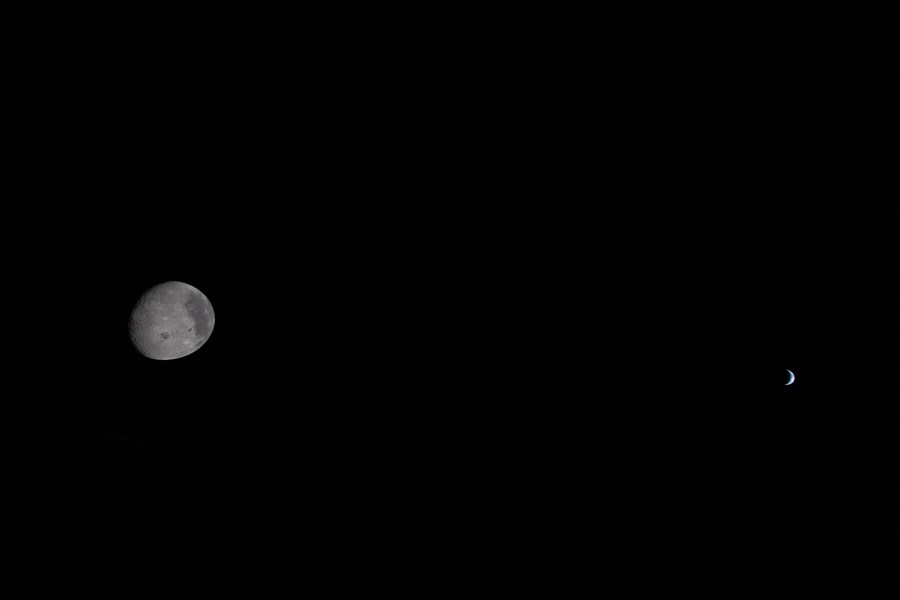
(NewsNation) — With the Artemis II mission in the rear mirror, new information has emerged about how far the moon continues to move away from the Earth.
A report from Space Daily says the moon is receding from Earth at 3.8 centimetres per year.
“That number is small enough to sound trivial. It is not,” Space Daily states. “The same measurement, extended forward, eliminates an astronomical phenomenon that human beings happen to be alive at exactly the right moment in geological time to witness.”
The development results from tidal friction, the site notes.
How to watch the northern lights on Monday, May 18
Friction occurs as Earth’s oceans bulge under the Moon’s gravity. Consequently, the days lengthen on Earth by about 1.7 milliseconds per century, and the moon spirals outward because it’s gaining orbital energy.
“The value of 3.8 centimetres per year is not a model output,” adds Space Daily.
“It is a direct measurement, repeated for decades through the Lunar Laser Ranging Experiment, in which observatories including the Apache Point facility in New Mexico and the Côte d’Azur station in France time the return of laser pulses bounced off the Apollo and Lunokhod retroreflectors.”
The moon formed roughly 4.5 billion years ago. The separation between the moon and Earth then was on the order of 20,000 to 30,000 kilometres.
Copyright 2026 Nexstar Media, Inc. All rights reserved. This material may not be published, broadcast, rewritten, or redistributed.
For the latest news, weather, sports, and streaming video, head to NewsNation.