
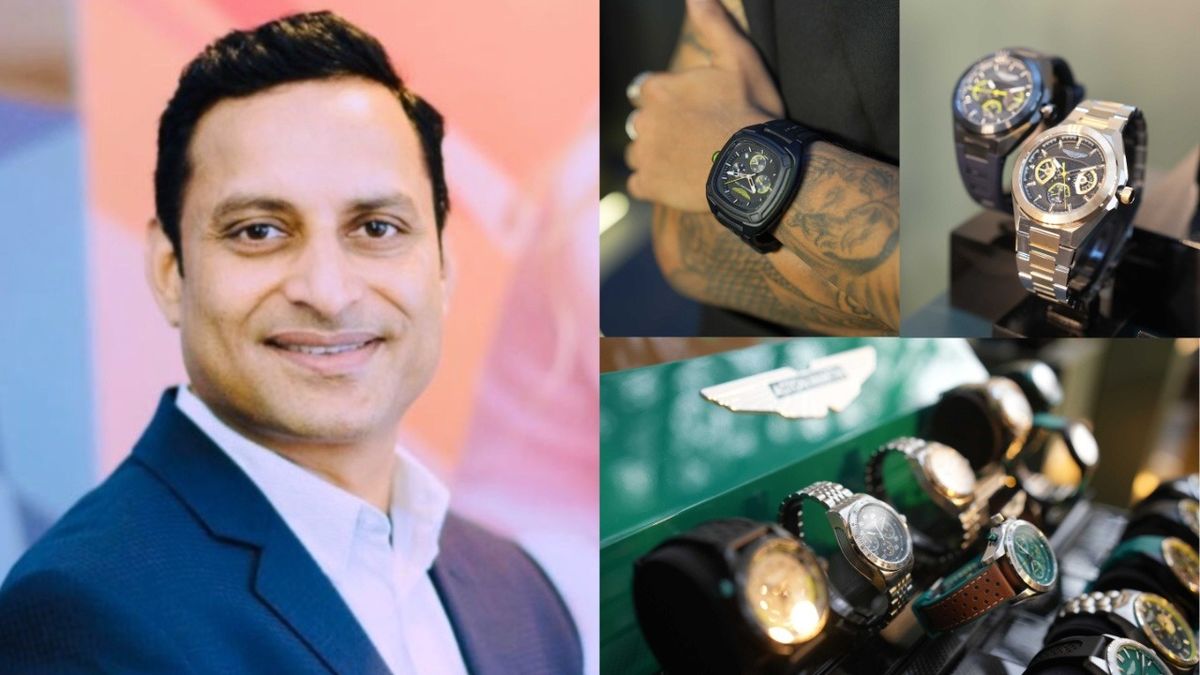
Why does a company selling wristwatches install a full-sized mirror at its retail stores? “Because watches no longer serve the purpose of telling time; that has been taken over by mobile phones. Watches are a fashion accessory now, so you need to know how they look with your entire outfit,” says Deepak Chhabra, managing director of Timex Group India.
That explains why the Timex Group has collaborated with Aston Martin, the luxury automobile brand, to produce a new line of luxury watches.
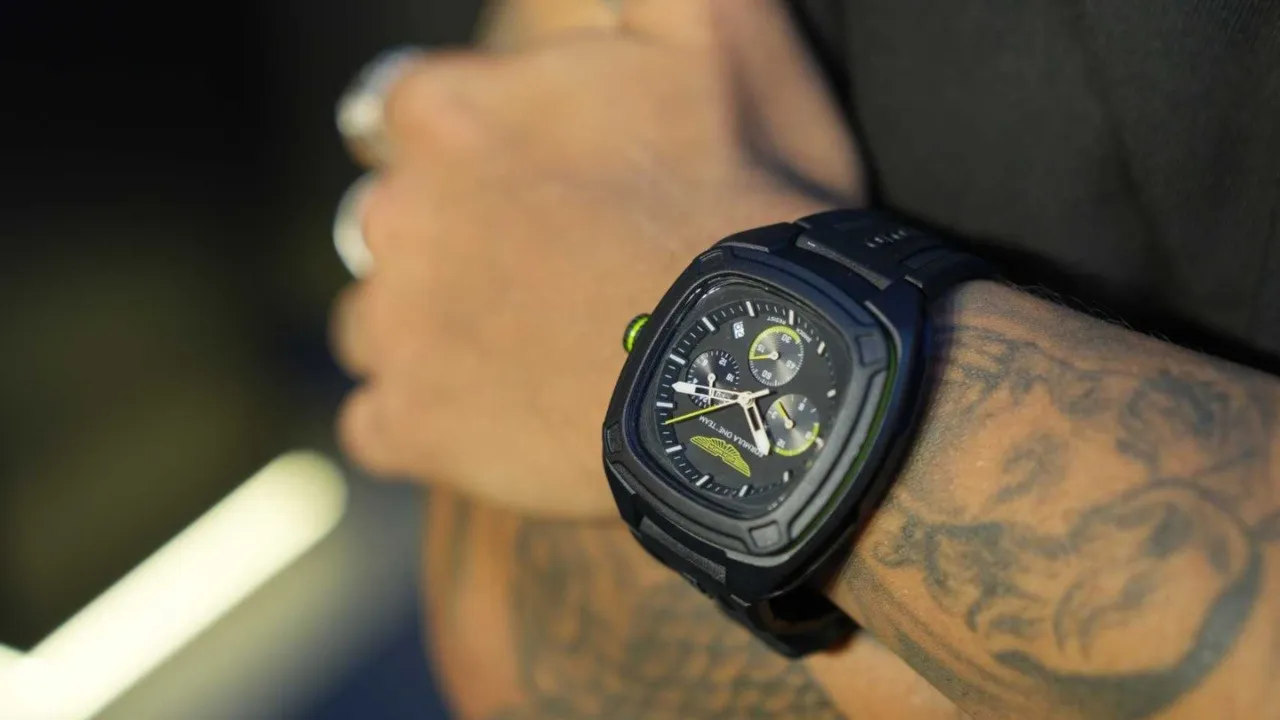
“These watches are unmistakably inspired by the cars. When you look at the dial, you can see elements like tyres, speedometers, and dashboards; it’s very clearly Aston Martin,” says Chhabra. The new watches range between Rs 12,000 and Rs 70,000.
The Timex Group traces its roots back to 1854, starting as the Waterbury Clock Company in Connecticut, USA. Now a global watchmaker, the group has a diverse portfolio of owned and licensed luxury brands. Timex Group India is its publicly listed subsidiary with a revenue of Rs 540 crore in FY25, marking 28% growth from FY24, as per the company’s annual report.
Affordable or aspirational?
One quick Google search will tell you that, aside from the recent luxury collaboration, Timex watches are actually quite affordable, starting at Rs 1,900. So is Timex an affordable brand or an aspirational one?
“We are actually not just Timex; we are the Timex Group,” explains Chhabra. “So we have two parts of the business; one is our own brand, and then the other part of the business is licences that we have with luxury brands.”
While Timex has its own range of affordable sub-brands like Helix and TMX, the larger group has been collaborating with luxury fashion brands such as Versace, Guess, Salvatore Ferragamo, Ted Baker, Furla, and Philipp Plein for decades.
“As a company, I have all the brands, but for a consumer, they don’t even know that the Timex Group sells Versace or Guess,” and Timex intends to keep it that way as long as they can cater to all kinds of audiences.
“India is consuming more. We have a large population that now has discretionary income, and they spend it,” asserts Chhabra. “People are investing more in watches now. So the price points are not a constraint,” he adds.
Why Aston Martin?
Timex has been licensing watches for luxury brands for about 40 years now, but all such collaborations have only been with fashion brands.
“We saw that there is a gap for a genuine sports brand in our portfolio, in general, and in particular for motorsports.”
Aston Martin is a British luxury car manufacturer, which is also famous for its Formula 1 (F1) team. Considering the rising popularity of F1 racing in India, Timex has not only collaborated with Aston Martin, but it has also dedicated an entire Formula 1 range within the collaboration for younger fans.
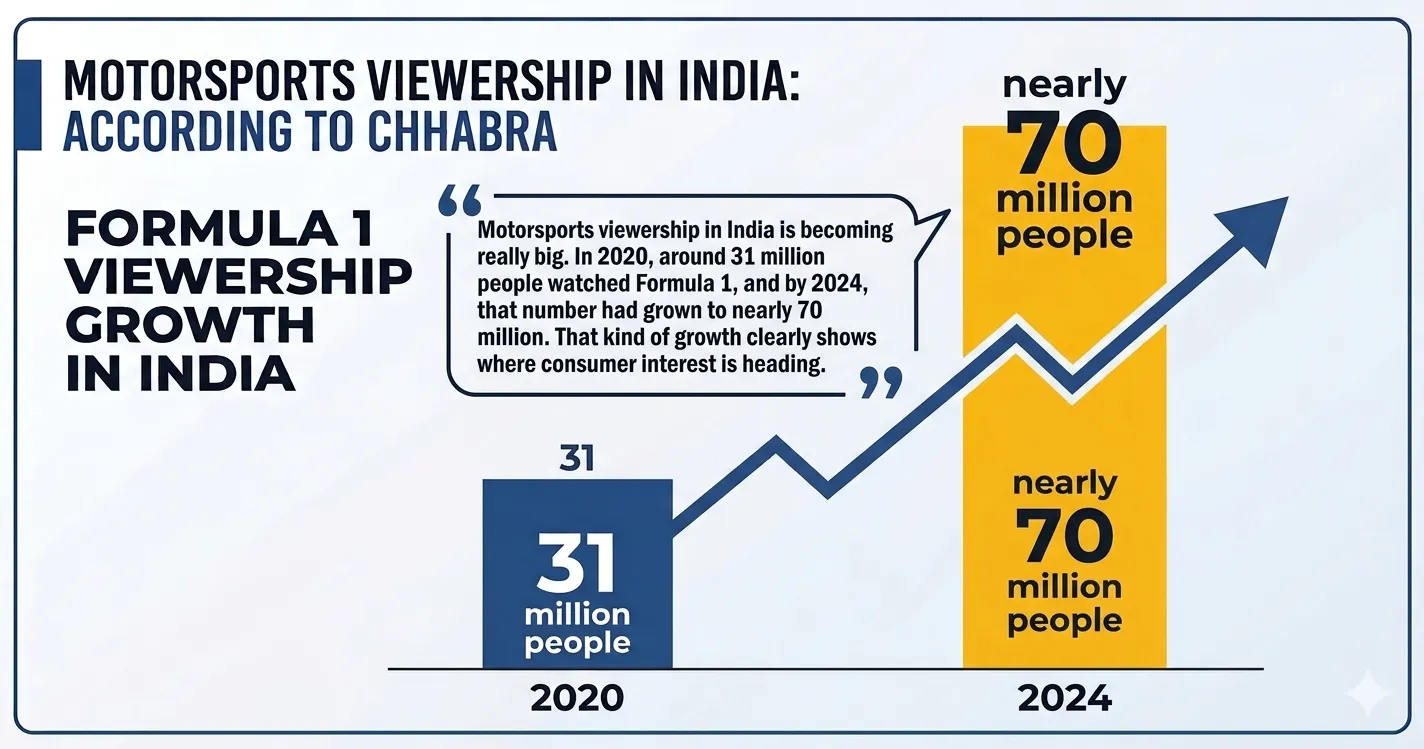
According to Chhabra, “Motorsports viewership in India is becoming enormous. In 2020, around 31 million people watched Formula 1, and by 2024, that number had grown to nearly 70 million. That kind of growth clearly shows where consumer interest is heading.”
Aston Martin’s association with Formula 1 and their combined popularity in India have also made it easier for Timex to target its audience.
“The beauty is it’s not just 70 million regular people who are the fandom of Formula 1. Unlike a cricket fandom, which is massive, they’re all affluent.”
Adding to the sentiment, Chhabra says, “It’s not even free over the counter, you know; if you have to see a race, you have to pay a subscription. That makes it easy for us to sell more because they can afford an Aston Martin, all of them.”
Analogue versus digital versus smart watches
During the pandemic, when the world retreated into “Bermudas and t-shirts”, watches lost their allure.
“We were worried during COVID-19 because nobody was moving out of their homes,” Chhabra admits. During that era, smartwatches surged because they served a functional purpose: health tracking.
But times have changed.
Chhabra notes that interest in smartwatches has dropped by “nearly 50%” in the last two years. The reason? “Smartwatches are the most boring,” says Chhabra.
“They are generally black; whether it’s a boAT or an Apple, they all look the same. You could be spending Rs 1,000 or a lakh, but the aesthetic remains a black rectangle.”
Additionally, since watches have become more of an aesthetic than a utility, one isn’t enough. “I need a white, a blue, a denim, and a black denim”, Chhabra explains. “If it is fashion, I need seven of them.” This shift from owning one functional timepiece to a “wardrobe of watches” is a primary engine of the industry’s current growth.
We are no longer seeing just straps and dials; the women’s market is now pivoting toward ring watches, jewelled bracelets, and serpentine designs, adds Chhabra.
Who’s buying? The 30s Club and the unisex shift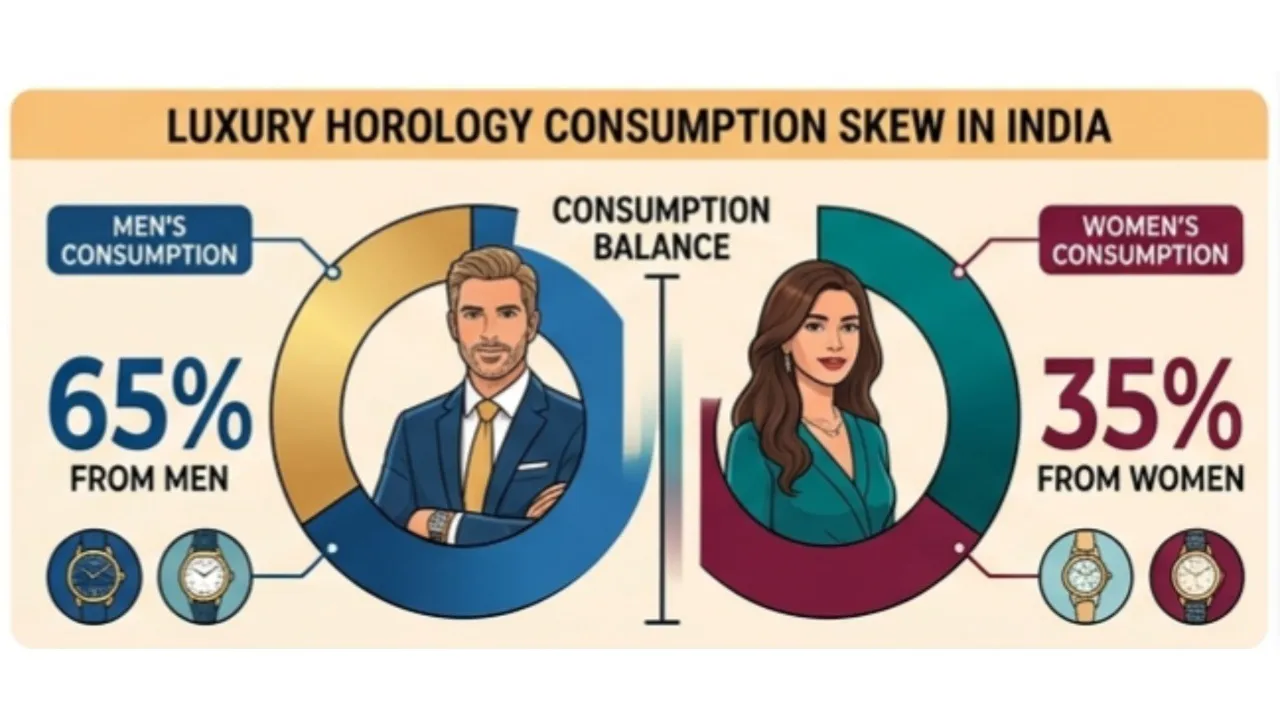
This appetite for high-end horology is most concentrated in the 30-45 age group, consumers who are “settled in life” and ready to indulge themselves.
While luxury in India has a reputation for being a “boys’ club”, Chhabra points out that the gap is narrowing, even if the demographics lean one way. “Versace, Ferragamo, and Aston Martin are more towards men. In the luxury space, consumption is skewed, with 65% from men and 35% from women,” he explains.
However, men’s watches have become effectively unisex now. While you can’t imagine men wearing jewelled women’s pieces, the reverse is happening globally.”
The ‘Top 8’ rule
For Timex, the difference between “India” and “Bharat” is a matter of price points. According to Chhabra, luxury remains an urban phenomenon, with just 8 cities driving 80% of premium business.
Delhi accounts for 18% of sales, and Mumbai sits at 12-15%. Conversely, for the value-driven Timex and TMX brands, Tier 3 and 4 cities are the growth engines where “Bharat is buying its first-ever watch”.
Timex utilises a tiered distribution strategy to cover the entire sales pyramid. Mass-market sales are driven by “mom-and-pop” neighbourhood stores and multi-brand chain stores like Shoppers Stop and Lifestyle. Offline sales account for 60% of affordable Timex watches.
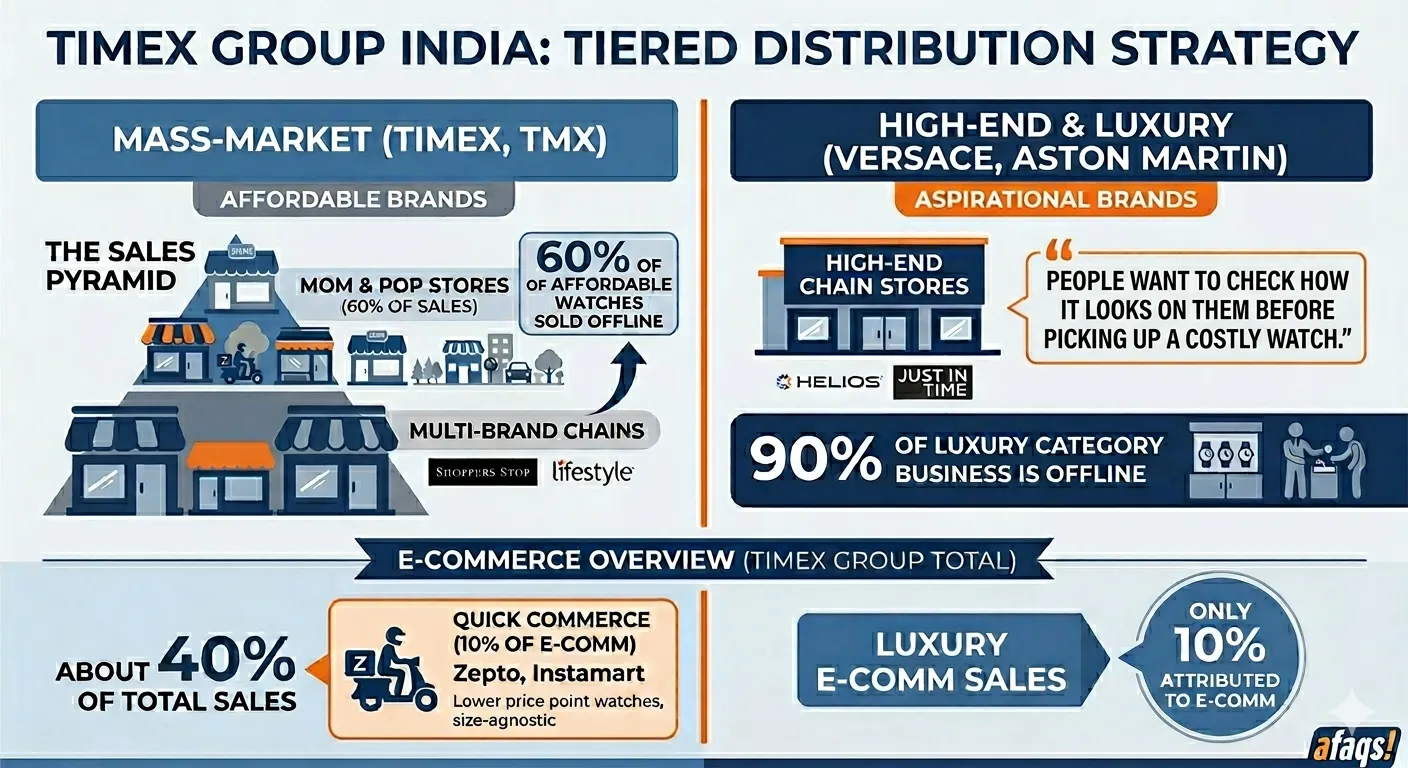
High-end collections rely on specialised chain stores, such as Helios or Just in Time. Across the luxury category, 90% of business is offline. “People want to check how it looks on them before picking up a costly watch.”
In addition to brick-and-mortar stores, about 40% of Timex sales are attributed to e-commerce, out of which 10% comes from quick commerce. Whereas only 10% of Timex’s luxury collection sales are attributed to e-commerce.
“Lower price point watches are size agnostic; people are comfortable buying them on Zepto or Instamart,” Chhabra says.
For Timex, quick commerce currently only makes up 2-2.5% of total company revenue. However, Chhabra predicts that it will explode to 10-12% of the entire business within 3-4 years. “It’s not cannibalising slow commerce; it’s solving the ‘evening dinner’ gifting crisis.”
Media buying budget and the print paradox
The Timex India Group spends 12% of its overall turnover on marketing its own brands, whereas it spends only 8% of the same turnover on marketing its licensed luxury portfolio.
The logic? “Why would I license a brand that isn’t already popular?” explains Chhabra.
Despite the high-gloss ads seen in every Sunday supplement, Chhabra reveals that digital is the true driver of sales, even for luxury. “Large investment remains digital because we have a tiny set of people to target, about 5 million in India. Targeted communication only happens digitally; print is generic.”
He candidly admits that many luxury print ads are a result of “partner pressure” from retailers. “Nobody just gets up and buys an Rs 1.5-2 lakh Rado because they saw a print ad. It’s a planned purchase, but retailers want to see their shop address in the paper.”
So whether you are panic-buying a Rs 1,900 watch on Zepto for a birthday party or swiping Rs 70,000 on your card to feel like a racecar driver on your morning commute, Timex has your wrist covered.