
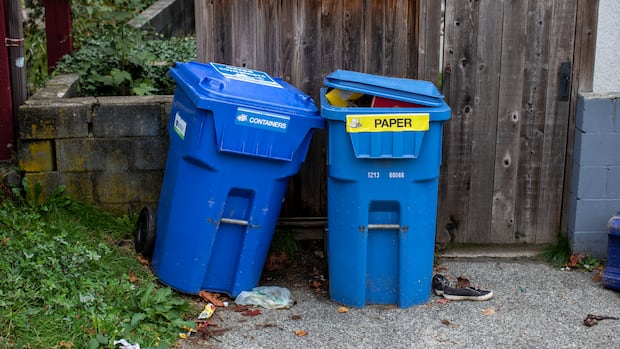
If you live in an apartment in Metro Vancouver, your recycling routine might look a bit like a juggling act.
From balancing an overflowing compost bin in your left hand, to grasping a bag of garbage in your right — while lugging another bag of plastic containers on your hip — you’ll walk through hallways, an elevator, maybe the parkade, to reach a smelly recycling room.
Hands full, you toss your various bags into the receptacles, without trying to touch anything too gross. It’s a success — at least you didn’t spill your compost in the elevator.
That’s one possibility.
An alternative is that you just don’t recycle at all.
Apartment dwellers are less likely to recycle and compost as their neighbours in single-family homes, according to data from the Metro Vancouver Regional District.
Data from the regional district shows that single-family dwellers have a recycling rate of about 60 to 65 per cent, whereas the rate for multi-family dwellers is 30 to 35 per cent.
“Multi-family” buildings include high-rise and low-rise condo and rental apartment buildings.
The recycling rate includes both blue-bin recycling, like paper and plastic, as well as green-bin waste like food scraps and yard trimmings.
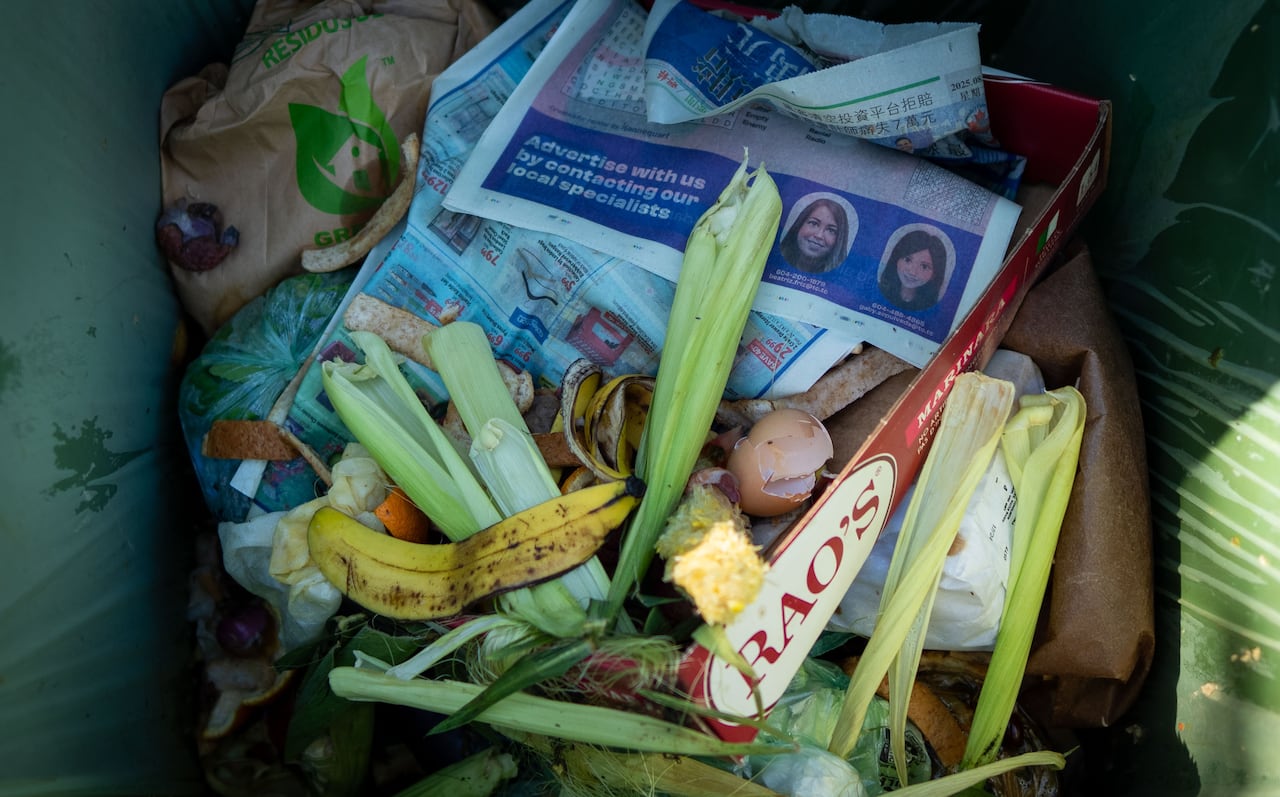 The Metro Vancouver Regional District includes compost or green-bin waste in its recycling rate. (Ethan Cairns/CBC)
Part of the reason is a higher barrier to recycling for residents of apartments and multi-family homes, according to Zero Waste B.C. volunteer Belinda Li. She laid out the labyrinthine path some condo-dwellers take.
“That’s quite different than, say, a single-family home where you might just have your bins outside, and you can just take your stuff there pretty regularly.”
There’s other factors too, Li said.
She noted some municipalities don’t offer collection services for apartments like they do for single-family homes, which means municipalities don’t have as much control over how multi-family dwellers recycle, such as which types of waste are collected.
Rodrigo Borquez Zalle, who lives in a Vancouver apartment, said he and his roommates recycle and compost as much as they can.
But he said he wasn’t surprised other apartment dwellers find it a hassle, particularly with “barely” enough space to store all the garbage.
“But we make it work,” he said.
WATCH | Why do recycling rates differ between buildings and homes?:
Metro Vancouver apartments don’t recycle as much as single-family residences
It’s a tale of two recyclers. It turns out if you live in an apartment, chances are you might not be diverting as much waste as your neighbours who live in single-family homes. The CBC’s Lauren Vanderdeen explains why, and how the region is hoping to change that.
For Borquez Zalle, the clearer the information, the better.
“I would like the people in charge of that to make it easier for us to learn what goes in where. I’ve tried to look for guides, but I want something simpler.”
New long-term solid waste plan
Metro Vancouver is in the middle of updating its solid waste management plan. One of its priorities is increasing how much multi-family home waste is diverted from the landfill.
Karen Storry, senior engineer for Metro Vancouver, recommended using the green bin as a great way to start.
“When you put your organics in the green bin instead of the garbage, then it doesn’t go to a landfill where it creates methane,” Storry said. “So it’s really important to divert your organics, so that you can reduce climate emissions.”
Li said it’s also on companies to design products with less packaging waste.
“The best scenario is if we don’t even generate these waste materials to begin with.”
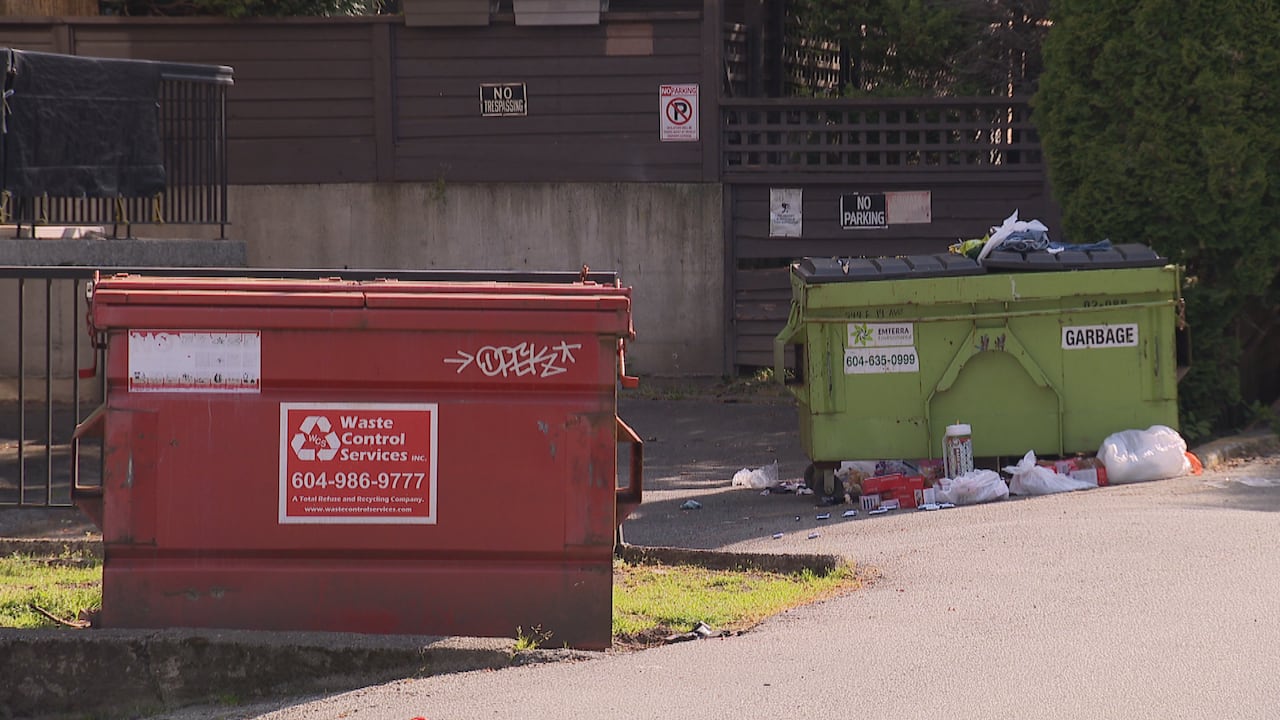 According to data from Metro Vancouver, apartment residents throw away about 1.3 times more waste than those in single-family homes. (Martin Diotte/CBC)
Storry noted some cities have zero-waste ambassadors in condo buildings that can help translate and share information from local governments to residents directly.
Make recycling easy, comfortable: advocate
One of those ambassadors, Jennifer Danczak, has set up a variety of programs to get her Vancouver neighbours on board with reducing waste.
“Convenience is the main thing people are looking for when they’re recycling or upcycling,” Danczak said.
She recommended stratas set up recycling programs and communicate clearly to residents.
She said her condo has cameras in the recycling room, and it fines residents who don’t comply with recycling bylaws.
That’s saved them thousands of dollars that would have been spent on paying junk haulers to take away items illegally disposed by residents, according to Danczak.
She said residents are encouraged to participate in prepaid programs, in which they can spend about $10 to $15 to send off unwanted items that can’t be easily thrown out, thus avoiding a $50 to $100 fine for dumping.
Danczak also spruced up the building’s recycling room to make it more pleasant.
She bought a $50 stainless steel table off of Facebook Marketplace to make it easier for people to set their garbage down and created fun graphics to indicate which waste goes where.
“Some things work, you trial them out, and some things don’t work but you just keep trying,” she said.
The Metro Vancouver draft solid waste management plan will go through a public comment period in the coming weeks, according to the regional district.
The draft plan along with whatever feedback is received will eventually go to the environment minister for final approval.