
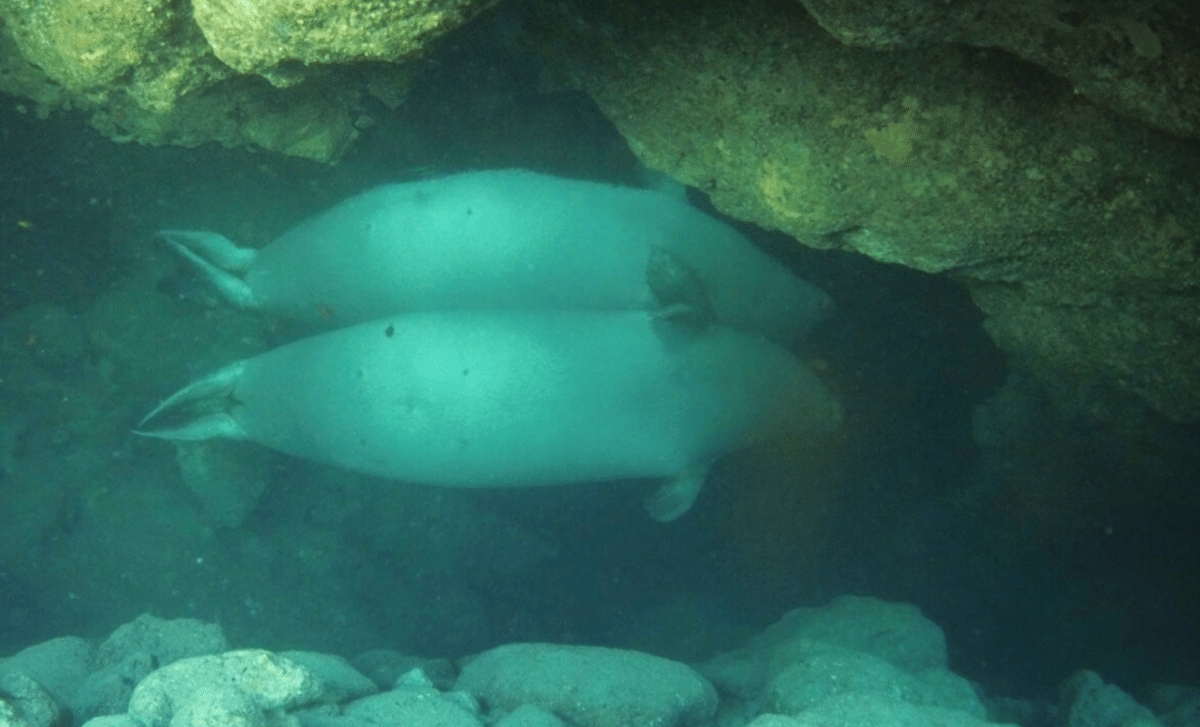
A team of researchers has uncovered a remarkable behavior of the Mediterranean monk seal, one of the world’s most threatened marine mammals. According to a study published in Oryx, these seals are retreating from crowded beaches and summer tourism by seeking refuge in underwater bubble caves, air-filled chambers accessible only through submerged passageways. This discovery reveals not only the ingenuity of these animals in avoiding human disturbance but also highlights the importance of protecting hidden marine habitats that were previously overlooked.
Seals Under Pressure From Human Activity
Historically, Mediterranean monk seals would haul out on open beaches to rest, dry their fur, and raise pups. However, as tourism in areas like the Formicula Islet in Greece’s Inner Ionian Archipelago has grown, these large marine mammals have been increasingly forced to abandon their natural resting spots. Tourists often attempt to interact with the seals or explore the caves where they reside, creating continuous disturbances during the critical summer months. The resulting stress can alter their natural behavior, leaving the animals vulnerable to environmental pressures and human interference. Researchers sought to track exactly where the seals were retreating to improve conservation strategies and better understand the species’ behavioral adaptations.
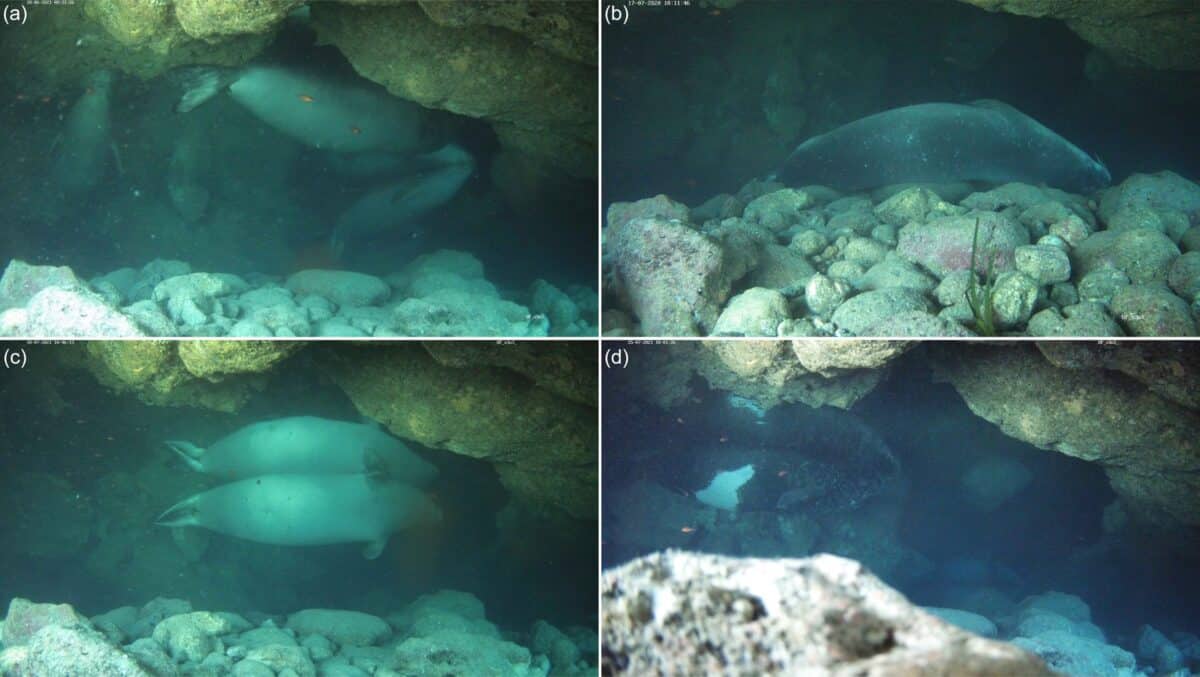 Mediterranean monk seals Monachus monachus using the bubble cave: (a) three seals sleeping or resting at the surface; (b) seal sleeping on the sea floor; (c) female sleeping laterally with nostrils underwater while exposing her four nipples and umbilicus to the camera; (d) heavily scarred large black male, with a characteristic white belly patch, sleeping at the surface.
Credit: Oryx
Discovery Of Hidden Bubble Sanctuaries
Using a combination of remote cameras and watertight housings, scientists monitored seal activity over 141 days, capturing detailed footage both in the main cave and within the submerged bubble chambers. Over this period, the seals were observed in the bubble caves for 119 days, far outnumbering their 30 days in the more accessible main cave. Within these hidden domes, the seals exhibited varied resting behaviors, floating awake at the surface, sleeping upright, or motionless on the sea floor. “These wet, less accessible and inconspicuous domes may not only provide refuge against human disturbance but also play a role as resting sites,” explained the study authors in their paper, published in Oryx, emphasizing the caves’ critical role in supporting natural seal behavior away from human pressures.
Implications For Conservation And Habitat Protection
The findings from Oryx provide new insight into habitat use by Vulnerable Mediterranean monk seals. These hidden bubble caves represent vital sanctuaries, particularly in areas heavily visited by tourists. The study notes, “Habitat suitability studies for the Mediterranean monk seal may benefit from including bubble caves, as they provide valuable resting spots, especially in tourist areas.” By integrating these underwater refuges into conservation planning, policymakers and marine biologists can improve protections and ensure that these seals maintain safe spaces for resting and rearing their pups. This discovery underscores the need to reconsider how human activity impacts even seemingly remote marine environments.