
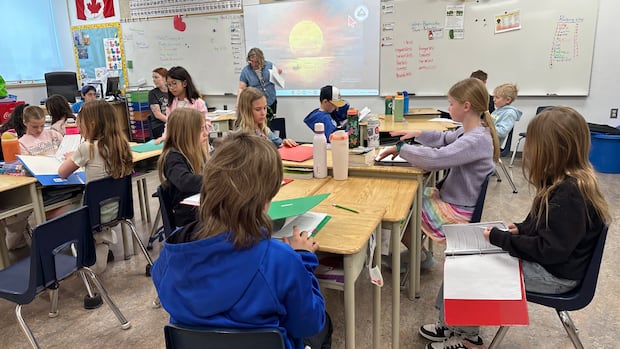
A growing shortage of substitute teachers in Alberta has left hundreds of schools scrambling to cover classes.
In Calgary, the public school system now fails to replace roughly 200 teachers a day. In one small rural school CBC News visited recently, four staff were missing with no substitutes and the principal had to teach.
Teachers say it’s leading to burnout, to staff not calling in sick when they should, and to poor learning environments for thousands of students.
“We’re always told to take the time we need, but we all feel guilty. … Is it worth it or can I push through?” said Ryan Yeats, a Grade 8 teacher in Calgary.
“Pre-scheduled jobs tend to get filled. But if I get sick? The odds of me getting a sub are almost non-existent if I get sick overnight or my kids get sick.”
Teachers raised the issue in January through CBC News’ Alberta teachers questionnaire. They said they were having to double up classes, lose their prep time, and ask unqualified educational assistants to cover a class. Several worried it is evidence of a larger staffing crisis to come.
Then one substitute teacher in Calgary contacted CBC News when he counted 240 unfilled jobs at 9 a.m. one morning in the public school system, including seven at a single elementary school.
20% of jobs unfilled
We aren’t naming him because he wasn’t authorized to share the information, but the Calgary Board of Education confirmed the total unfilled jobs per day for the last week in April. An average of 209 jobs went unfilled daily.
The rate normally increases as the school year advances, but this is worse than normal. CBE officials said this year, 20 per cent of jobs went unfilled in April; last year it was 16 per cent.
It’s a provincewide problem, says Jason Schilling, president of the Alberta Teachers’ Association.
“We’ve been seeing a teacher shortage in Alberta for several years now,” he said. “It really came to fruition during COVID; the year after is when we saw that shortage of substitute teachers ramp up.
“Many substitute teachers who were working left the profession entirely during COVID … and it’s just never bounced back.”
He said a general teacher shortage has been felt in rural and remote areas for years, and this year even areas closer to urban centres have been struggling to fill positions.
And the substitute teacher shortage recently intensified because of the number of new teachers being hired for Alberta’s complexity teams.
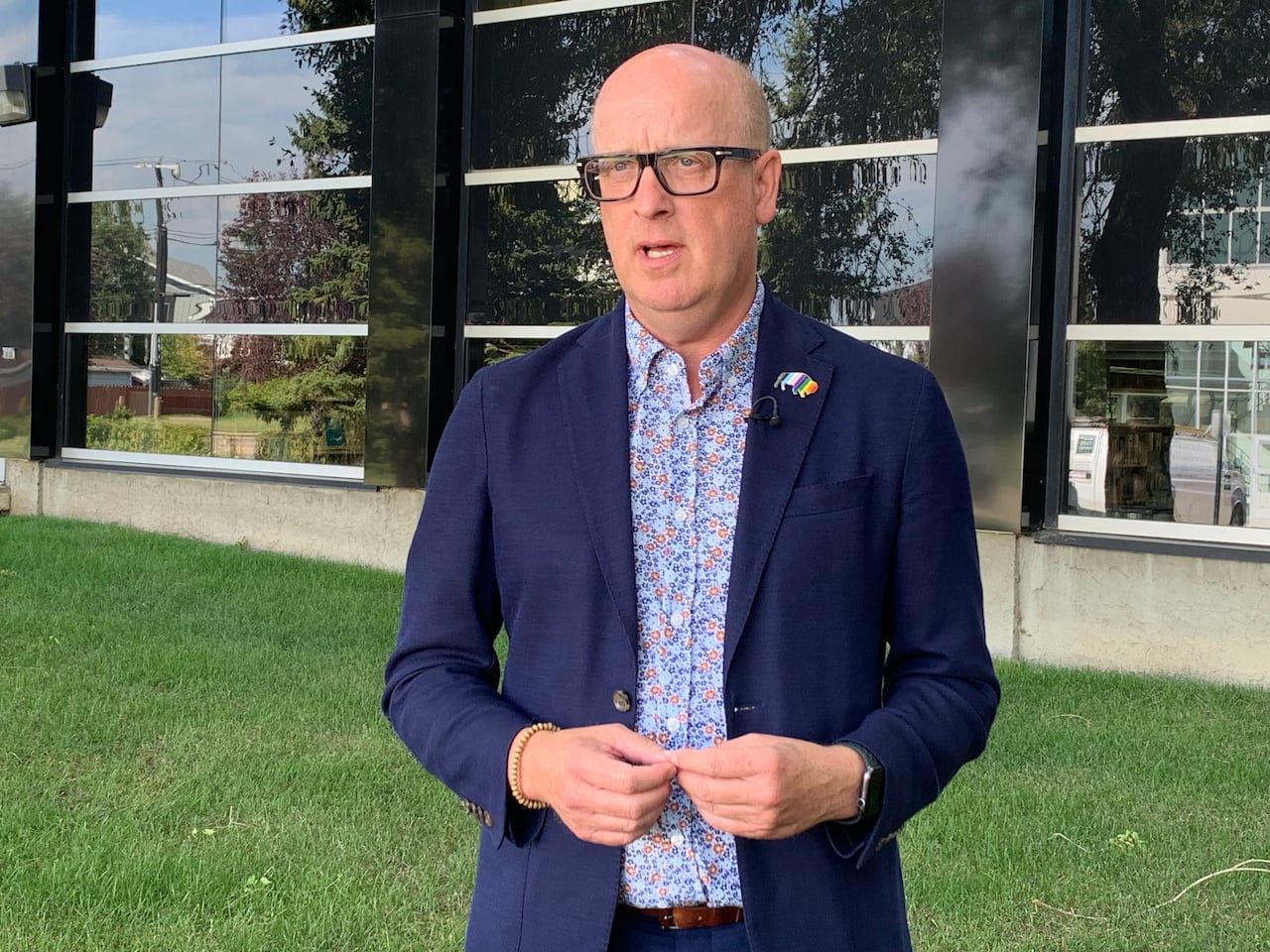 Alberta Teachers’ Association president Jason Schilling says the group’s provincial executive council hears concerns about the substitute teacher shortage from its members on a daily basis. (Nathan Gross/CBC)
In February, Alberta Education pledged to hire nearly 500 new teachers to set up the complexity teams, meant to help elementary schools in the province that have the most complexity.
In May, it announced funding to hire an additional 1,400 teachers to reduce class sizes.
It has also promised to create four fast tracks to get more teachers certified. These would cater to people who are internationally trained or who are skilled professionals who want to teach those skills to high school students.
What it’s like to be a sub
Kim Beirnes has been a substitute high school teacher since 2014, with some breaks to take longer term contracts. She works in the Calgary area.
Asked why she thinks there’s a substitute teacher shortage, she said: “Partly it’s because being a sub is a really hard job. … So unless you’re in it to become a full-time teacher, you’re probably not doing it. Or you’re a retired teacher; that’s the other category.”
Under the provincial contract, substitute teachers are paid about $270 a day, until they teach in one classroom for multiple days and get bumped onto the teachers’ salary grid. That takes between two days and about a week, depending on the school district.
Substitute teachers have no benefits or guaranteed hours, and don’t get paid when they don’t work, such as during spring break.
“It makes budgeting a challenge,” Beirnes said. “Every sub I know has at least one other side hustle.”
In her case, she’s a face painter.
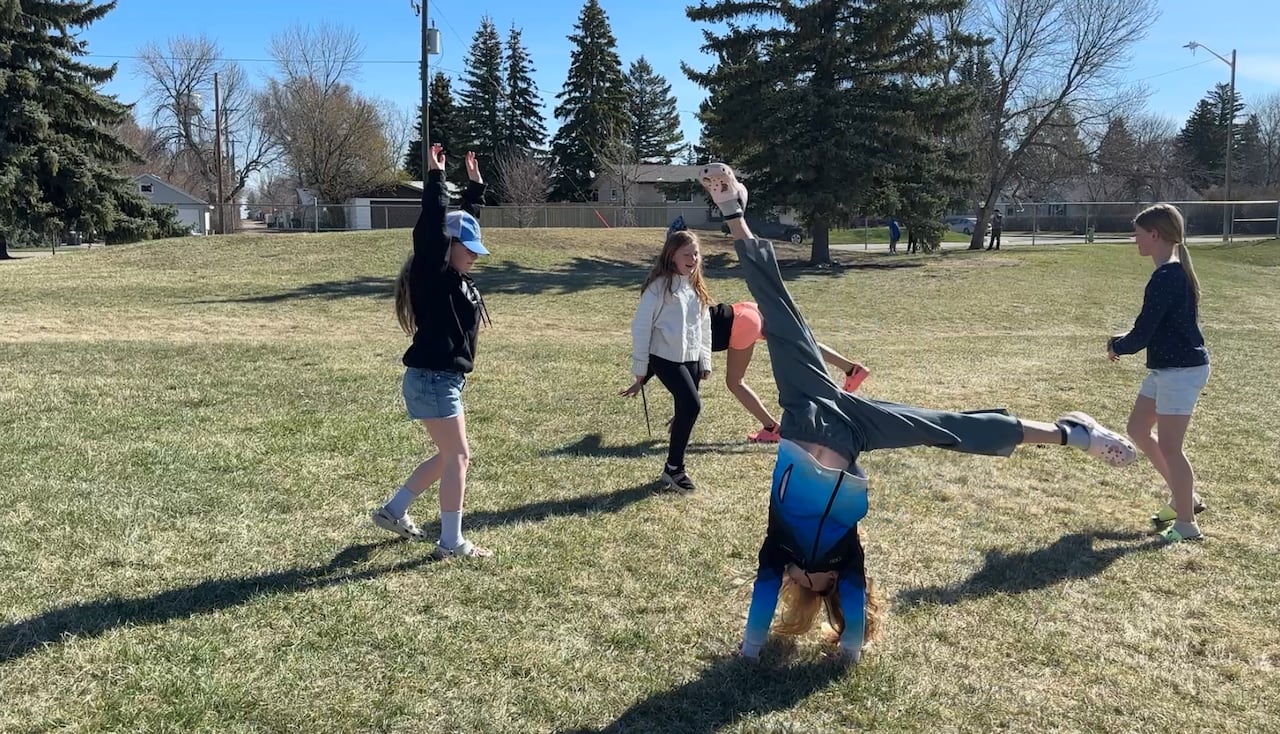 Students at Vulcan Prairieview Elementary School perform cartwheel after cartwheel during the morning recess break. (Elise Stolte/CBC)
Being a substitute teacher provides flexibility.
But you’re also walking into busy, complex classrooms with only the teacher’s notes to guide you, Beirnes said.
It’s easier when she focuses on working just at one school, as she’s doing now.
“Almost all of the kids in the school know me, probably more than [they] know some of the teachers because I’ve been in and out of all of their classrooms.”
‘One of the hardest things I’ve ever done’
Brad Camroux is also a substitute teacher in the Calgary area. He says the biggest challenge is classroom behaviour, especially in junior high.
“I would feel like it would take around three days to a week to kind of get a handle on things, but we don’t often have assignments that long. It’s going in and out of classrooms all the time,” he said.
Camroux came to teaching later in life after a bachelor’s degree in geophysics and a career in environmental reclamation. He’s been subbing since 2022, and is now holding out for the right teaching contract in high school science.
“I had a temporary contract last year for November to June and I did Grade 9 math. It was good and it was very, very, very stressful. It was probably one of the hardest things I’ve ever done, including my degrees.”
So instead of taking a contract that doesn’t fit, he’s focusing on filling in for specific teachers and schools that he knows. It’s not a bad situation, he said.
“There’s a lot of benefits. You don’t have to plan as much. You don’t have to mark or do all that extra teacher stuff. But it’s less money and less consistent work.”
CBE hiring new graduates
Jesse Hillas, who’s on the hiring team at the Calgary Board of Education, expects the shortage to improve soon as the district hires hundreds of new university graduates.
To cope with growth and to replace teachers who resign, CBE has been hiring year-round, drawing down the substitute teachers list and looking farther afield, he said. It hasn’t been easy.
“It’s not just Alberta that’s hiring teachers, it’s everywhere across the country,” he said. “We’re in a place where it is a highly competitive labour market, and we have teachers who are graduating who have a lot more options.”