
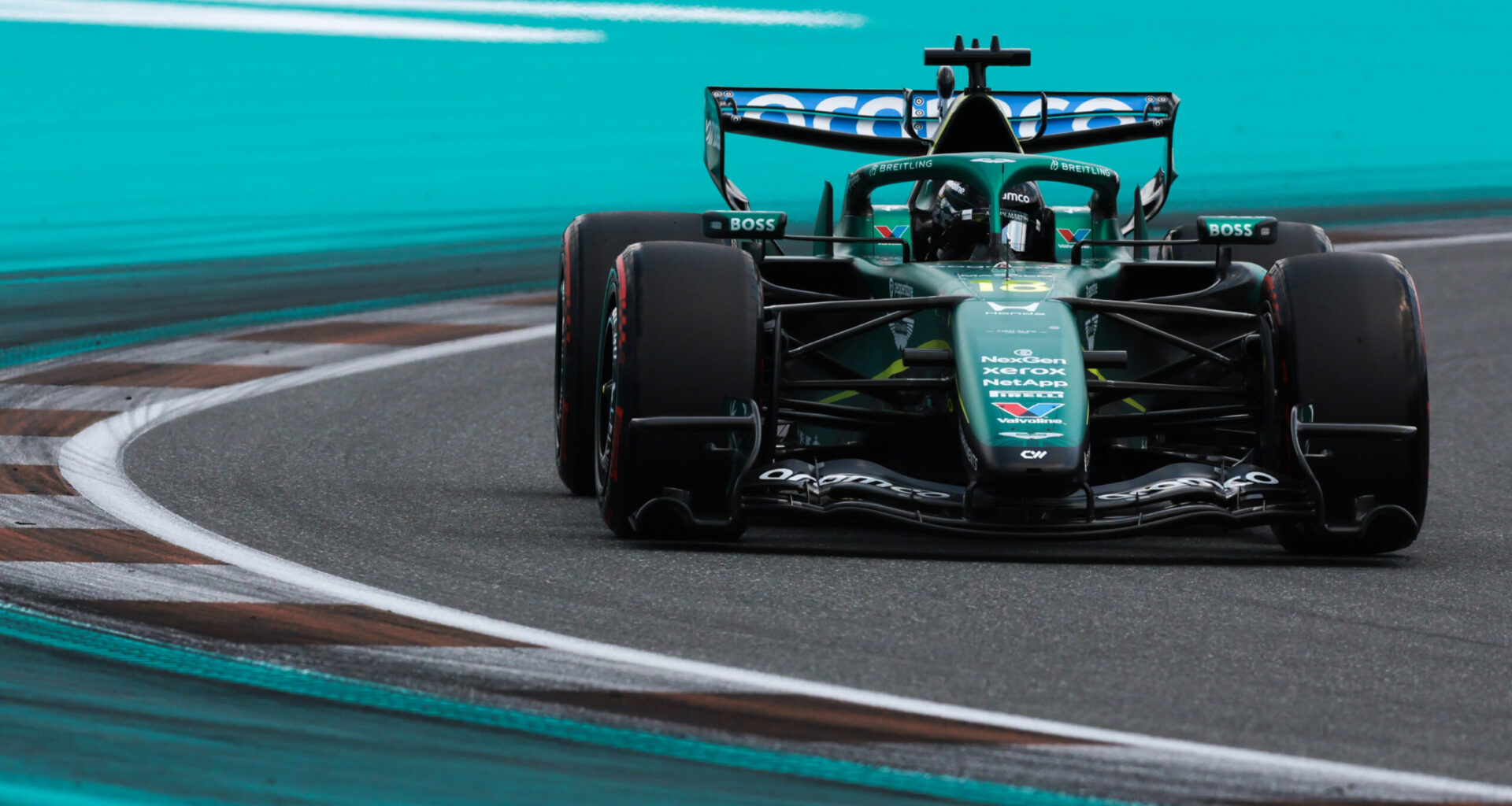
The Aston Martin F1 team has shifted its priority to enhancing the car’s performance for the Canadian Grand Prix this weekend after facing technical struggles since the start of the 2026 season.
The team faced significant reliability issues with the AMR26 F1 car, including excessive vibrations that numbed the fingers of its drivers.
Honda, the team’s power unit supplier, was tasked with resolving the issue, making full use of the long break ahead of the Miami Grand Prix.
Fernando Alonso confirmed during the race weekend in Miami that the issue was addressed by Honda. Now, Aston Martin is shifting focus to making the car faster for the race in Montreal, which also happens to be a sprint race weekend.
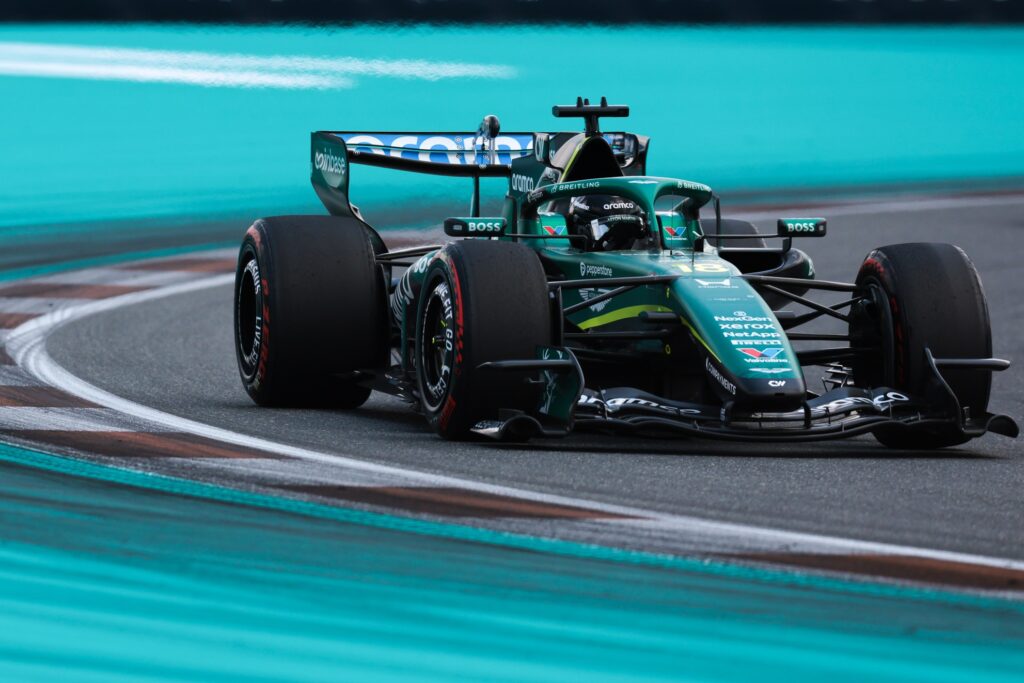 May 2, 2026; Miami Gardens, FL, USA; Aston Martin Racing driver Lance Stroll (18) during the F1 Miami Grand Prix Sprint Race at Miami International Autodrome. Mandatory Credit: Sam Navarro-Imagn Images
MotorBiscuit reported Alonso’s statement from Miami, where both Aston Martin F1 cars crossed the finish line for the first time this season. He said after qualifying:
“The reliability and the vibrations are much better than what it has been so far. That’s the main positive of this weekend. Let’s say we can tick that box because the car behaves normal now. No issues to finish the race tomorrow. No reliability concerns.”
With the issue resolved, Honda has set a new target for the Canadian GP of extracting more performance from the power unit. RacingNews365 quoted the team’s chief engineer, Shintaro Orihara, who said:
“In Montreal, which is Lance’s home race, we will focus on enhancing the driveability and our energy management strategy to support the drivers in building more confidence.
“In fact, this is an important target of our race weekend. If we can give more confidence to the drivers in entering the corners faster and carrying more speed, then we unlock lap time.”
However, time will be a constraint given the sprint race this weekend, meaning Aston Martin and Honda will have to get the setup right in FP1 while taking into account the possibility of rain. Orihara added:
“Canada is another new Sprint race format, making FP1 very important. At this event, it’s the usual 60-minutes, so it’s crucial to optimise everything during this session.
“Another characteristic is that the circuit has a long straight, so it’s vital to adjust energy deployment in this section of the lap.
“We also have a slow speed corner section before the back straight, but also Turns 1 and 2.
“Additionally, we have to consider possible wet conditions and cooler temperatures.
“This can be tricky for grip, and driveability becomes even more important with a combination of MGU-K delivery, accuracy and torque delivery accuracy.”