

Listen to this article
Estimated 5 minutes
The audio version of this article is generated by AI-based technology. Mispronunciations can occur. We are working with our partners to continually review and improve the results.
Any time Taylor Lindsay-Noel wants to go to a restaurant or bar in Toronto, she first checks where the washrooms are located. Usually, she finds, they’re tucked away in a basement.
“It happens extremely often,” she said. “Especially in the core, which is so disappointing.”
Lindsay-Noel uses a wheelchair, which makes these restaurants and bars off-limits to her. Online, she posts review videos using the handle “Access By Tay,” ranking the accessibility of Toronto establishments. Navigating washrooms is one of the worst parts of her nights out.
“It’s one of the most sought-after questions I get from my audience,” she said of washroom locations. “It’s something that we all do. It’s something that we all need.”
If you frequently dine or drink in Toronto and need to use the loo, surely you’ve seen it too: dank, dingy washrooms hidden down a steep, creaky, narrow stairwell.
Listen to this story in podcast form on This is Toronto:
Chris Bateman thinks he knows why. Bateman, who runs the plaques program for Heritage Toronto, moonlights as a bathroom historian. He has extensively researched and written about the history of public washrooms in Toronto.
Bateman points way back to a pre-plumbing Toronto, when there was no running water. Pit latrines outside and in basements were the standard.
“All that human waste [was] just seeping through the soil into the groundwater and polluting it,” he said, adding this was making people sick and creating a public health nightmare.
By the mid 1800s, Toronto decided to take the issue seriously, rolling out a sewer system and supplying treated drinking water to homes. This is where Bateman’s suspicions start.
“One of my theories here is that in these early days the water pressure was so low, I wonder if they even had the water pressure to push it to an upstairs,” he said.
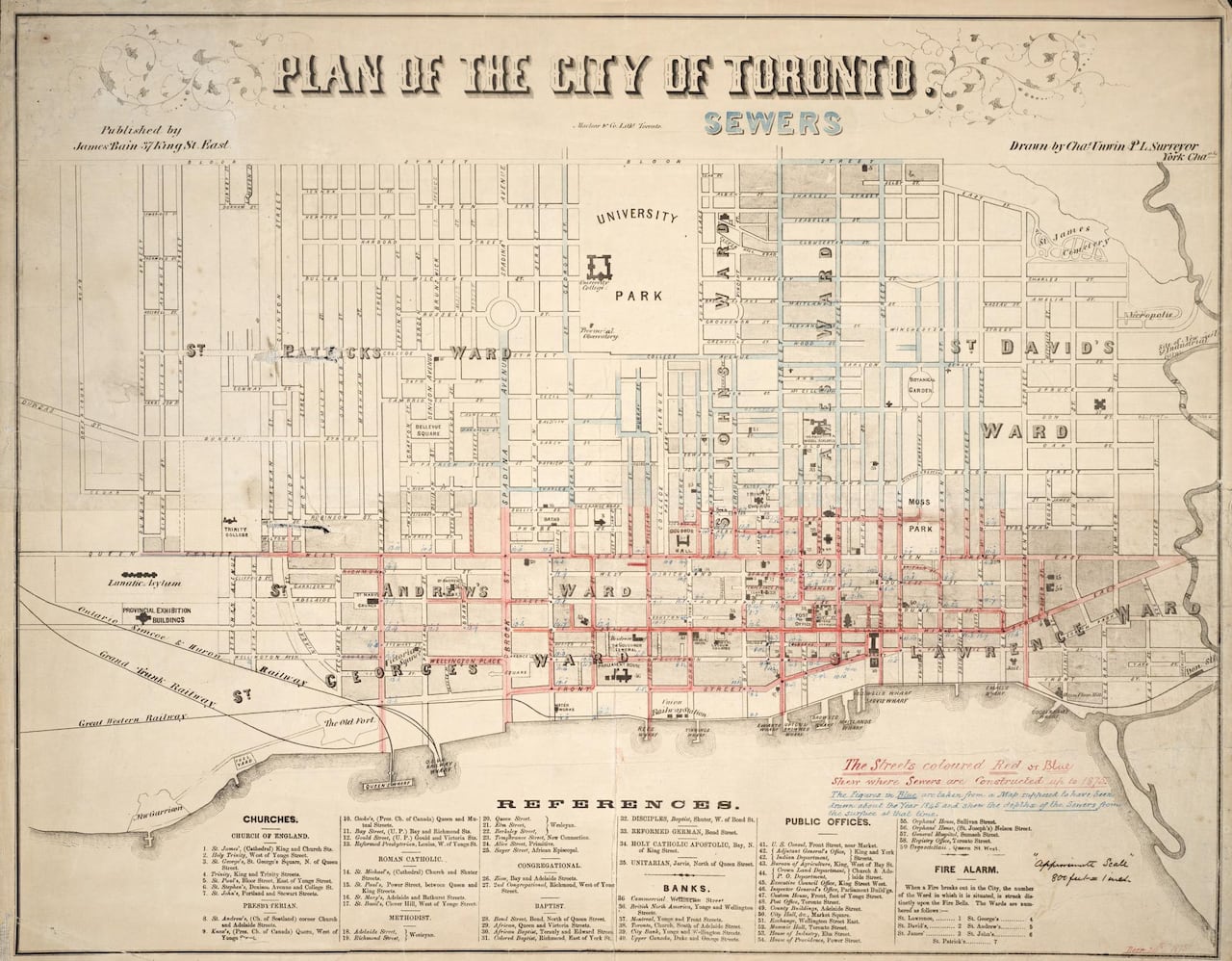 A map of Toronto from the mid-1800s, showing where sewers were laid up until 1875 and in some cases, how deep they went. (Courtesy of Toronto Public Library)Blame old buildings and floor space
Architecture plays a role too. Many Toronto restaurants and bars are housed in old buildings that were likely not designed for that purpose. Builders of the day surely didn’t anticipate customers trudging into basements to go to the washroom.
Space is at a premium in these old buildings, according to Toronto’s chief planner Jason Thorne.
“Usually a business owner wanted to maximize their use of their ground floor footprint, so they didn’t want to put the bathroom in there,” said Thorne.
Thorne, who towers at 6 feet 7 inches, often finds himself ducking and crouching to navigate basement bathrooms.
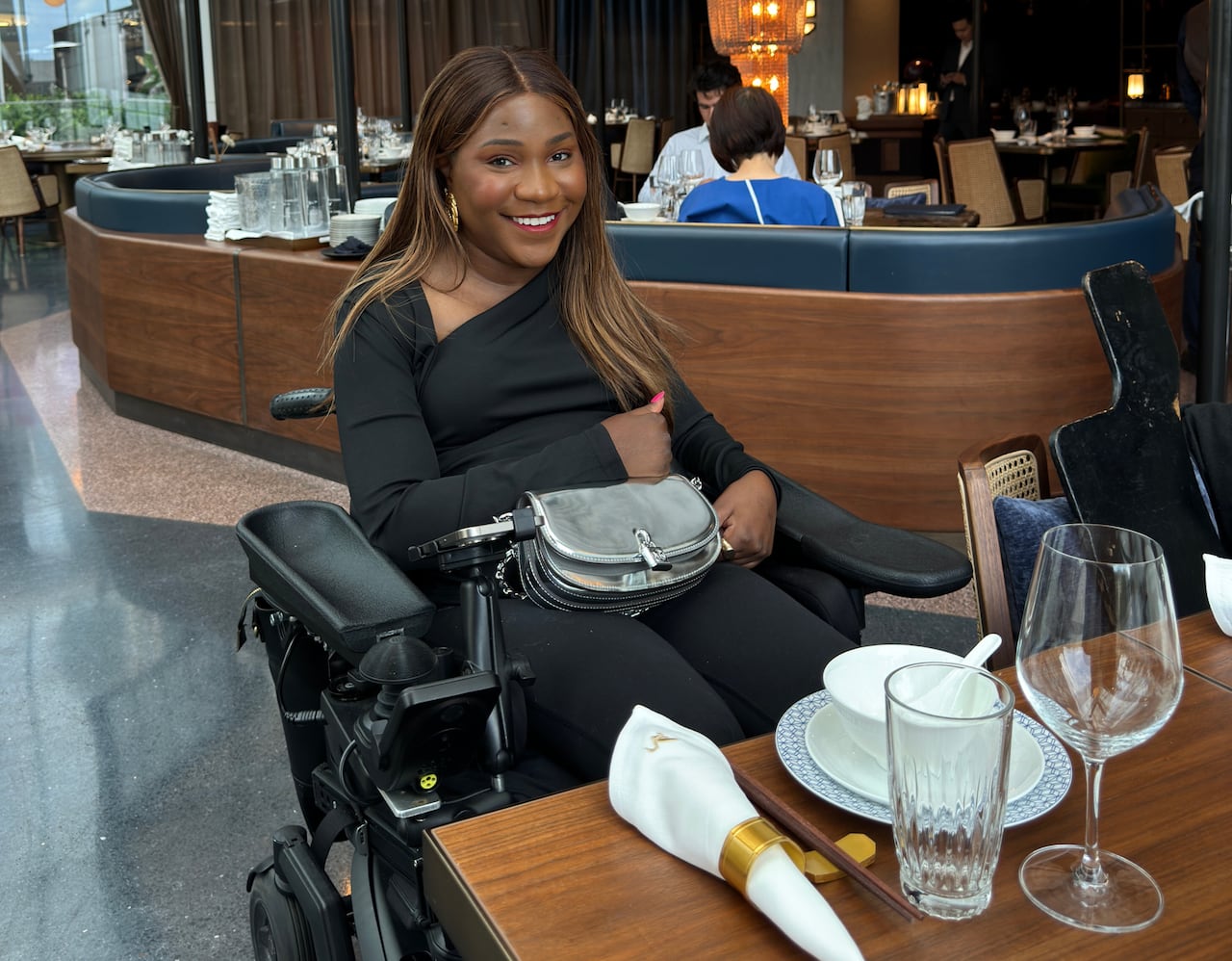 Taylor Lindsay-Noel posts videos online, reviewing the accessibility of Toronto establishments. Her posts have led some restaurants to change their spaces to make them more accessible. (Submitted by Taylor Lindsay-Noel)
“Over time, we’ve got to find ways to make these accessible to everybody,” Thorne said.
But that’s not required.
Since its creation in 1975, Ontario’s building code has evolved to incorporate accessibility, but the code is not retroactive.
So while accessible washrooms are required in new builds today, the code does not apply to basement bathrooms in older buildings nor are they required to upgrade — only in circumstances like major renovations.
“Some of these buildings would have to be totally torn down or totally redone in order to accommodate that,” said Gerald Moore, head of RSM Building Consultants.
‘It’s not impossible’: accessibility consultant
Julie Sawchuk has tried to get businesses to think bigger picture.
“You don’t have to make a 12 foot by 12 foot bathroom. You can renovate and make a space better, which is better than doing nothing,” said Sawchuk, who runs Sawchuk Accessible Solutions and is also a wheelchair user.
After trying — and failing — to find resources, Sawchuk wrote her own book, Building Better Bathrooms, and helps businesses adapt. She talks excitedly about how a business in her home of Huron County installed an accessible bathroom after mulling it for a decade.
“It’s not impossible and what it takes is some out-of-the-box thinking and getting in some people that can do the work and that are creative and problem solvers,” she said.
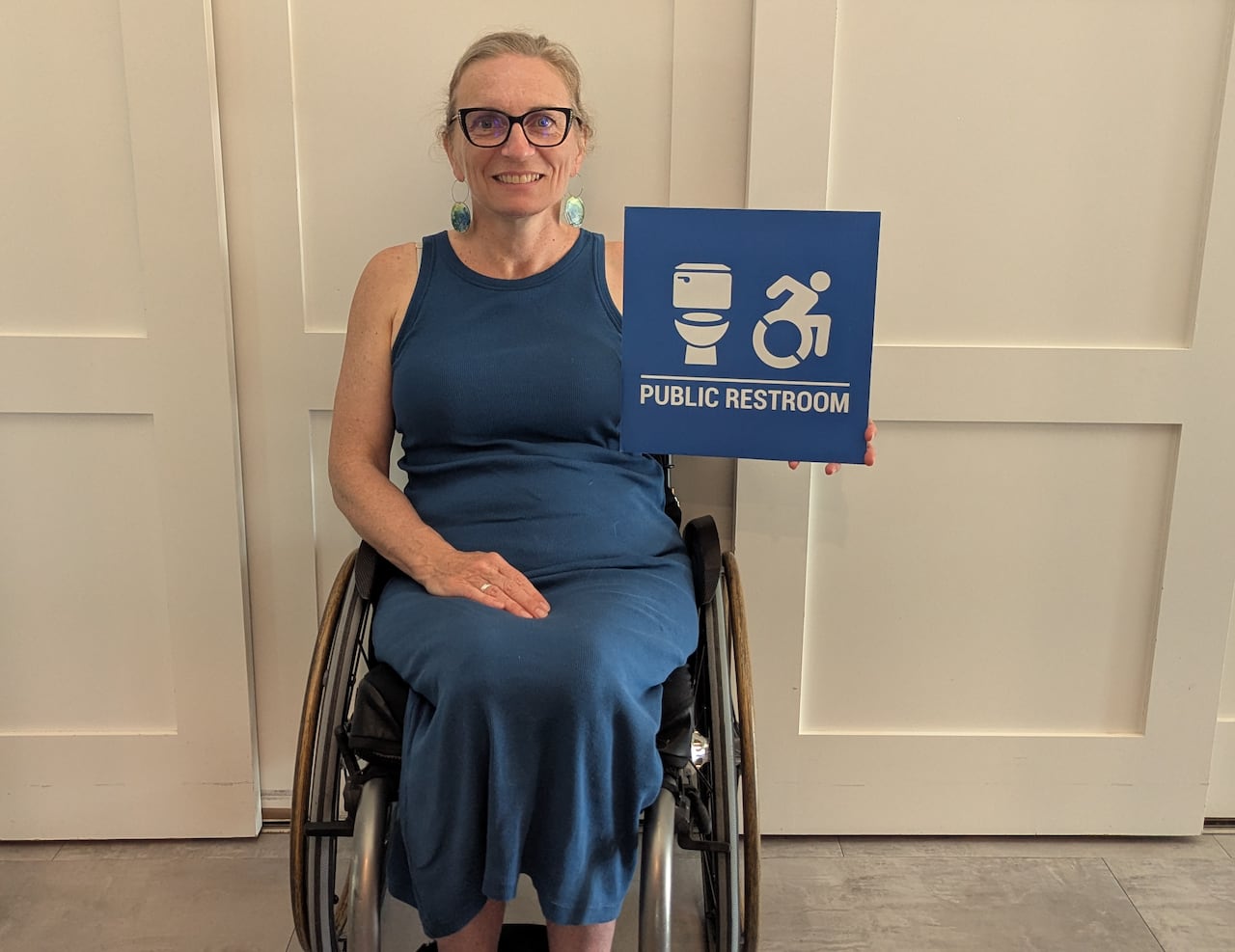 Julie Sawchuk consults businesses on how to build accessible washrooms. “If you can’t go to the bathroom, you can’t stay,” she frequently tells her clients. (Submitted by Julie Sawchuk)
She mentions the money businesses are missing out on if they don’t have an accessible washroom.
“If you can’t go to the bathroom, you can’t stay.”
Renovation costs can be a barrier. Government programs, like the province’s Enhancing Access to Spaces for Everyone (EASE) Grant, can be used to build accessible washrooms. Submissions for the latest intake just closed earlier this month.
But if it’s not mandatory, there’s less incentive to upgrade, leaving potential customers like Lindsay-Noel behind.
“I understand that older buildings are part of Toronto’s charm,” she said. “But accessibility can’t always be sacrificed in the name of aesthetics and tradition.”