
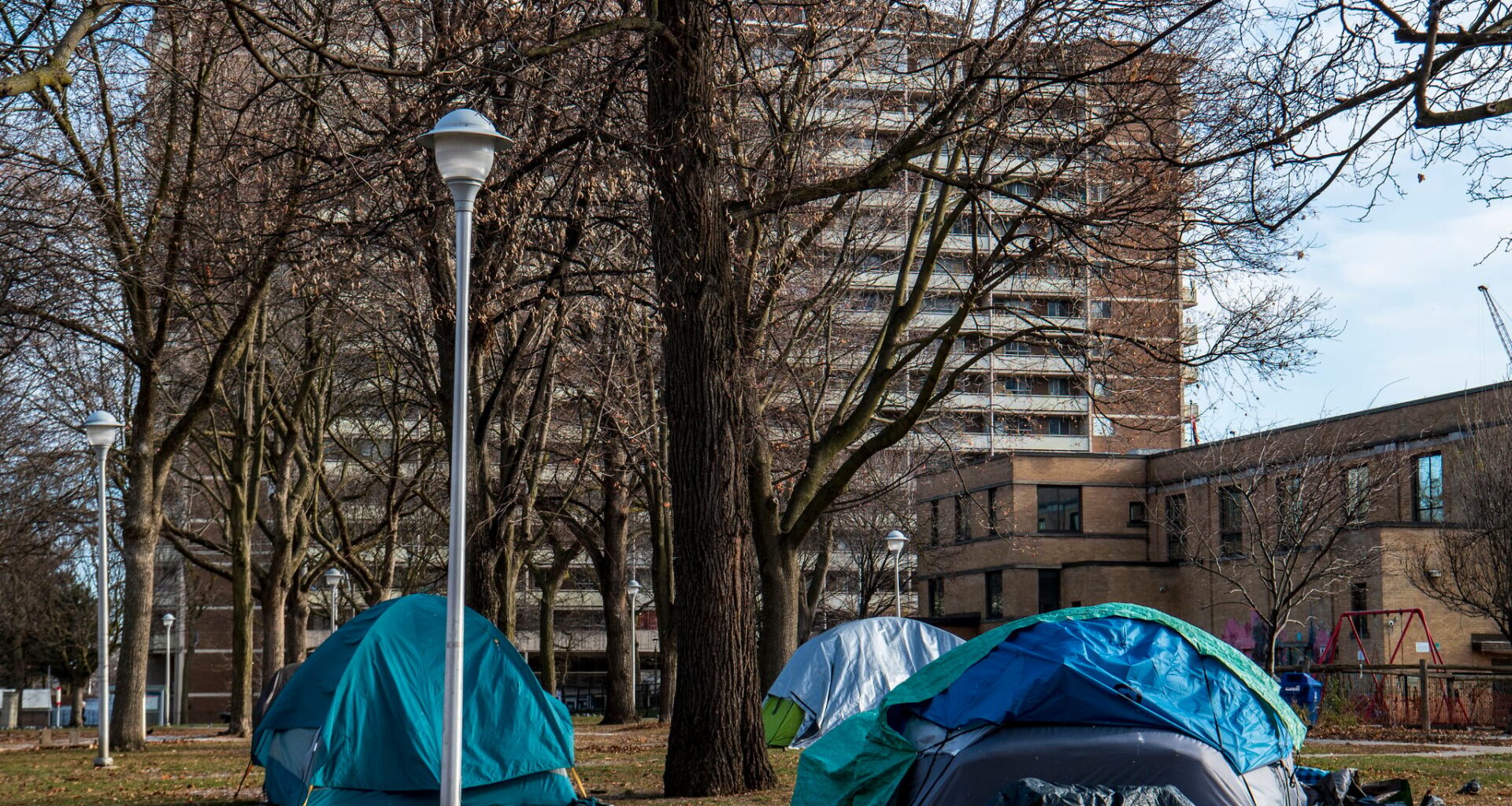
Toronto has already experienced its first heat warning of the year. Now, ahead of a potentially hot summer, some advocates are raising concerns about the lack of shelter space for people experiencing homelessness in the city.
In an effort to protect its citizens, the City of Toronto has released its 2026 Heat Relief Strategy, which outlines plans to manage the highest temperatures expected this year. But Samantha Green, a family doctor and president of the Canadian Association of Physicians for the Environment (CAPE), says the measures contained within are “obviously insufficient” to protect the city’s most vulnerable populations.
Extreme heat can be lethal. In Vancouver, more than 600 people died during a heat dome between June 25 and July 1, 2021. The pressures of climate change endanger all Torontonians, but especially vulnerable populations such as the elderly, chronically ill and homeless. Across Ontario, temperatures this summer are expected to rise higher than normal, and the urban heat island effect is expected to make parts of the city five degrees warmer still.
Since 2019, the city has relied upon a network of more than 500 “cool spaces,” public-access facilities that run air conditioning or provide people with a place to swim, even when heat warnings aren’t in effect. As part of its 2026 strategy, the city also plans to introduce a 24-hour cooling centre with room for 23 homeless people that will only operate during extreme heat warnings, when temperatures rise above the unsafe threshold for at least two days.
Advocates have raised concerns about the heat-relief network in the past, arguing that homeless people can’t depend on these measures alone. Some of the sites proved to be inconsistent, like when city pools closed due to high humidex levels. Further, there is intense demand on the system— 14,809 caller requests were turned away from shelters between May and September 2025, while the facilities remained at 99 per cent capacity, according to the city.
Toronto Mayor Olivia Chow called a motion to address “gaps” in the plan last year, and the council agreed to a review of their 2025 strategy, including recommendations to reimplement the 24-hour cooling centers.
Joanna Beaven-Desjardins, executive director of Toronto Emergency Management, summarized the changes in a Report For Action, including what the report calls “expanded access to cool spaces.”
Green calls on the city to go further in its efforts to provide safe shelters, providing enough placements to accommodate those in need of respite from sweltering weather. She also raised concerns about what she calls the reactionary nature of the emergency heat management plan. Moving forward, she believes there should be a greater focus on preventative measures such as supportive housing for vulnerable populations, rather than intermittent responses.
“What we need is a 24-hour network of drop-in centres for people who are unhoused to stay safe,” she said in an interview with Canada’s National Observer. “That shouldn’t just be in the event of a heat warning, but it should be consistent at all times.”
She addressed the underutilization of a 24-hour cool space provided last year, which she said was, “not for lack of need.” There was, however, a lack of privacy, comfortable seating and “proper food,” all of which she said reduced the number of people wanting to use the area.
“Partnering with community organizations that can actually provide services that are desired and needed, like meals, mental health supports, housing workers, wrap-around services. That’s what’s needed in a 24-hour relief centre,” Green said.
Canada’s National Observer contacted the city for comment, but did not receive a response before publication.
Charlotte Slayton is entering her fourth year of study at the University of Guelph, where she is pursuing an undergraduate degree in Wildlife Biology and Conservation.