
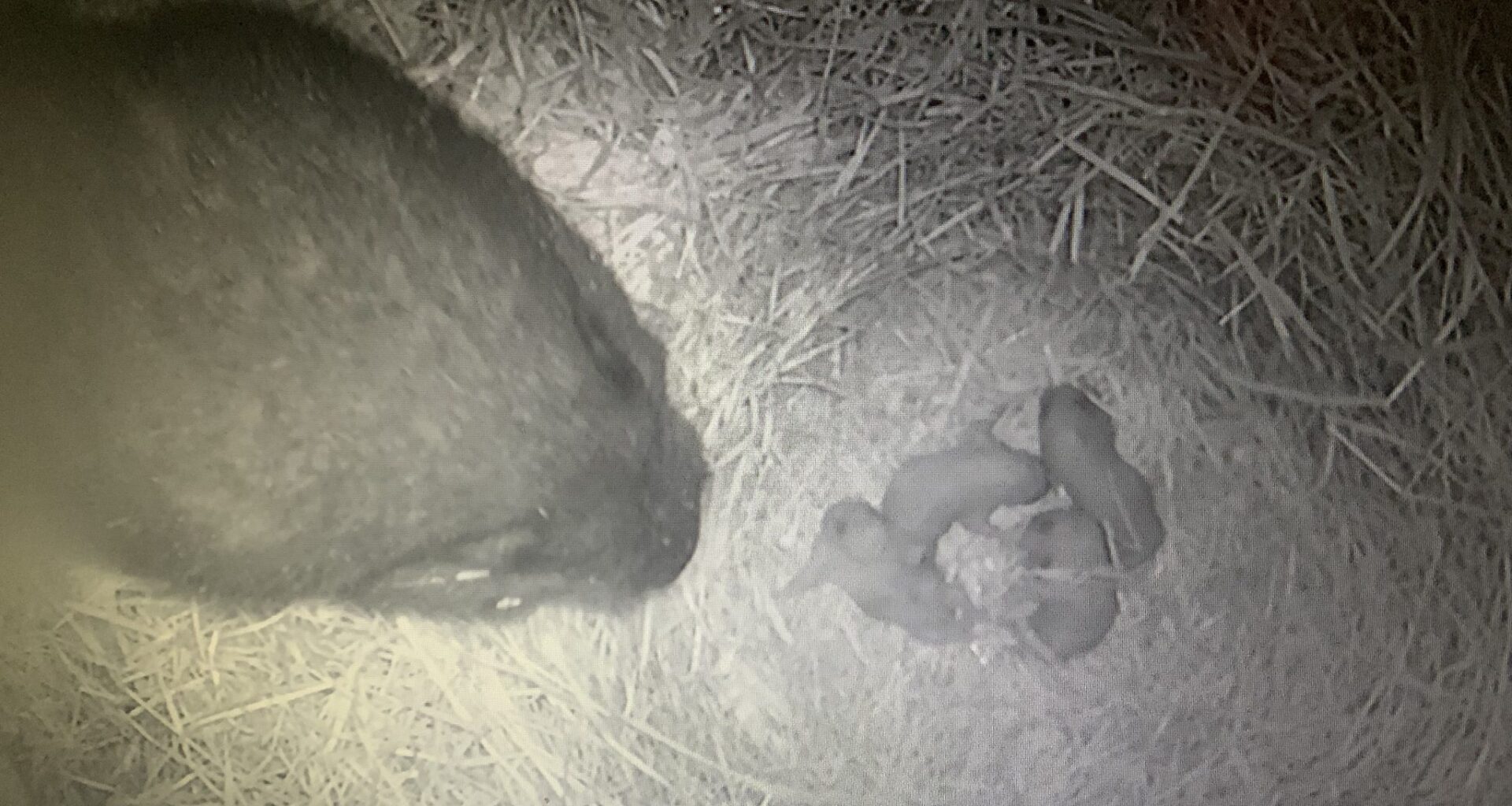
The Marmot Recovery Foundation is sharing “exceptionally rare” video of newborn Vancouver Island marmots that was recorded using a remote nest camera at the foundation’s breeding facility at Mount Washington.
The pups are just days old and are hairless, virtually immobile, and only measure inches long, according to conservation breeding coordinator and veterinarian Malcolm McAdie.
McAdie says it’s difficult to get shots of newborn marmots since their mothers are so defensive of them, and because they don’t have cameras set up in every one of their burrow boxes.
“We only have a few nest spot cameras and for some reason the mums typically choose to have their pups in the alternate box that they supply for them, so to get them under the camera like that is not a common thing,” he said.
The video shows a marmot ambling up to her four pups.
McAdie notes that Vancouver Island Marmot moms tend to get aggressive late into their pregnancy, defending their pups from even other marmots, which is why they’re provided with alternate boxes to raise their pups away from the other marmots.
He adds it’s existing to catch the marmot pups on camera, since usually the researchers have to rely on listening for them from outside the boxes to see if they’ve been born.
“It’s very low volume but it sounds, people have described it two ways, one is that it sounds like a litter of puppies and others say it sounds like it’s a flock of seagulls flying over,” said McAdie.
Endangered species unique to Vancouver Island
As their name suggests, the endangered Vancouver Island marmot is endemic only to Vancouver Island – and is just one of five endemic land mammals in all of Canada.
The species marked its lowest point in 2003, when just 22 individuals were recorded in the wild. Now, their population numbers in the hundreds, with 420 wild marmots observed in the wild during the last count in 2025, and May now marks the beginning of the next season for the animal.
Vancouver Island marmots generally hibernate from mid-October until late April, with litters appearing around May.
Last year, wild Vancouver Island marmots produced about 41 litters for a total of 116 pups, the highest number of pups ever recorded since breeding efforts began in 2003.
McAdie says it’s too early to say how many pups there are this year, as the season has just begun, but teams are currently out in the field trying to get a count of how many Vancouver Island marmots survived the winter.
“To me one of the most interesting things is, like I said, they’re good mothers. The marmot mum, she goes through a six or seven month hibernation and during that time they don’t eat anything at all, they subsist entirely on their fat reserve,” said McAdie.
“So you’d think after their hibernation they’d be ravenous but that’s not the case, their first priority is to breed.”
Once they’ve given birth, the marmot mums will stay with their litter almost all day, only venturing out a few times a day to eat and defecate before returning and nursing the pups regularly.
As they get older, the nursing becomes less frequent and within about four weeks the pups are ready to leave, now with their own fur coat, some mobility, and eyesight.
McAdie says there’s currently 89 marmots at the Tony Barrett Mount Washington Marmot Recovery Centre and if all goes well about 40 will be released into the wild this year.
RELATED: