

Listen to this article
Estimated 5 minutes
The audio version of this article is generated by AI-based technology. Mispronunciations can occur. We are working with our partners to continually review and improve the results.
The Edmonton Police Service and Recovery Alberta are opening a facility to detain people who are causing public disorder that don’t face criminal charges.
Police Chief Warren Driechel says the Integrated Stabilization Centre (ISC) has been in the works for eight months in collaboration with the province, and that officers will use “temporary holding powers” to detain people.
An EPS spokesperson said police would primarily use a section of the Gaming, Liquor and Cannabis Act to hold intoxicated people in custody for up to 24 hours.
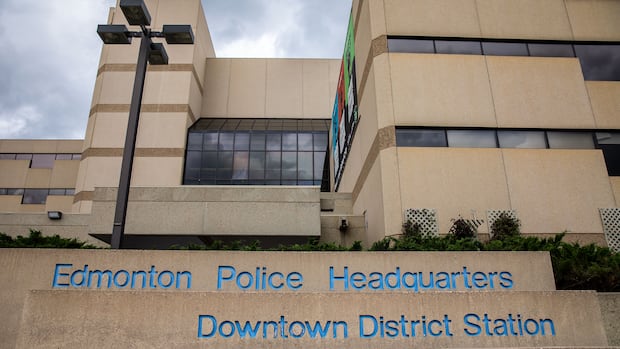
The facility will operate in a previous detainee care space in downtown Edmonton.
A statement from the Ministry of Mental Health and Addiction said the facility will give care to those struggling in Edmonton, the epicentre of the opioid crisis in Alberta. It said the facility will be staffed by Recovery Alberta clinical staff, social workers and recovery coaches, and is expected to become operational in the coming weeks.
When presenting EPS’ annual report to city councillors on Tuesday, Driechel said social service crisis diversion teams are currently oversubscribed and slow to respond.
He said because of that, police are responding to situations at 2 a.m. that aren’t necessarily crime, and it’s unclear where officers are supposed to take someone.
“I’ll just say it, some of the response sometimes is: pick him up and try to drop them off in front of a shelter and hope they go through the doors,” Driechel told council. “And I don’t think that’s the appropriate response right now.”
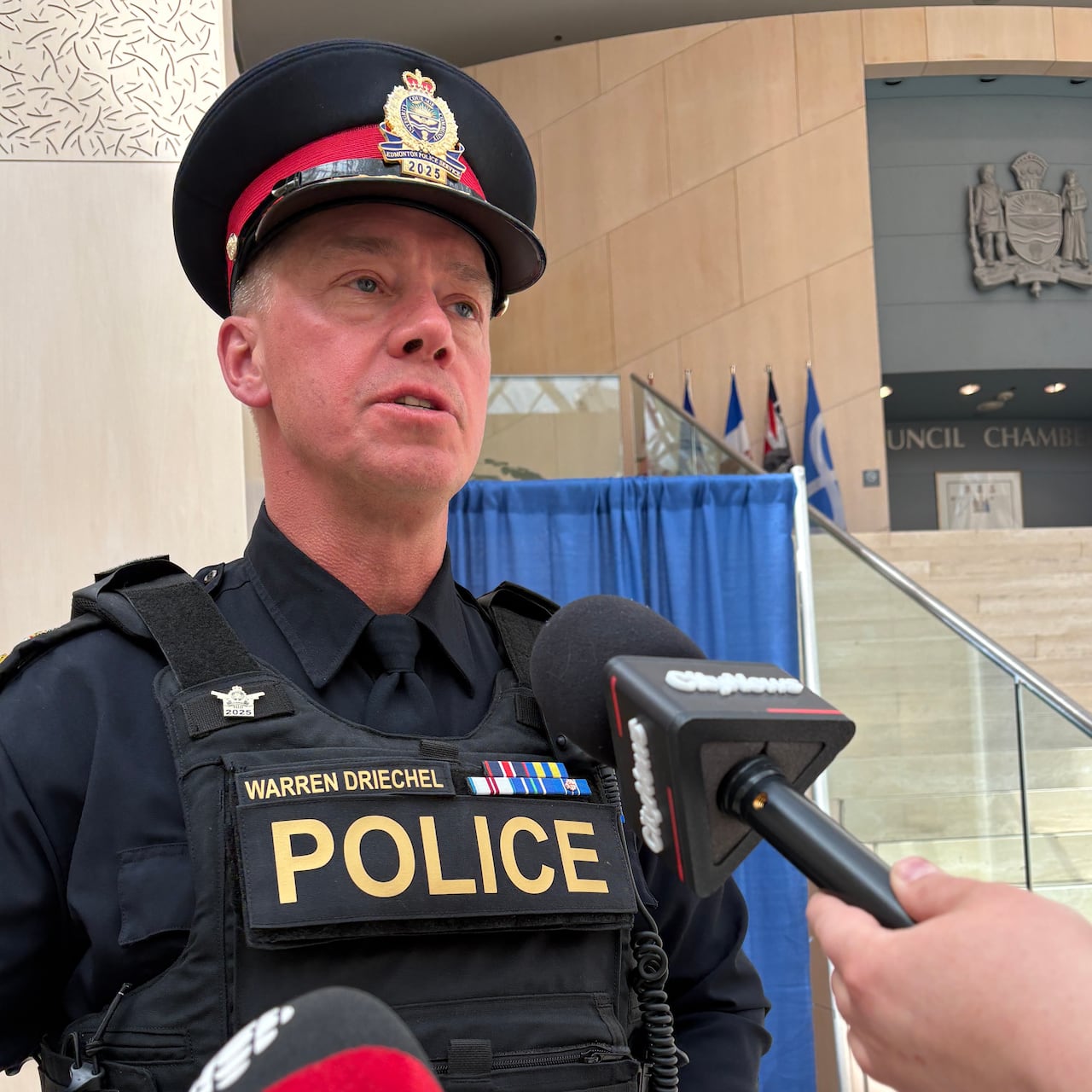 Edmonton Police Chief Warren Driechel says officers are increasingly responding to disorder calls at night, when it’s unclear where police should take someone. (Emily Williams/CBC)
Driechel later told reporters the new facility could help police triage somebody they deem unable to care for themselves, due to addiction or mental health struggles.
“The stabilization centre is for us to really slow things down, … allow us to take care and control of those individuals and then determine what are the next steps for them.”
‘Like a drunk tank’
Currently, police are only detaining someone if they have been charged with an offence like public intoxication.
Driechel said Edmonton previously had a different facility called the Integrated Care Centre where people could work with health professionals and peace officers, but that lost provincial funding. That service also required co-operation from the person being dropped off, which the chief said posed challenges.
“I often hear from the public, and I hear from our members and even within our organization, ‘These people don’t want help.’ I would suggest they don’t know they need help at this time,” Driechel said.
But some advocates say they believe this model could be harmful.
Petra Schulz is the co-founder of Moms Stop the Harm, an organization that represents Canadian families impacted by substance use.
“It’s like a drunk tank,” she said in an interview.
“Somebody rolling up with a uniform and picking you up for your own good and locking you up somewhere is not the approach that is going to work.”
Schulz, who lost her son to a fentanyl overdose in 2014, said she worries the new facility and detention policy will instead drive drug users underground, which can be dangerous in the event they overdose.
What works long term
Ginetta Salvalaggio, a University of Alberta professor of medicine, said the new approach seems to be a reaction to discomfort the public has with seeing visible signs of homelessness and addiction.
“Is it evidence-based? Is it helpful? There’s not a whole lot of suggestion that that’s the case,” she said.
“What we do know is that sticks don’t work. Punishment doesn’t work.”
Salvalaggio, who studies people who use drugs in Edmonton, said the new facility is coming at a time when harm-reduction measures are being cut, and getting people into stable supportive housing can take years.
Mayor Andrew Knack also pointed to longer term solutions, telling Driechel Tuesday that he believes there’s a lack of pre- and post-recovery housing units in Edmonton, something he said he’s flagged to the provincial government.
News of the upcoming ISC follows the Downtown Revitalization Coalition’s call last month for a 24-hour stabilization facility to address public safety.
The statement from the Ministry of Mental Health and Addiction said the idea for the ISC stems from conversations dating back to 2022, when a task force was created to address social issues in Edmonton.
Driechel recently signalled a new approach to policing in the city, with zero tolerance for disorder and open drug use, while also recognizing further criminalization isn’t always the answer.
EPS has yet to announce a date for when the facility will begin taking people in but said intake is expected to begin later this year.