

Listen to this article
Estimated 5 minutes
The audio version of this article is generated by AI-based technology. Mispronunciations can occur. We are working with our partners to continually review and improve the results.
As Halima Abdi checked in at the Canada Border Services Agency office in downtown Edmonton last Wednesday, like she’s done weekly for the past decade, time was running out.
Earlier this month, authorities issued a removal order for the single mother after cancelling one previously in November 2023. That decision three years ago allowed Abdi to apply for permanent residency on humanitarian grounds.
Now, as the new removal date this Monday careens towards Abdi’s family, so does the nightmarish decision it will force her to make.
Abdi has three children under the age of eight: Mohamed, Mukhtar and Mubarak. They were born in Canada. Abdi dreamed of raising them in a stable, inclusive country full of opportunity.
But without anyone else to look after them, Abdi must now decide whether to bring her children to Kenya— the country where she says she fled the extrajudicial killings of ethnic Somalis that killed her brother — or leave them behind in the care of the Alberta government, without their mother.
When Abdi broke the news to her oldest son, she said he tearfully begged her to call the president so he could stay with his friends.
“I’m trying to be the best mom, but I feel like I’m failing them,” Abdi said in an interview Wednesday. “I don’t know what else to do. I’m out of options.”
Abdi’s journey to Canada began nearly a decade ago when she flew from Kenya to the United States and then walked across the Canadian border in February 2017.
Canadian immigration authorities at the time concluded her life was not at risk and rejected both her refugee claim and pre-removal risk assessment.
What scared Abdi even more though, was the impact a separation would have on her boys, or how they would fare in Kenya where systemic discrimination against ethnic Somalis is rampant, and she has no family or community support.
WATCH | It’s been nearly a decade of uncertainty for Halima Abdi who went into hiding in 2022 to avoid being separated from her children: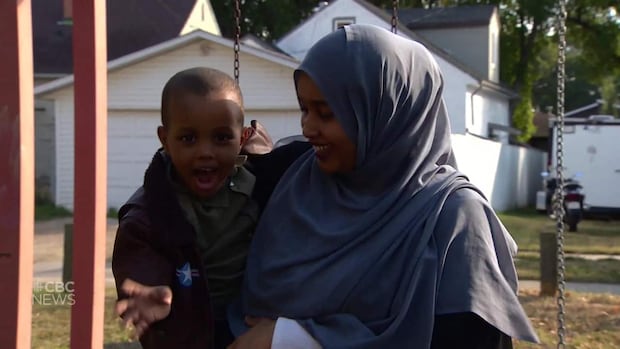
Edmonton mother in hiding to avoid deportation
Community advocates call on Ottawa to reconsider Halima Abdi’s deportation to avoid harming her Canadian-born children.
Abdi’s plight drew the lobbying efforts of the Canadian Academy of Child and Adolescent Psychiatry, which warned the federal government’s approach to removal is putting the mental health of Canadian children at risk.
Community and business leaders have also rallied around Abdi, including Duran Aden, a freelance journalist with Somali BBC.
In an interview, Aden described Abdi as a hard-working and loving mother who volunteers at her sons’ school and community functions where she loves to bake. He noted the children’s father is no longer in the picture and Abdi has never relied on income support.
Also helping Abdi advocate for a deferral is Mark Cherrington with the Coalition for Justice and Human Rights, who was by her side at the CBSA office Wednesday where he described her kids “as Canadian as maple syrup and Connor McDavid.”
“It’s ridiculous that we have a pending application for her to stay here, and at the same time, the federal government is throwing these people [out] on removal orders,” Cherrington said.
“If she steps on that plane, I will be bringing these three children to the doorsteps of Children and Family Services, and these children will remain in care for their whole childhood, and this is going to end up costing taxpayers millions of dollars when you add it all up.”
Decade-long processing times
Immigration, Refugees and Citizenship Canada said Abdi’s pending application to gain permanent residency under humanitarian and compassionate grounds, submitted in August 2024, does not delay her removal.
IRCC spokesperson Jeffrey MacDonald wrote in an email that the average processing time outside Quebec for a permanent residence application under humanitarian and compassionate grounds is more than a decade.
“IRCC will continue to process their application and we will notify the applicant of the decision in writing,” he wrote.
According to MacDonald, in recent years, the number of applications received has been higher than the number of spaces available under the 2026–2028 Immigration Levels Plan.
“This has led to larger application inventories and longer wait times for many applicants. We understand that waiting for a decision can be deeply stressful and uncertain, particularly when it affects people’s ability to reunite with loved ones, plan their futures, or move forward with important life decisions,” MacDonald said.
Back at his office Wednesday, as Cherrington fired off emails to federal and provincial ministers pleading her case, Abdi still dared to dream of a future — one where she’s allowed to stay in Canada.
She wants to follow in Cherrington’s footsteps as his mentee.
“I understand how important it is to have support, kindness and someone who truly listens during difficult moments,” Abdi said.
“I want to use my experiences to help others feel less alone, give encouragement and be a source of understanding and hope for people facing hardships in their lives.”
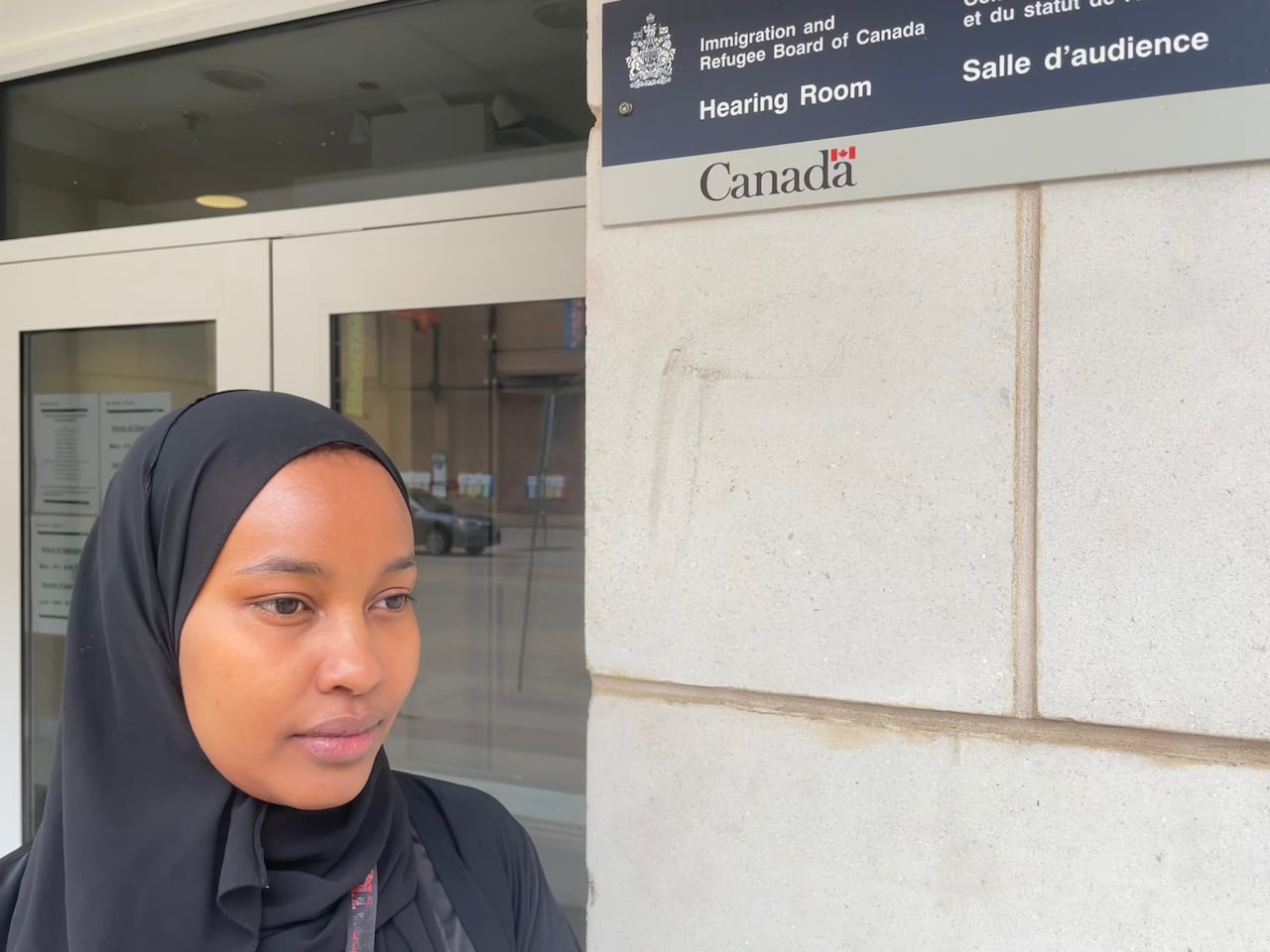 Halima Abdi checked in at the Canada Border Services Agency office in Edmonton on Wednesday for what could likely be one of her final few days in Canada. (Andrea Huncar/CBC News)